

Europe beckons. Every year. In ‘24 it was The Netherlands, Belgium, Luxembourg & a dash across to Cologne & Trier, (Germany).
The itinerary included Brussels, Bruges, Ypres, Antwerp, Ghent & Ostend.
The moot question – where best to park oneself. Ghent, the obvious answer. Lovely, if not lovelier than Bruges, it is quieter, less touristy & only thirty to sixty minutes from every other place on the list.
Possible though it is to do Antwerp in a few hours, it deserves a night & day at least.
Short on time I broke journey enroute. The station has a luggage deposit facility, €5 a day & Ghent’s just an hour away (€12 by train).
Belgium’s second largest city has medieval streets & stunning Flemish – Renaissance architecture. Central station (early 20th century) & Handelsbeurs – world’s oldest bourse (1531) – fine examples of the same.
An old port town known for diamond cutting, the famous diamond district begins at the station itself. Past Meir street, into the old town & Square.
Visitors to ‘The Cathedral of Our Lady’ get to see 4 in-house Reuben masterpieces. Son of the soil (17th century), Reuben’s house still stands. Had a hard time finding it though.
Roaming around in the drizzle – to Grote Markt, Brabo fountain, the heart of town & beyond. Having heard of Sint Anna tunnel I was more than eager to see it. An underwater tunnel that connects both banks of the Scheldt, a curiosity that does not disappoint. One descends a well maintained wooden elevator – one of the first of its kind – to enter the 572 meter tunnel. Up another at the opposite end to come out on a grassy bank. Stein Castle, one of the oldest preserved building’s right there. The view from this end clear, open, undisturbed. With hardly a soul around, strolling along the embankment on wet, cool green grass pure joy.


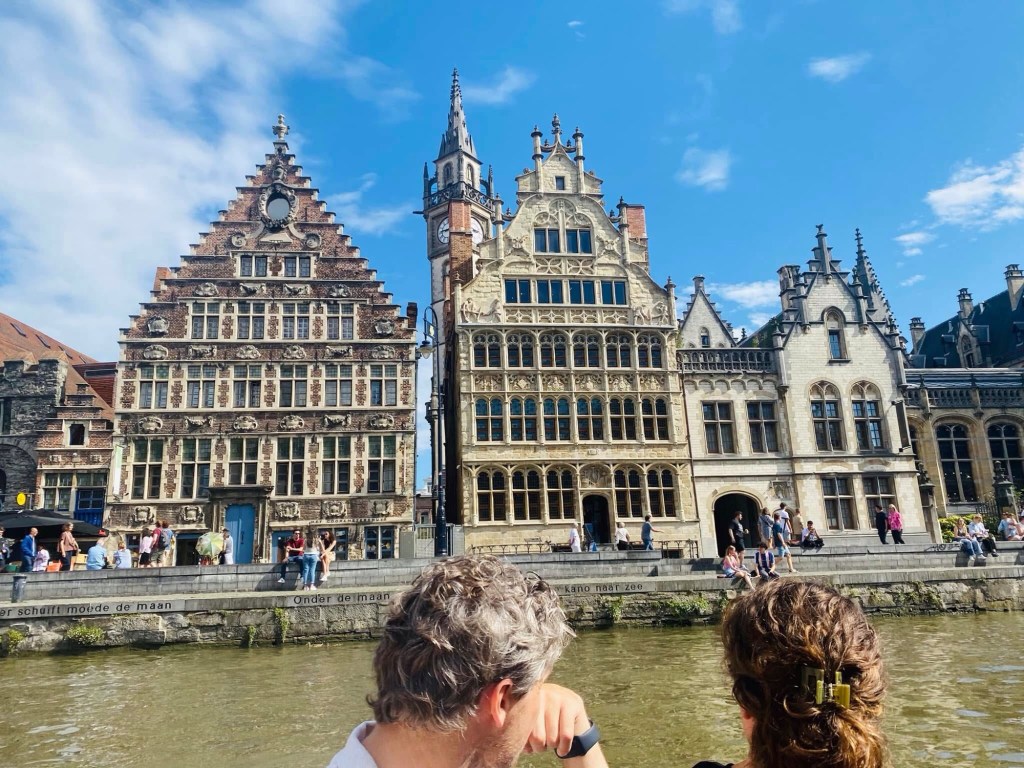
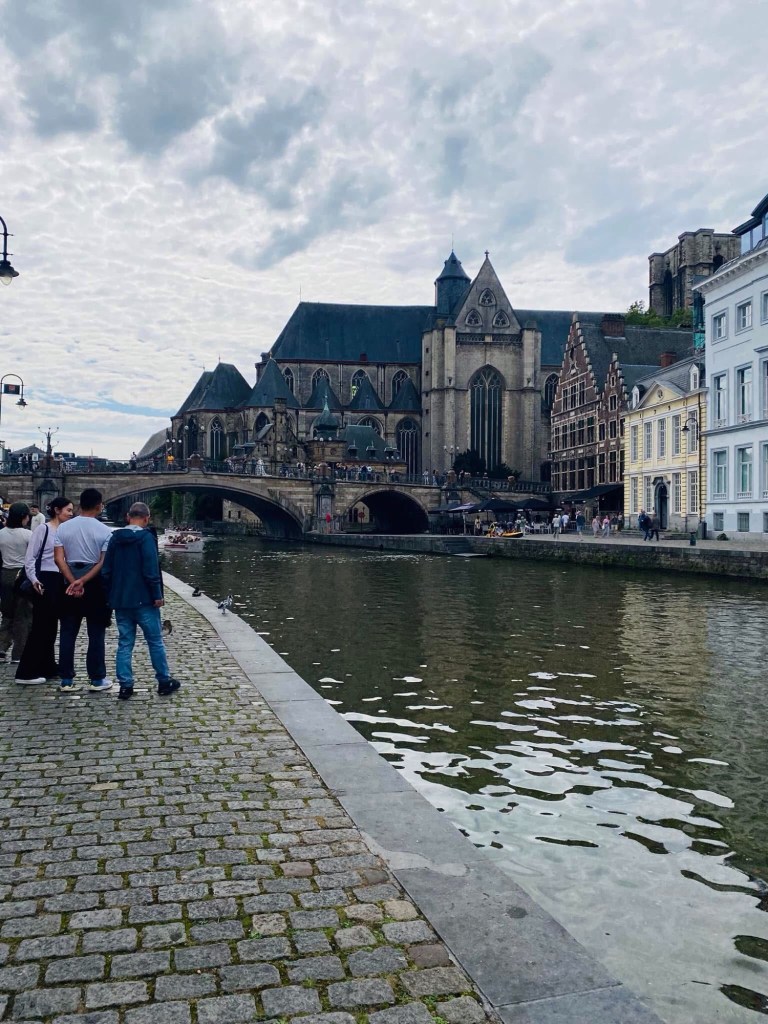
Ghent was everything I expected & more. A university town with medieval architecture much of the activity centre’s around Graslei & Karenlei, quays on either side of the Lys.
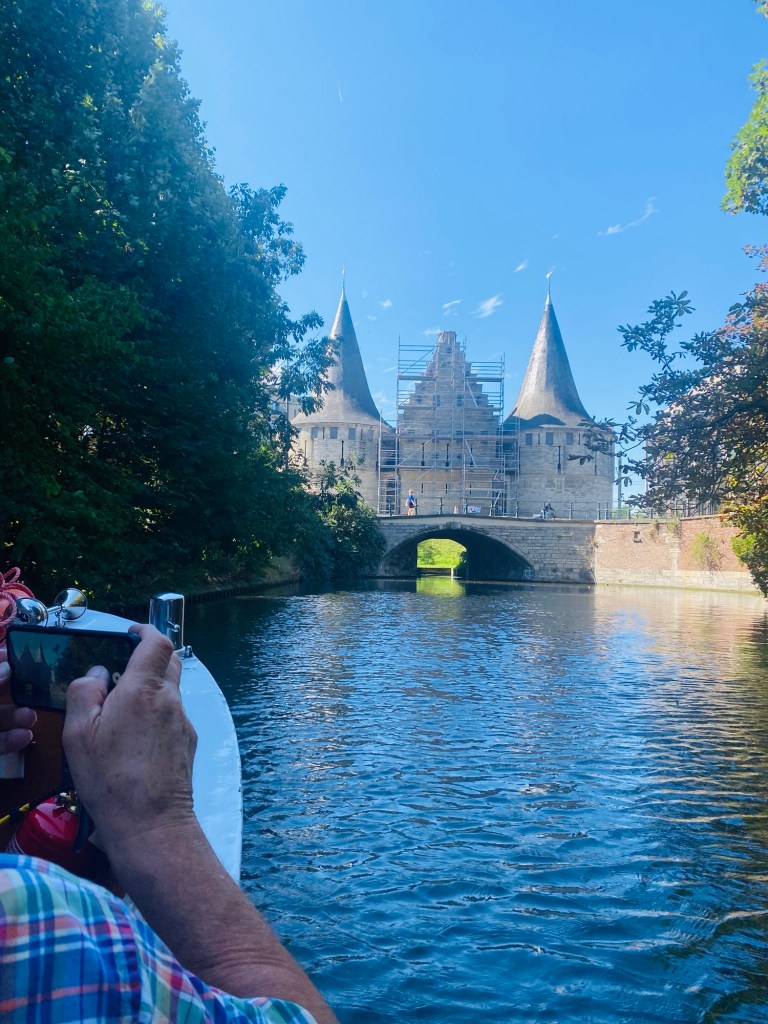
Spent an entire day with Andre, a local friend. Taking a leisurely stroll along the waterfront promenade, a boat tour down the canal, chatting by a riverside café, taking in the scene generally. Ghent has a lively urban art scene – colourful murals, street art & graffiti.
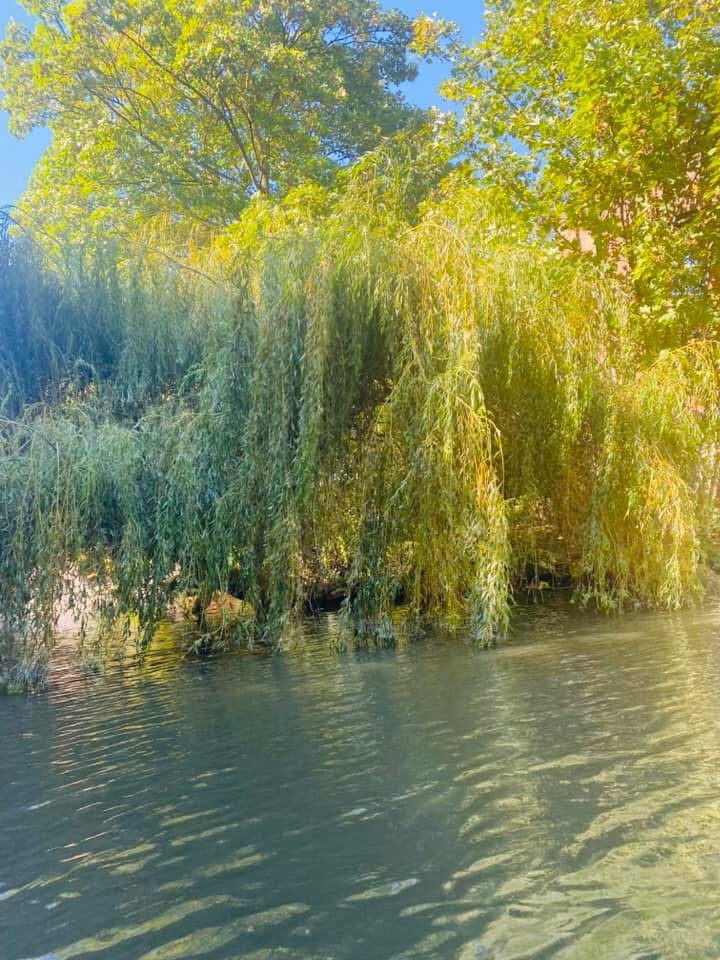
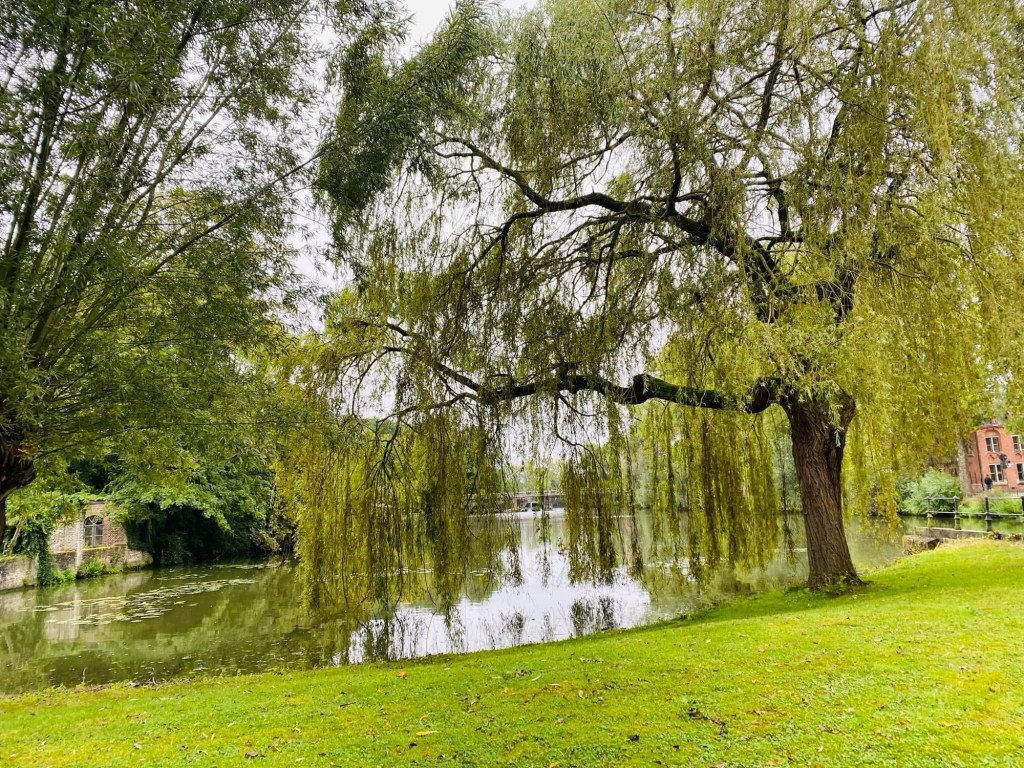
Gravenstein Castle (1180 AD) with its towers, dungeons, moat & high stone walls a major draw, as is the 91 meter tall belfry. Both offering stunning views from atop. Grasbrug, a short spring bridge on the river must not be overlooked. Nor the cluster of Weeping Willow cascading into the waters.
A word about ‘The Astoria’ where I stayed. Simply because it deserves to be said. A small, eco friendly boutique hotel, it appears to have got many things right. Help yourself to fresh home cooked meals remembering only to leave a note of it behind.
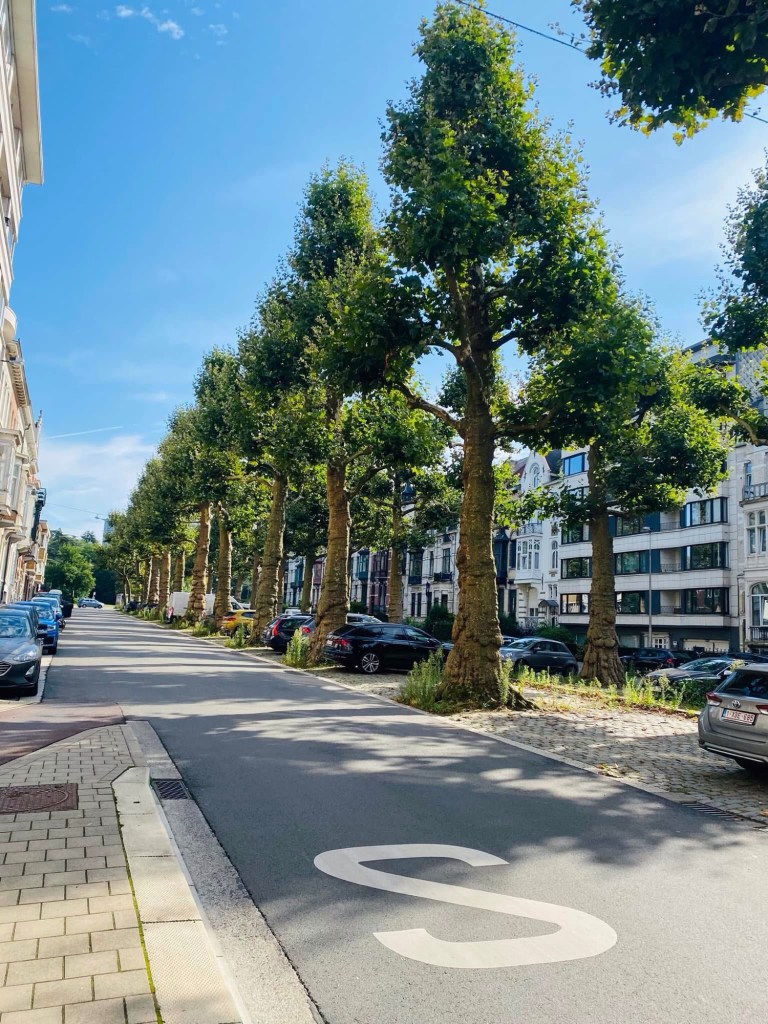
On a quiet side street barely 500 meters from Ghent Central, the ‘Astoria’ is a pleasant 30 minute walk to the city centre. Signages in pink mark the way – via an avenue of Plane trees, Citadel garden & Lys embankment.
Completely after my heart, Ghent is where I could have lingered indefinitely.
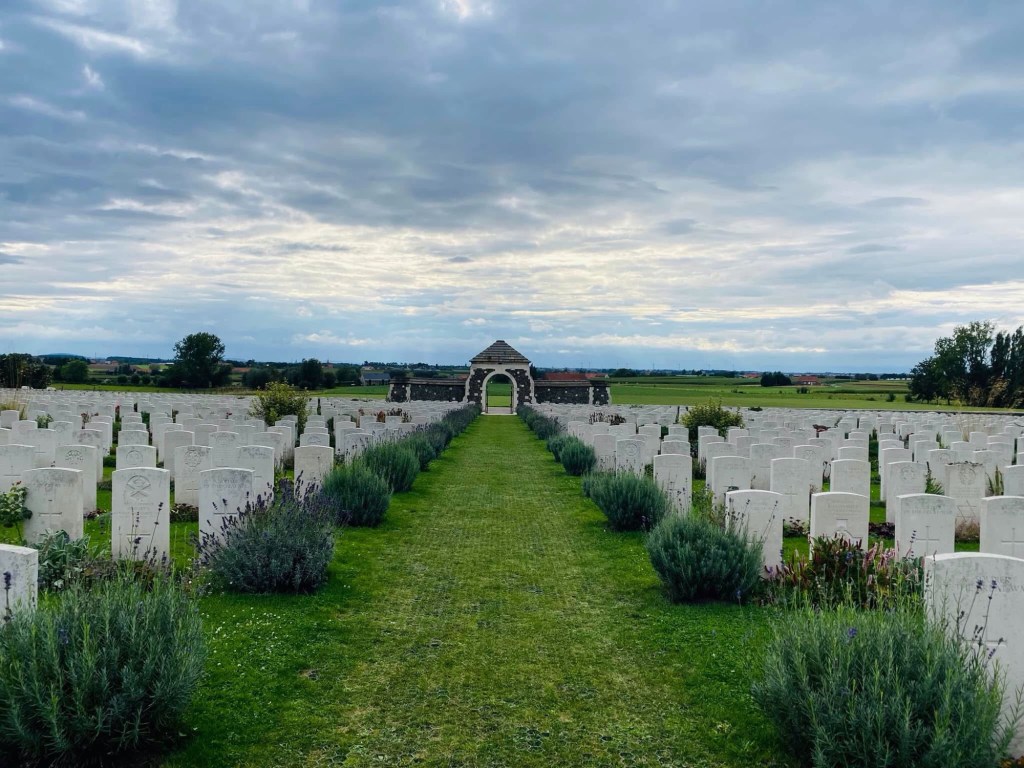
Andre offered to drive me to Ypres. We set off on a clear blue day going past vegetable farms & homesteads. Ripened grain glistening in the Autumn sun. No poppies in Flanders Fields, alas! It was teeming with sunflowers. Stopping by an old Abbey for lunch, then on to Tyne Cot, the largest CWG cemetery.
WW1 for me, holds strange & enduring fascination. The thought of idealistic young men going into “war to end all wars”. Dying disillusioned & young. Several of them poets with a remarkable body of work.
Ypres one realises isn’t merely a war site. Real people live here. It has a Cathedral, Museum & Memorial that is in a way a paean to peace.
Menin Gate’s a memorial to the 54,348 missing. CWG officials in blue coats come by around 7.30 every evening. Traffic in & around coming to a halt, a sudden hush descends upon the gathered crowd. Wreaths placed, the Last Post is sounded – come rain or shine – at 8 pm everyday. A simple, poignant, deeply moving ceremony to honour them who never returned.


Ypres to Bruges – via Kork – is just about an hour & a half (€8.30, senior citizen ). Luggage safely deposited (€6.70) a 25 minute walk takes you into the heart of town. There’s a free shuttle for elderly locals, not available to tourists I’m told.
A medieval city, Bruges swarms with tourists, night & day. Makes sense to arrive early if on a day trip, remembering also that everything remains closed on Sunday.
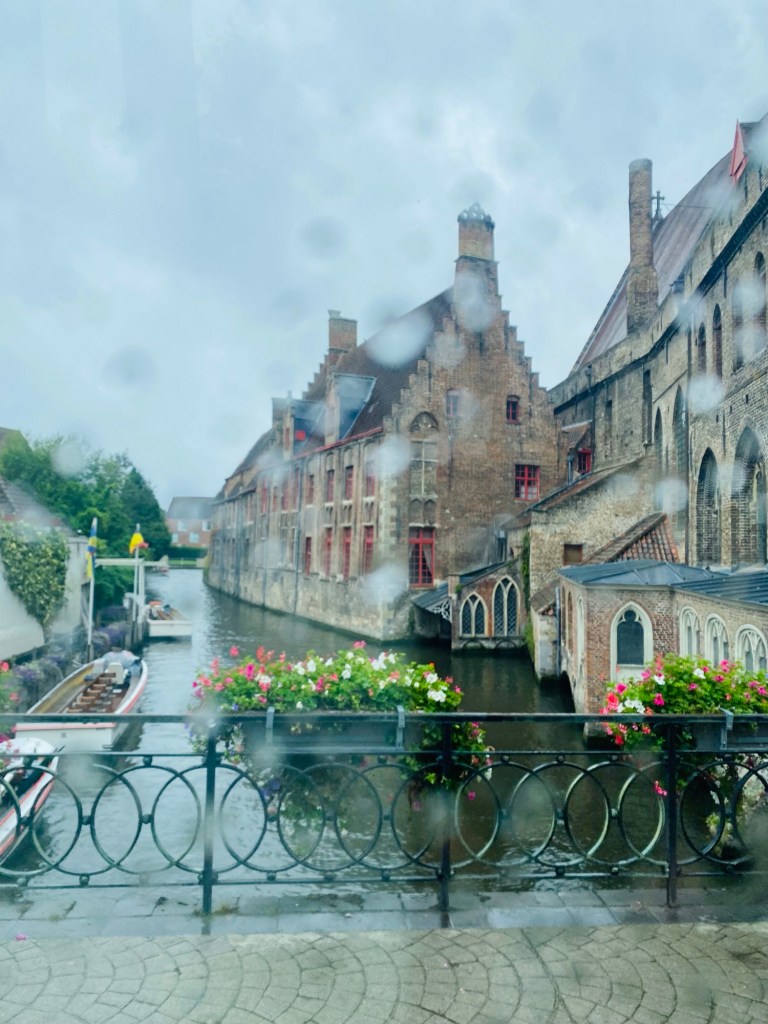
Map in hand I went about exploring this town of castles, bridges, myths & legends. A faint drizzle adding to picture perfect moments making everything appear surreal – ethereal. Tourist hordes adding to the fun in a gamely sort of way. A city tour by minibus is available to those who prefer not to walk (€25). It weaves its way through the 13th century Belfry and Janshuis the oldest windmill (1770). Still standing, still grinding flour, it has a museum inside. Past the early 20th century Bonafacious bridge, the bus goes past Minniewater park & a Giant Blue Whale made of trash. Having had a lovely day Bruges left me wondering if I should perhaps have spent a night there at least.
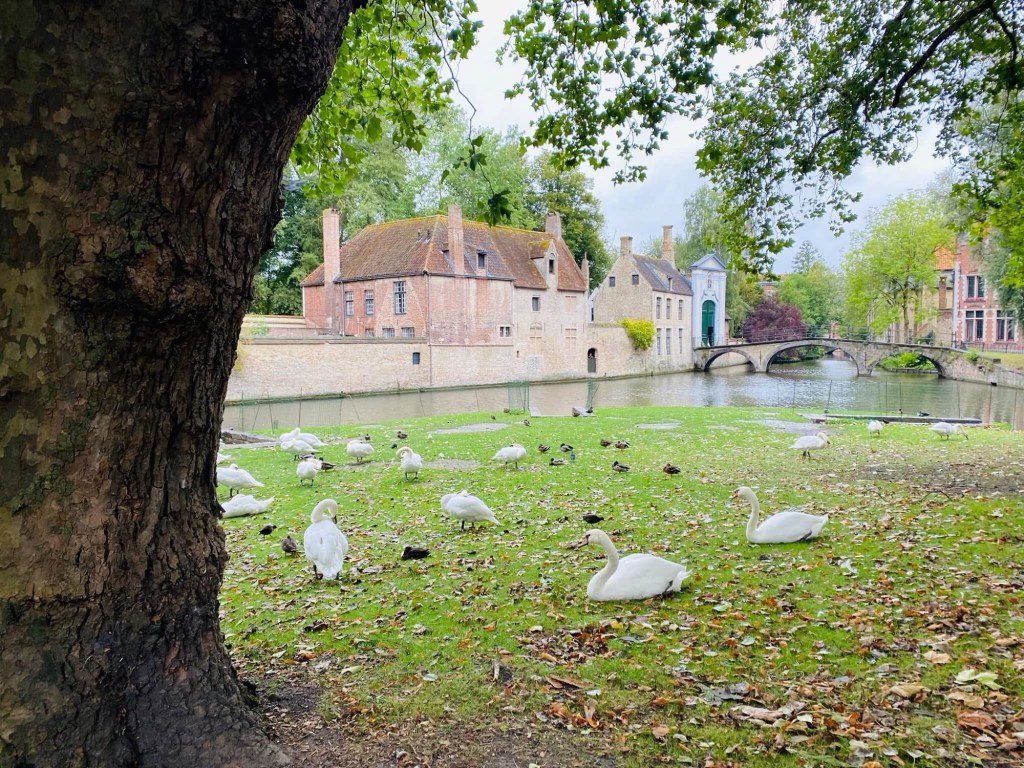
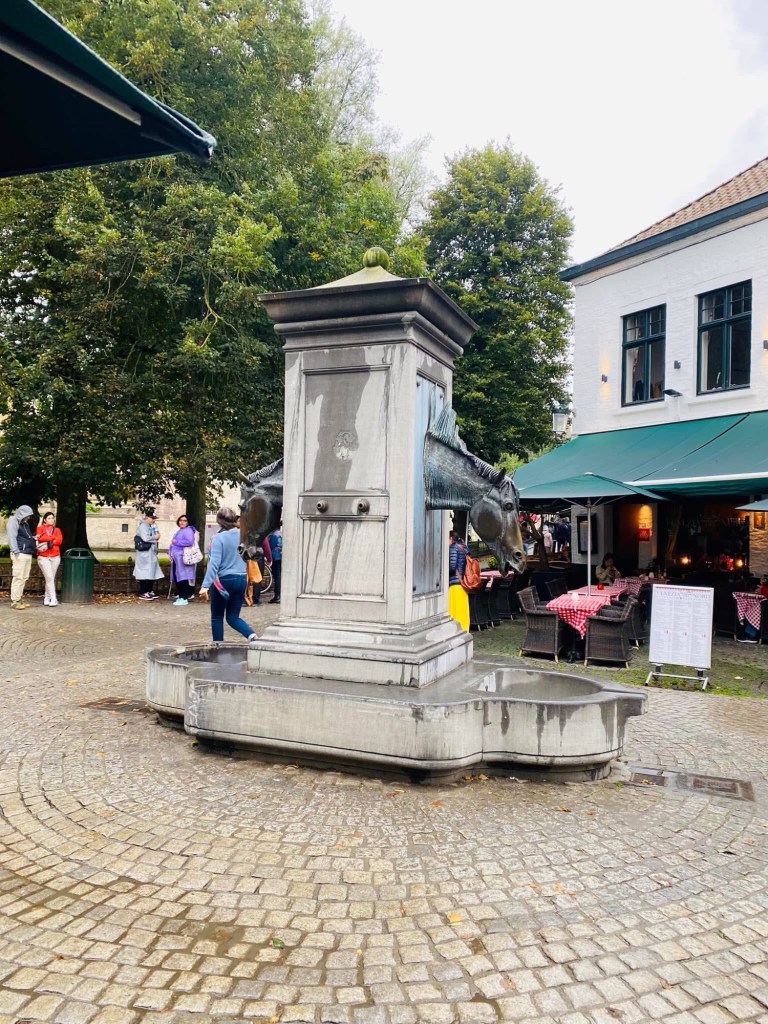
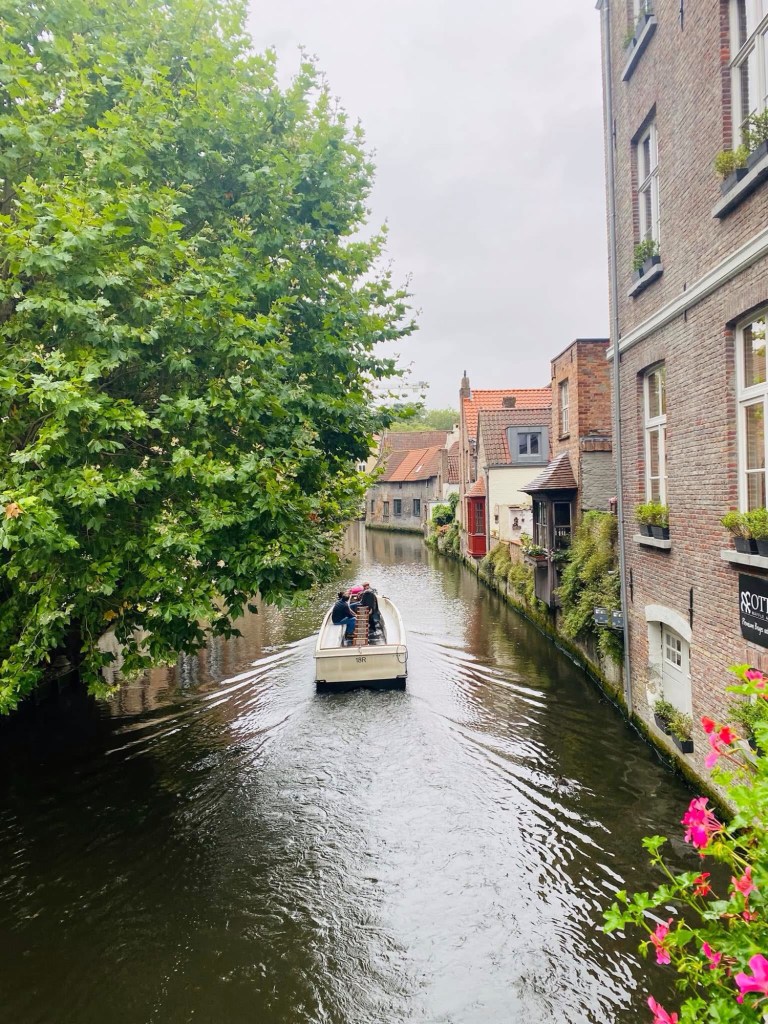
Reading about Kusttram got the adrenaline going. The world’s longest tram – line runs along Belgiums North Sea coast from the Belgium – French border in the west (De Panne) to Belgium – Netherlands border in the east (Knocke). Sixty seven kilometres, 68 stops. I boarded the tram midway at Ostend, for the westward ride to De Panne.
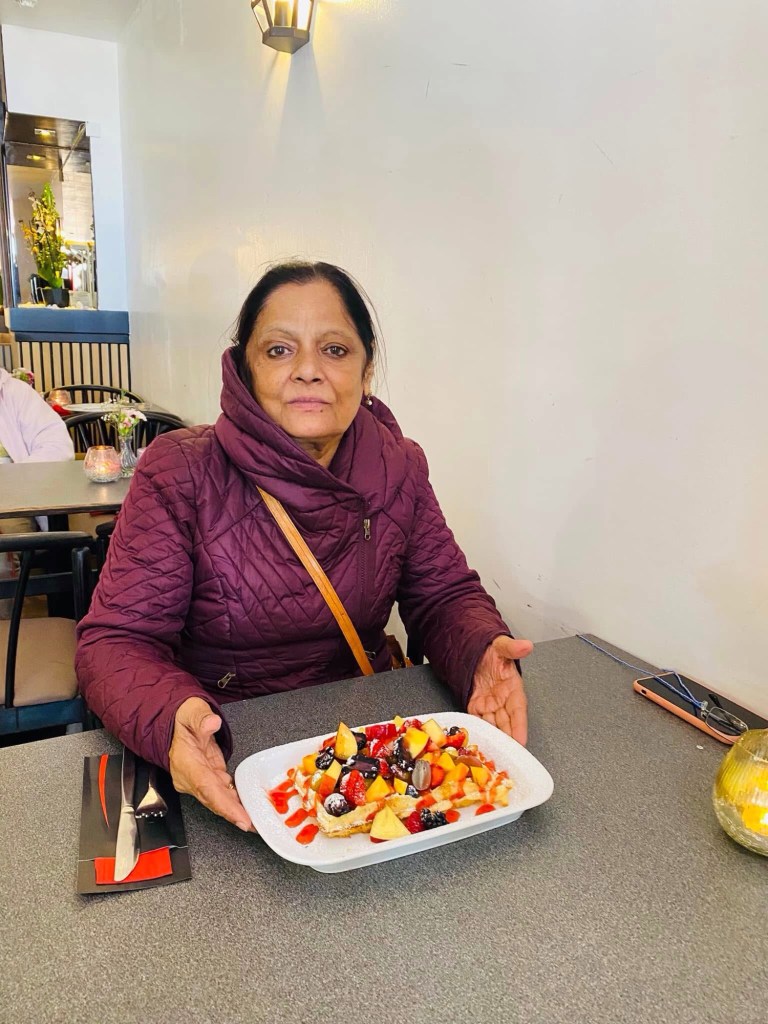
It was built in 1885 (not for tourists) as a facility for people living in the area. With a tram every twenty minutes, get off at any stop you please. For a walk, to shop or eat at the many Fish restaurants on the beach. You may choose to remain seated, lost in thought, gazing out at sea. A respite unknown to most in a fast paced world. Ostend remains a clear & distinct memory, not least for the hot asparagus soup (homemade) – on a cold rainy day – and waffles with fresh fruit topping.
(Fun fact: A vacuum cleaner tram clears the track of sand everyday)


Clearly meant to dissuade, ‘boring,’ was the word most often used to describe Brussels. I went nevertheless. To catch up with a friend and visit Waterloo. Not the namesake train station in London but the real place. Where Napoleon met his waterloo. Notwithstanding a historical past, it’s a small non descript town. Two hundred & twenty five steps lead to Lions’ mound offering a 360 degree view of the battlefield. Telescope, map et al.
Waiting for a return train to Brussels I thought I overheard a smattering of ‘punjabi’. Turning around to check, taken aback by the sight of a big – burly, Sardar. Parminder Singh from Kapurthala. Working at a construction site these past six months he hadn’t come across a single countryman. As delighted to see me as I him. Hail fellow well met!
Not half as notorious as Paris, Rome or Barcelona, Brussels has its share of pickpockets. Can’t say I wasn’t warned though. Ended up succumbing to the same old modus operandi. Young girls pretending to help – young girls out for a kill.
Nathalie showed me around the capital. After lunch at a popular joint we rode the tram into town. The highlight, a visit to ‘The Museum of Art’ – the old Masters, Brueghel & Reuben. Nathalie (Art historian) as companion meant enhanced perspectives & enjoyable experience. We did other stuff – shopping for antiques at the Saturday Flea market & buying clothes by weight (Rue Haute). There was a wedding at the Town Hall. The couple coming out on the balcony to shower flowers & wave to the crowd.
A write up on Brussels would not be complete without mention of the 3 pissing icons. Mannekin Pis, Jeaneke Pis & Het Pis the peeing dog. Mannekin Pis goes back early 1600. The little fella has a thousand outfits but prefers to go naked every third day. Jeaneke Pis does it squatting. She came along sometime in the 1980s – to correct a gender anomaly perhaps. If you’re wondering at the reason behind the trio’s existence ‘tis nothing but pure unadulterated fun.
No visitor ever leaves without buying chocolates. At ‘Neuhaus’. We shopped at ’Wittamer’ – the last hand made chocolatier in Brussels.
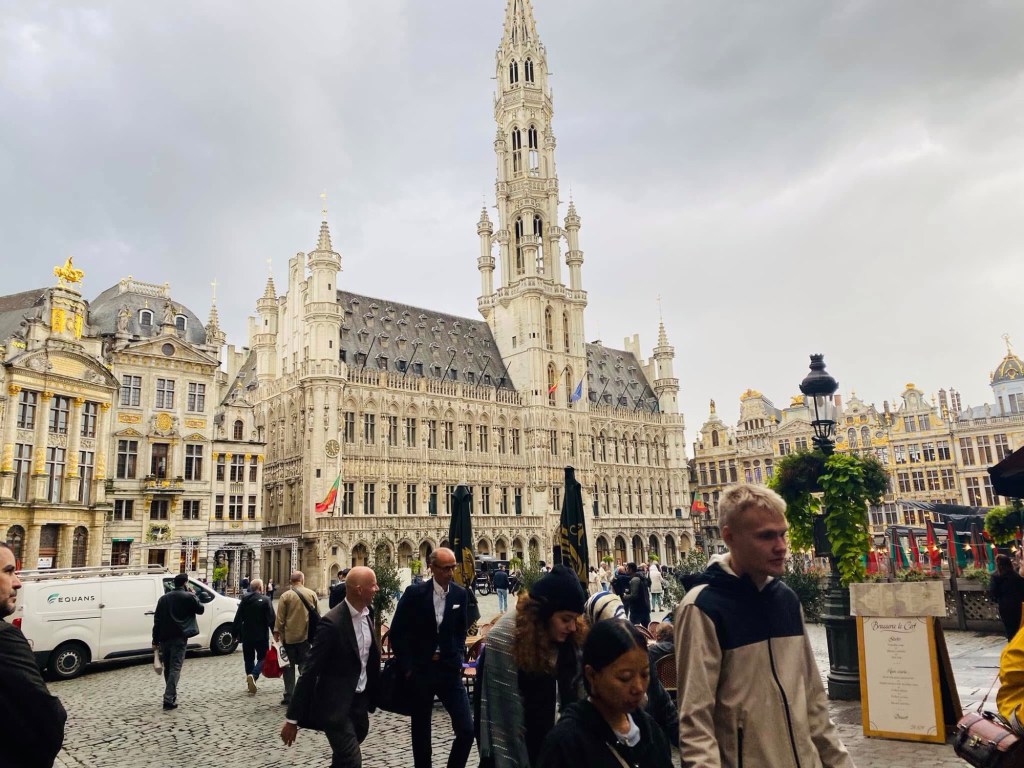

Brussels biggest plus is location. Less than 2 hours from Amsterdam, 3 from Luxembourg & an hour & half from Paris. Eurostar gets you into Cologne (Germany) under an hour, forty five minutes. The famous twin spires hovering into view as the train approaches. An immensely walkable city, everything’s in & around the station. Foot steps in pink guide you to old town – heritage site, Altstadt
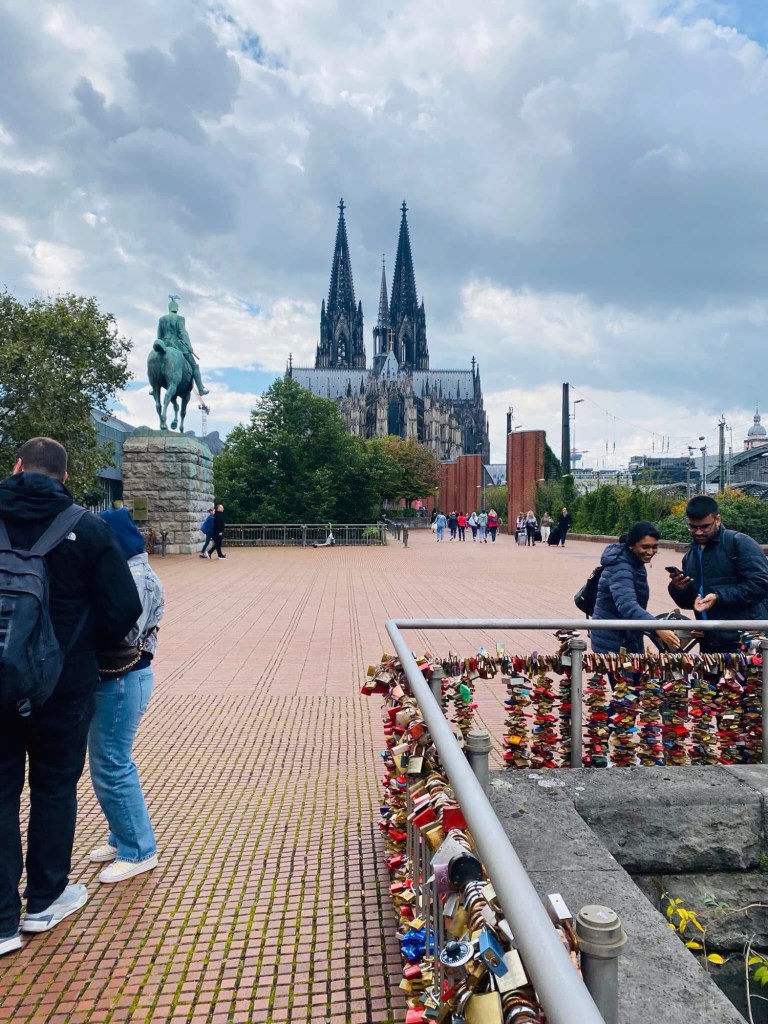
Six hundred years in making (1248), twin spired, the largest Gothic Cathedral in Germany contains the remains of the Magi. A fee of €6 allows entry to the Treasury & to the 533 steps leading up to the top.
Cologne has 12 other famous Romanesque churches but the Cathedral’s the focal.
The trip was planned around it. Shopping an afterthought. Went looking for a German – made nail cutter (the best in the world) in a market flooded wth Chinese. ‘Cologne 4711’ was the other sought after buy. A parfum invented in 1709, exclusive to the city of its origin.
Temperature in the 7 – 8 degree range, the sun was out & smiling. Walking the Rhine waterfront, hanging around Hohenzollern bridge laden with lovelocks. People – watching. Time for a beer – had to be traditional ‘Kolsch’ that outsiders smirk & call ‘piss’. Kolsch & Reibekuchen – crispy potato pancakes/ apple sauce – a great combo. Or German style, beer with mash potatoe – sausage & stewed apple.

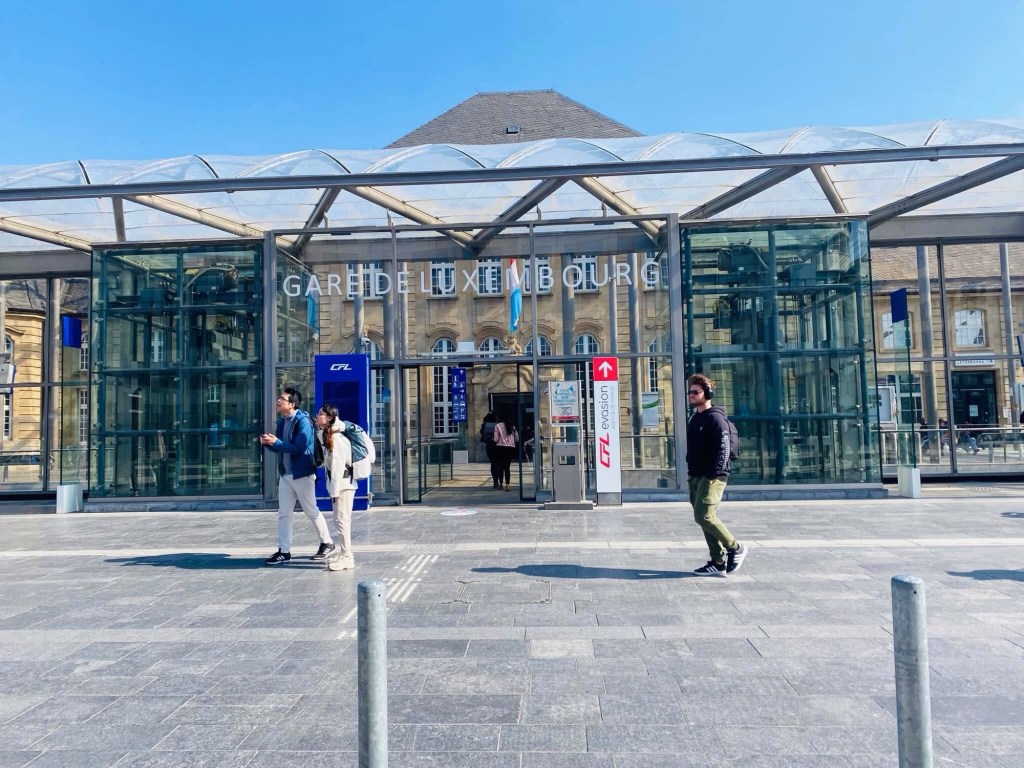
To Luxembourg finally – the only remaining Grand Duchy in the world. A tiny nation surrounded by big neighbours. Inhabited by people of all nationalities/ languages. Not only is it one of the wealthiest countries, it is expensive too.
It’s motto: “we want to be ourselves”.
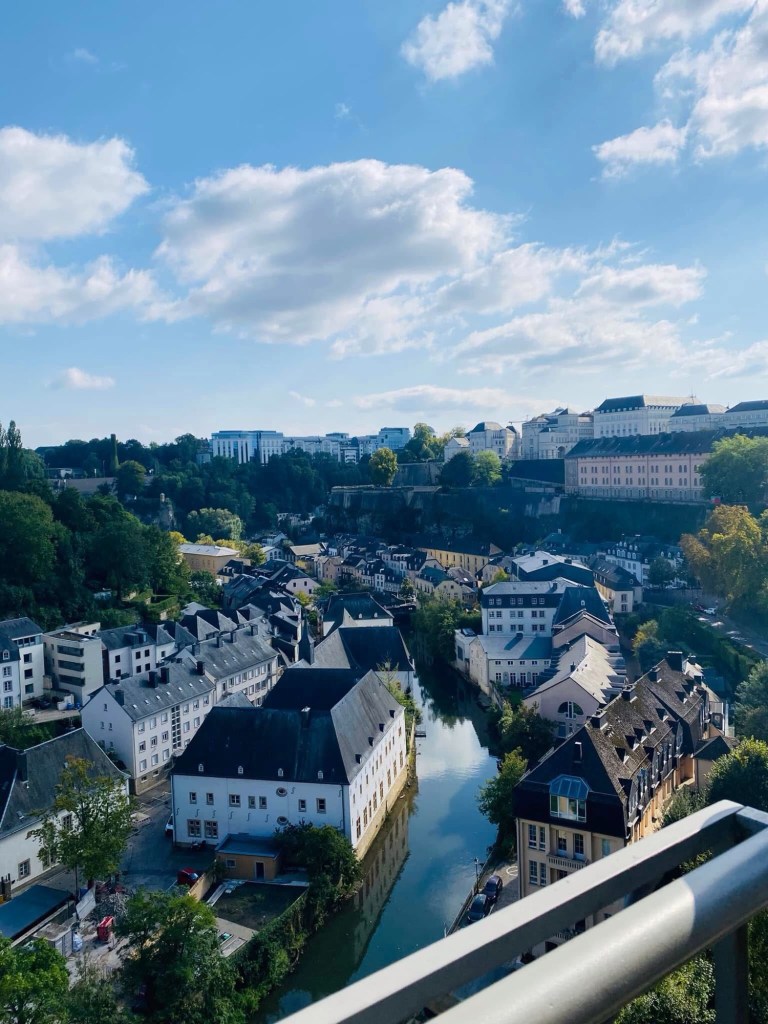
Hilly terrain, undulating countryside, Luxembourg sits across a rocky promontory surrounded by ravines & gorges cut by the Alzette & Petrusse rivers. It is at two levels, upper & lower, a lift connecting the two. Glass bottomed, free, a thrill to ride, the Pfaffenthal elevator offers amazing views.
Upper level Ville Haute (old town) is a 10 minute walk end to end. Perched on cliffs with ramparts, casements, old walls, ruins, fortifications, river gorges & what is popularly known as Europes’ most beautiful balcony – ‘Chemin de la Corniche’
Lower level Barrio Grund, old quarter / heritage (10th century) with black slate roofed homes. It has a village like ambience – canals, cafés & gardens.
Small & compact, Luxembourg has to be walked. A ‘walking tour’ took us along the circular Wendell path linking Haute & Grund. Thirty seven towers, fifteen gates, one thousand years of history in a hundred minutes.
Unable to do Vianden Castle, located in a medieval village on the outskirts I wandered around town square with its high end stores, restaurants & cafés. Notre Dame Cathedral 1613-21, Constitution Square (WW1& 2 Memorials) and the Passerelle Viaduct, an old arched bridge across the two rivers (1859-61)
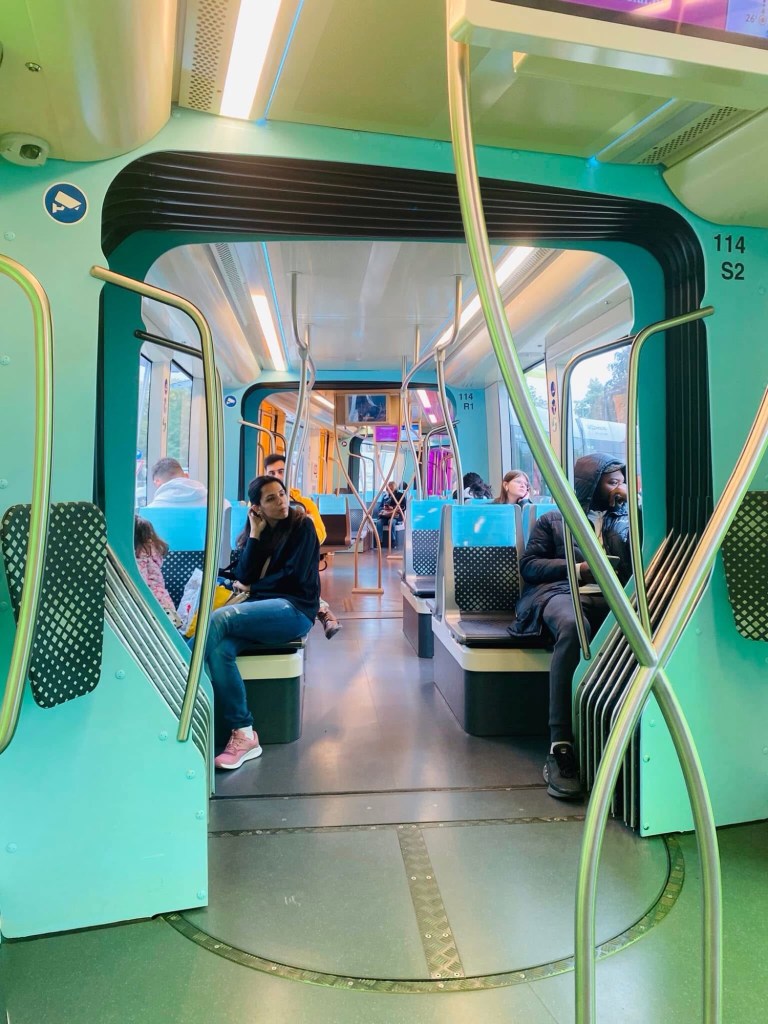
Luxembourg seemed like Utopia or very near it. Green open spaces, fresh clean air. Safe, orderly, next level. Offering a plethora of Freebies. From free public transport to free toilets. Free drinking water to free food inside fridges placed at a few designated spots.


To be in Luxembourg & skip Trier was unthinkable. On the banks of the Mosel, Germany’s oldest city (16 BC), home to Karl Marx & Emperor Constantine. It has 8 world heritage monuments that include Porta Nigar (2nd century city gate), a 4th century Roman Bath, an amphitheatre, ancient ruins, imperial baths & most prestigious of all the Cathedral with Christ’s seamless robe & ‘nail’. Preserved inside a crypt the relics are brought out for public view during the Pilgrimage, 2012 being the last time it was displayed.
It’s a delightful walk through town. From Trier HBF to Ville Haute, the historic city centre. Past medieval streets, archways, half timber homes, ancient ruins & Hauptmarkt Flea market. Trier is colourful & vibrant & makes for a fantastic day trip out of Luxembourg.


Europe it must be said has morphed into a homogeneous whole, achieving a degree of standardisation that makes travel simple & easy. Crisscrossing borders the traveler largely knows what to expect. From rules & regulations to budgeting to every little detail. Nitty-gritty like bathroom fittings, plugs, adapters too.
Global migration of the young a heartwarming experience, watch them make lifestyle choices – sans borders. Colour, creed, ethnicity no bar. Belgium a fine example of a brave new world in the making.
 Sudapoedia47's Blog