Unknown's avatar

Chocolate, Waffles & Lace

Europe beckons. Every year. In ‘24 it was The Netherlands, Belgium, Luxembourg & a dash across to Cologne & Trier, (Germany).

The itinerary included Brussels, Bruges, Ypres, Antwerp, Ghent & Ostend.

The moot question – where best to park oneself. Ghent, the obvious answer. Lovely, if not lovelier than Bruges, it is quieter, less touristy & only thirty to sixty minutes from every other place on the list.

Possible though it is to do Antwerp in a few hours, it deserves a night & day at least.

Short on time I broke journey enroute. The station has a luggage deposit facility, €5 a day & Ghent’s just an hour away (€12 by train).

Belgium’s second largest city has medieval streets & stunning Flemish – Renaissance architecture. Central station (early 20th century) & Handelsbeurs – world’s oldest bourse (1531) – fine examples of the same.

An old port town known for diamond cutting, the famous diamond district begins at the station itself. Past Meir street, into the old town & Square.

Visitors to ‘The Cathedral of Our Lady’ get to see 4 in-house Reuben masterpieces. Son of the soil (17th century), Reuben’s house still stands. Had a hard time finding it though.

Roaming around in the drizzle – to Grote Markt, Brabo fountain, the heart of town & beyond. Having heard of Sint Anna tunnel I was more than eager to see it. An underwater tunnel that connects both banks of the Scheldt, a curiosity that does not disappoint. One descends a well maintained wooden elevator – one of the first of its kind – to enter the 572 meter tunnel. Up another at the opposite end to come out on a grassy bank. Stein Castle, one of the oldest preserved building’s right there. The view from this end clear, open, undisturbed. With hardly a soul around, strolling along the embankment on wet, cool green grass pure joy.

Central station Antwerp
Grote Markt
Brabo Fountain
Wooden Elevator. In perfect working condition
Sint Anna tunnel
Antwerp: View from across the Scheldt

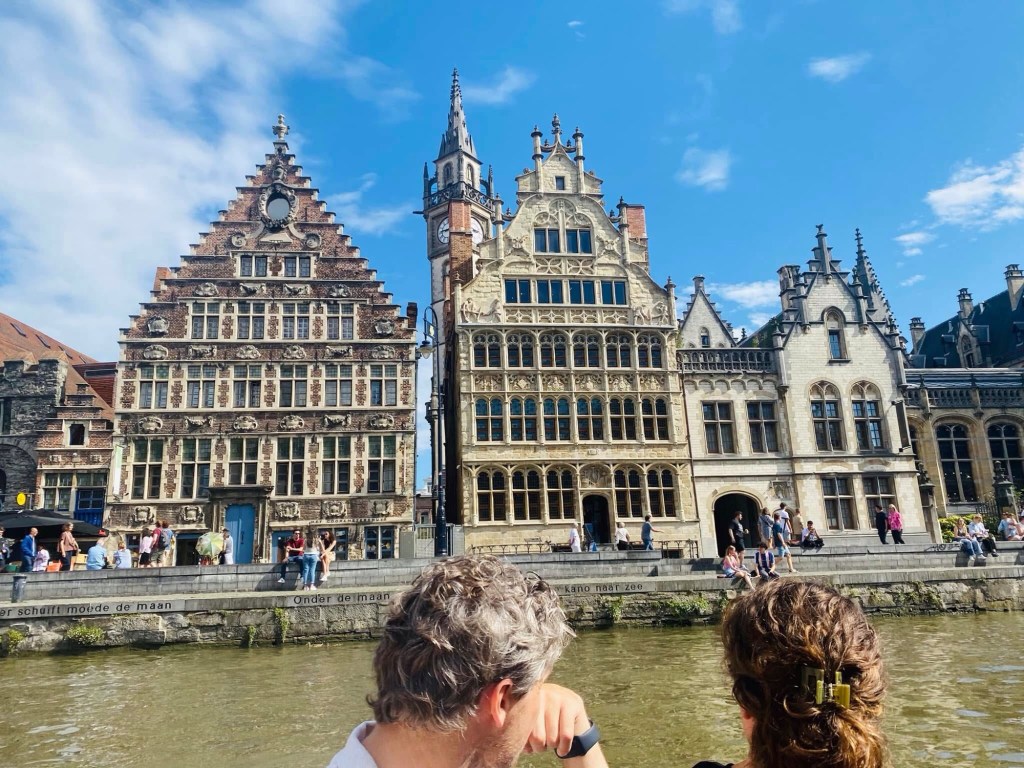
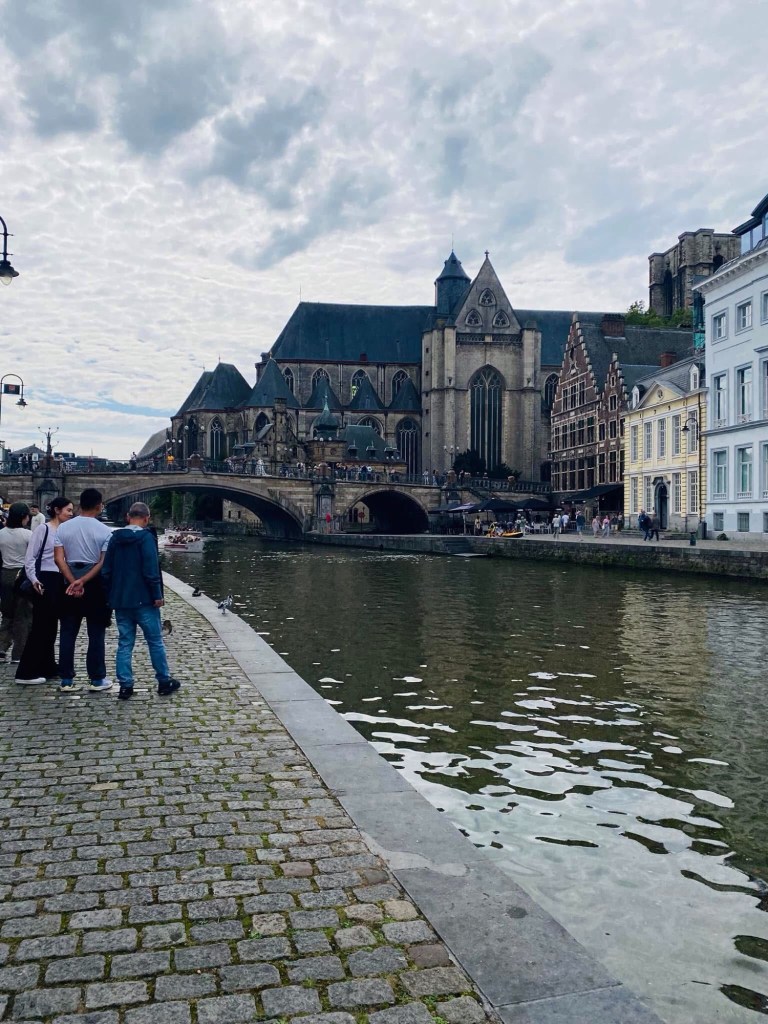
Ghent was everything I expected & more. A university town with medieval architecture much of the activity centre’s around Graslei & Karenlei, quays on either side of the Lys.

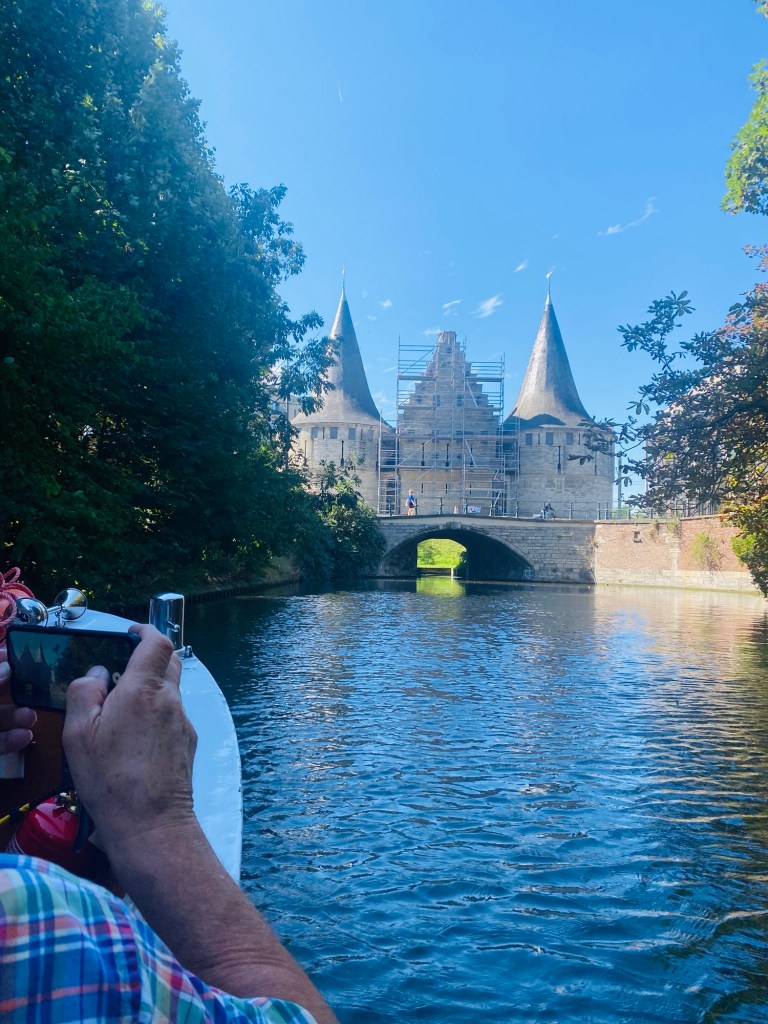
Spent an entire day with Andre, a local friend. Taking a leisurely stroll along the waterfront promenade, a boat tour down the canal, chatting by a riverside café, taking in the scene generally. Ghent has a lively urban art scene – colourful murals, street art & graffiti.

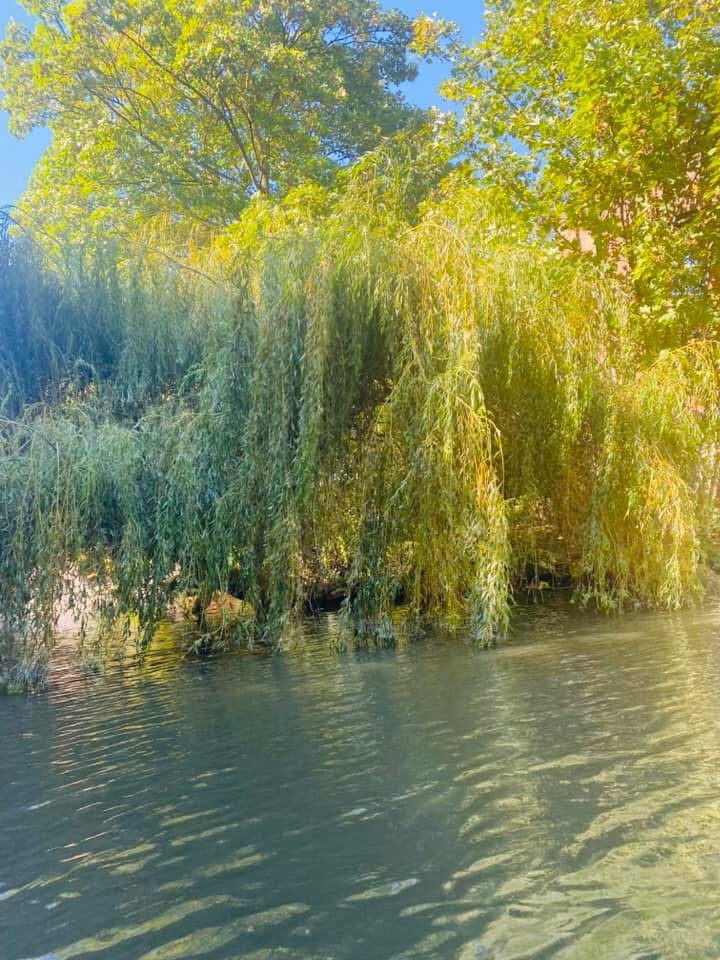
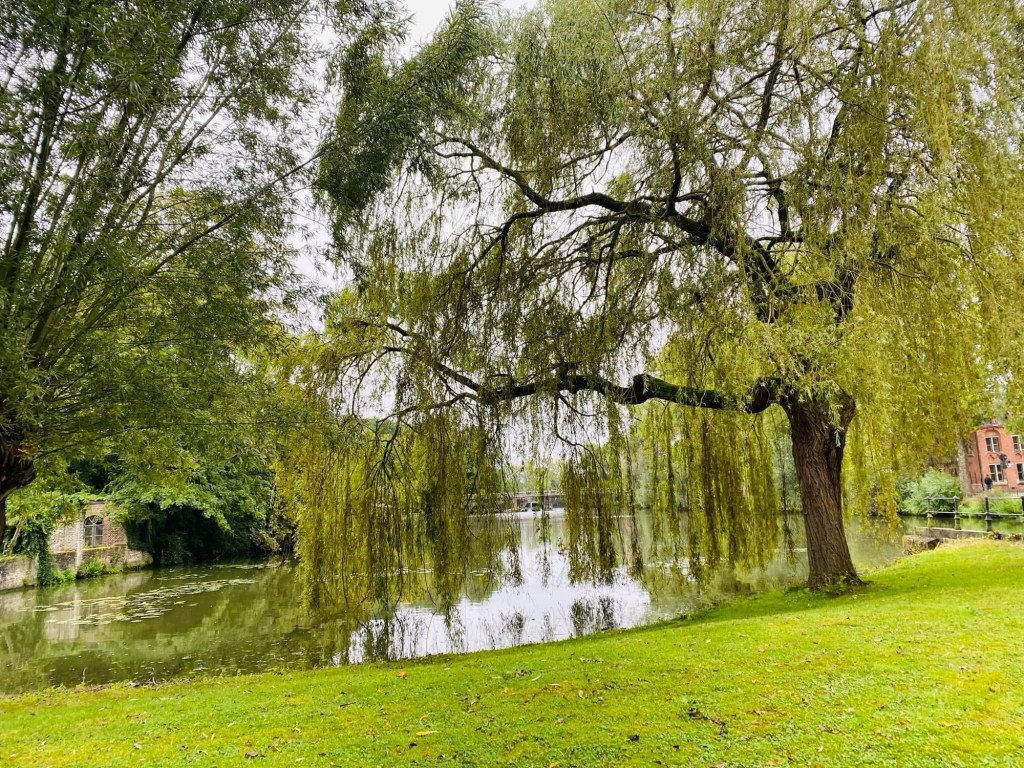
Gravenstein Castle (1180 AD) with its towers, dungeons, moat & high stone walls a major draw, as is the 91 meter tall belfry. Both offering stunning views from atop. Grasbrug, a short spring bridge on the river must not be overlooked. Nor the cluster of Weeping Willow cascading into the waters.

A word about ‘The Astoria’ where I stayed. Simply because it deserves to be said. A small, eco friendly boutique hotel, it appears to have got many things right. Help yourself to fresh home cooked meals remembering only to leave a note of it behind.

On a quiet side street barely 500 meters from Ghent Central, the ‘Astoria’ is a pleasant 30 minute walk to the city centre. Signages in pink mark the way – via an avenue of Plane trees, Citadel garden & Lys embankment.

Completely after my heart, Ghent is where I could have lingered indefinitely.
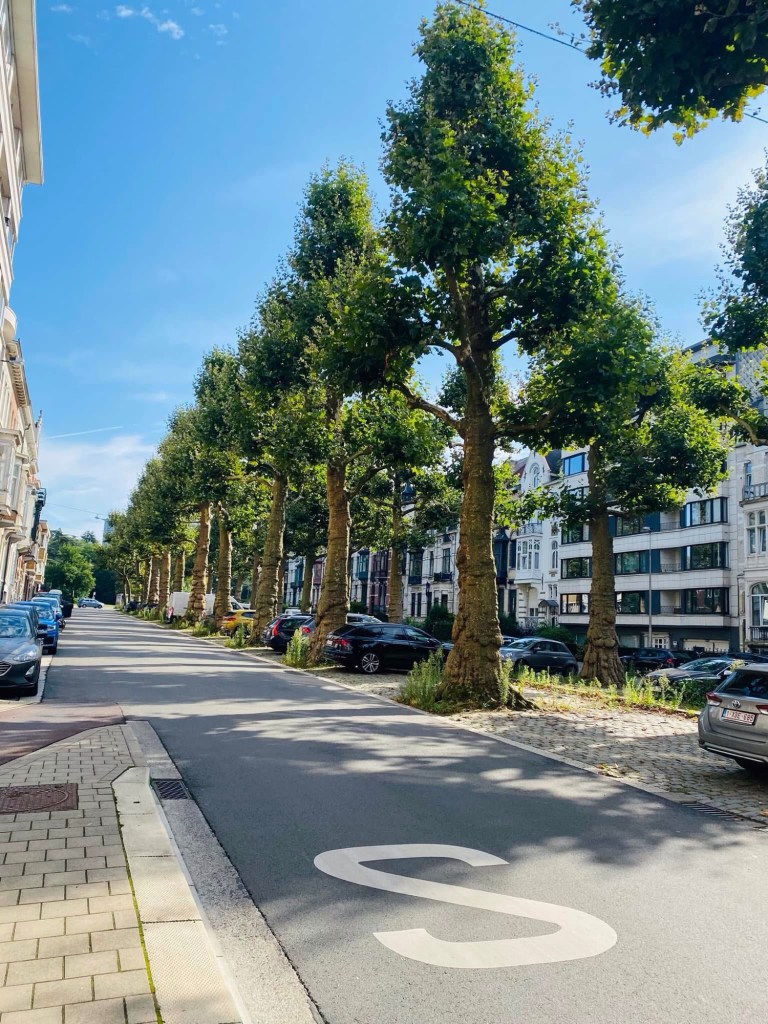
Plane trees
Along the Lys
Mozart on the streets of Ghent

Andre offered to drive me to Ypres. We set off on a clear blue day going past vegetable farms & homesteads. Ripened grain glistening in the Autumn sun. No poppies in Flanders Fields, alas! It was teeming with sunflowers. Stopping by an old Abbey for lunch, then on to Tyne Cot, the largest CWG cemetery.

WW1 for me, holds strange & enduring fascination. The thought of idealistic young men going into “war to end all wars”. Dying disillusioned & young. Several of them poets with a remarkable body of work.

Ypres one realises isn’t merely a war site. Real people live here. It has a Cathedral, Museum & Memorial that is in a way a paean to peace.

Menin Gate’s a memorial to the 54,348 missing. CWG officials in blue coats come by around 7.30 every evening. Traffic in & around coming to a halt, a sudden hush descends upon the gathered crowd. Wreaths placed, the Last Post is sounded – come rain or shine – at 8 pm everyday. A simple, poignant, deeply moving ceremony to honour them who never returned.
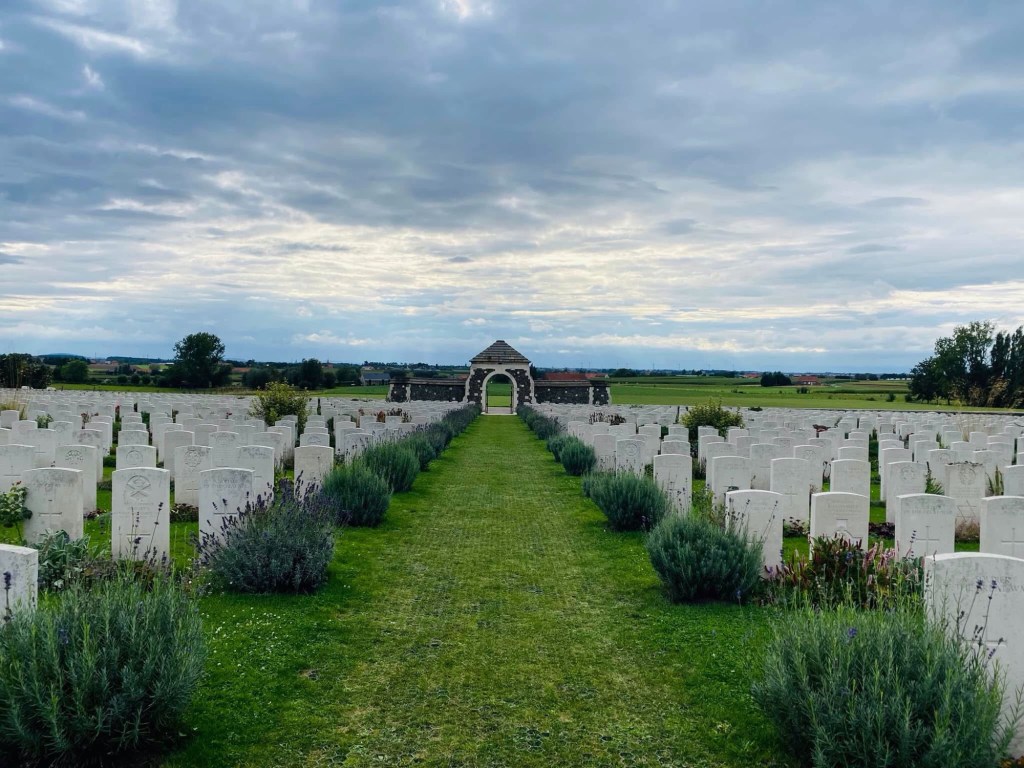
Tyne Cot Cemetery
Where have all the soldiers gone?
Gone to flowers everyone
Menin Gate (under renovation)
India in Flanders

Ypres to Bruges – via Kork – is just about an hour & a half (€8.30, senior citizen ). Luggage safely deposited (€6.70) a 25 minute walk takes you into the heart of town. There’s a free shuttle for elderly locals, not available to tourists I’m told.

A medieval city, Bruges swarms with tourists, night & day. Makes sense to arrive early if on a day trip, remembering also that everything remains closed on Sunday.

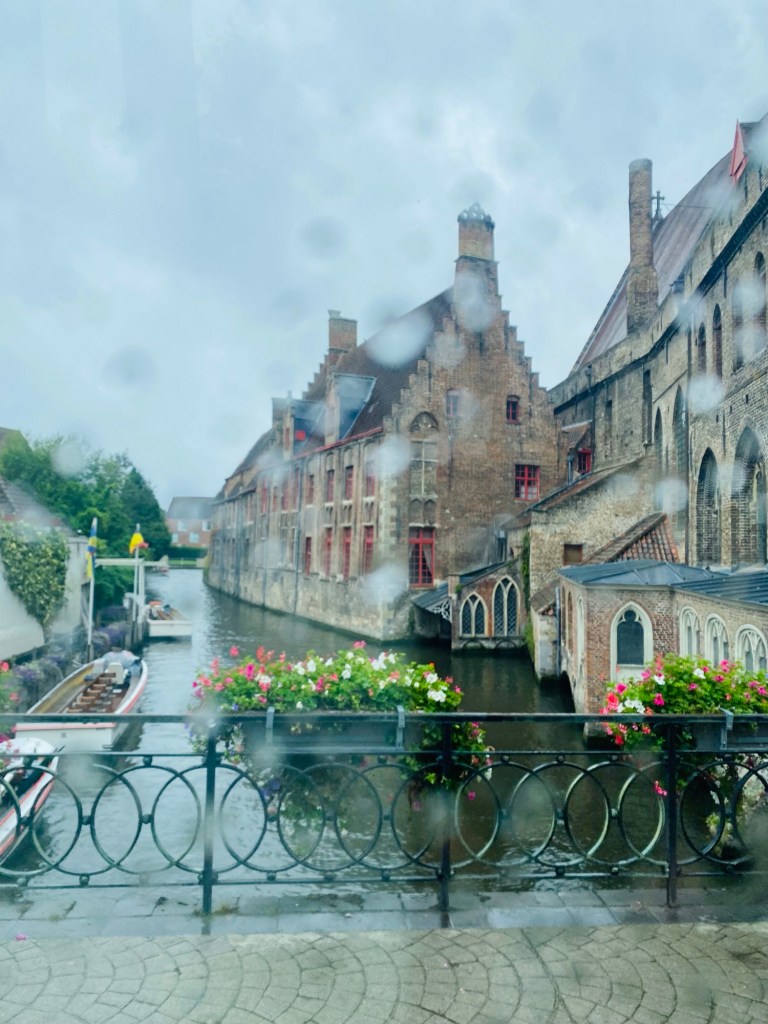
Map in hand I went about exploring this town of castles, bridges, myths & legends. A faint drizzle adding to picture perfect moments making everything appear surreal – ethereal. Tourist hordes adding to the fun in a gamely sort of way. A city tour by minibus is available to those who prefer not to walk (€25). It weaves its way through the 13th century Belfry and Janshuis the oldest windmill (1770). Still standing, still grinding flour, it has a museum inside. Past the early 20th century Bonafacious bridge, the bus goes past Minniewater park & a Giant Blue Whale made of trash. Having had a lovely day Bruges left me wondering if I should perhaps have spent a night there at least.
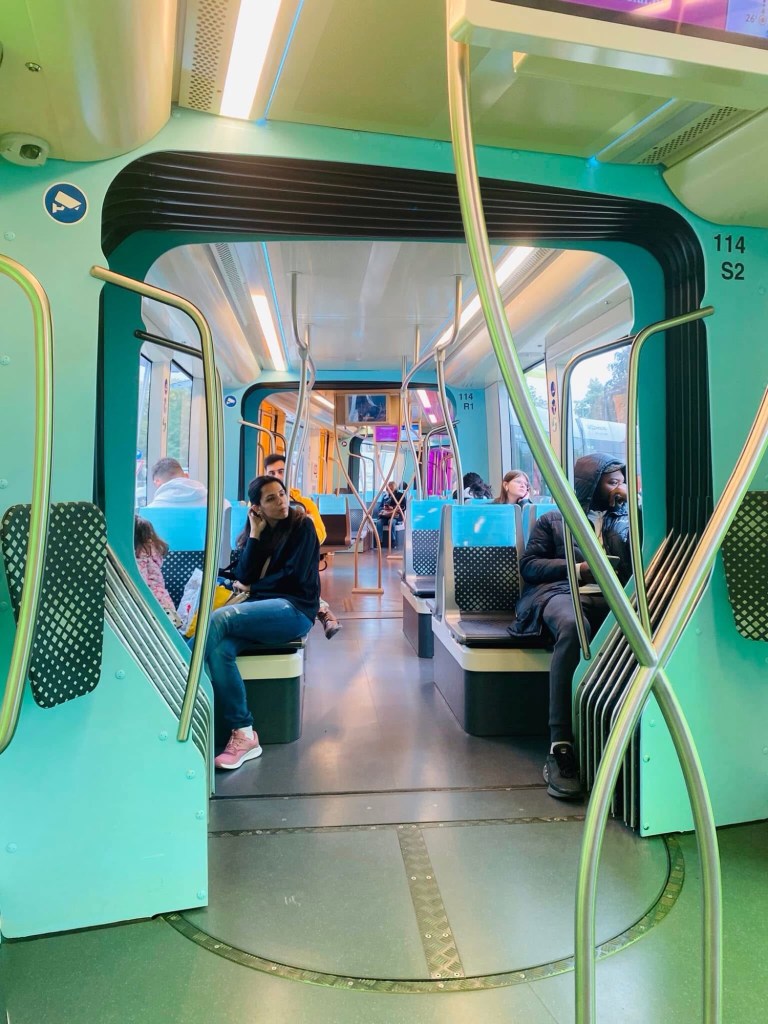
Reading about Kusttram got the adrenaline going. The world’s longest tram – line runs along Belgiums North Sea coast from the Belgium – French border in the west (De Panne) to Belgium – Netherlands border in the east (Knocke). Sixty seven kilometres, 68 stops. I boarded the tram midway at Ostend, for the westward ride to De Panne.

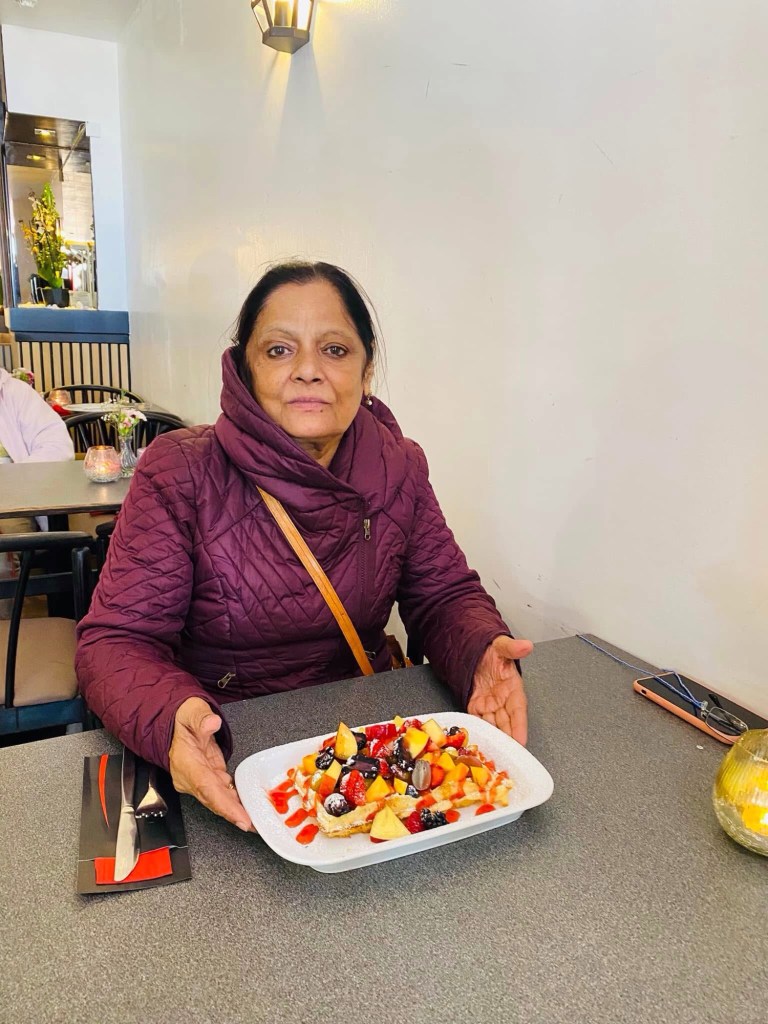
It was built in 1885 (not for tourists) as a facility for people living in the area. With a tram every twenty minutes, get off at any stop you please. For a walk, to shop or eat at the many Fish restaurants on the beach. You may choose to remain seated, lost in thought, gazing out at sea. A respite unknown to most in a fast paced world. Ostend remains a clear & distinct memory, not least for the hot asparagus soup (homemade) – on a cold rainy day – and waffles with fresh fruit topping.

(Fun fact: A vacuum cleaner tram clears the track of sand everyday)

Sand, sea and sky

Clearly meant to dissuade, ‘boring,’ was the word most often used to describe Brussels. I went nevertheless. To catch up with a friend and visit Waterloo. Not the namesake train station in London but the real place. Where Napoleon met his waterloo. Notwithstanding a historical past, it’s a small non descript town. Two hundred & twenty five steps lead to Lions’ mound offering a 360 degree view of the battlefield. Telescope, map et al.

Waiting for a return train to Brussels I thought I overheard a smattering of ‘punjabi’. Turning around to check, taken aback by the sight of a big – burly, Sardar. Parminder Singh from Kapurthala. Working at a construction site these past six months he hadn’t come across a single countryman. As delighted to see me as I him. Hail fellow well met!

Not half as notorious as Paris, Rome or Barcelona, Brussels has its share of pickpockets. Can’t say I wasn’t warned though. Ended up succumbing to the same old modus operandi. Young girls pretending to help – young girls out for a kill.

Nathalie showed me around the capital. After lunch at a popular joint we rode the tram into town. The highlight, a visit to ‘The Museum of Art’ – the old Masters, Brueghel & Reuben. Nathalie (Art historian) as companion meant enhanced perspectives & enjoyable experience. We did other stuff – shopping for antiques at the Saturday Flea market & buying clothes by weight (Rue Haute). There was a wedding at the Town Hall. The couple coming out on the balcony to shower flowers & wave to the crowd.

A write up on Brussels would not be complete without mention of the 3 pissing icons. Mannekin Pis, Jeaneke Pis & Het Pis the peeing dog. Mannekin Pis goes back early 1600. The little fella has a thousand outfits but prefers to go naked every third day. Jeaneke Pis does it squatting. She came along sometime in the 1980s – to correct a gender anomaly perhaps. If you’re wondering at the reason behind the trio’s existence ‘tis nothing but pure unadulterated fun.

No visitor ever leaves without buying chocolates. At ‘Neuhaus’. We shopped at ’Wittamer’ – the last hand made chocolatier in Brussels.
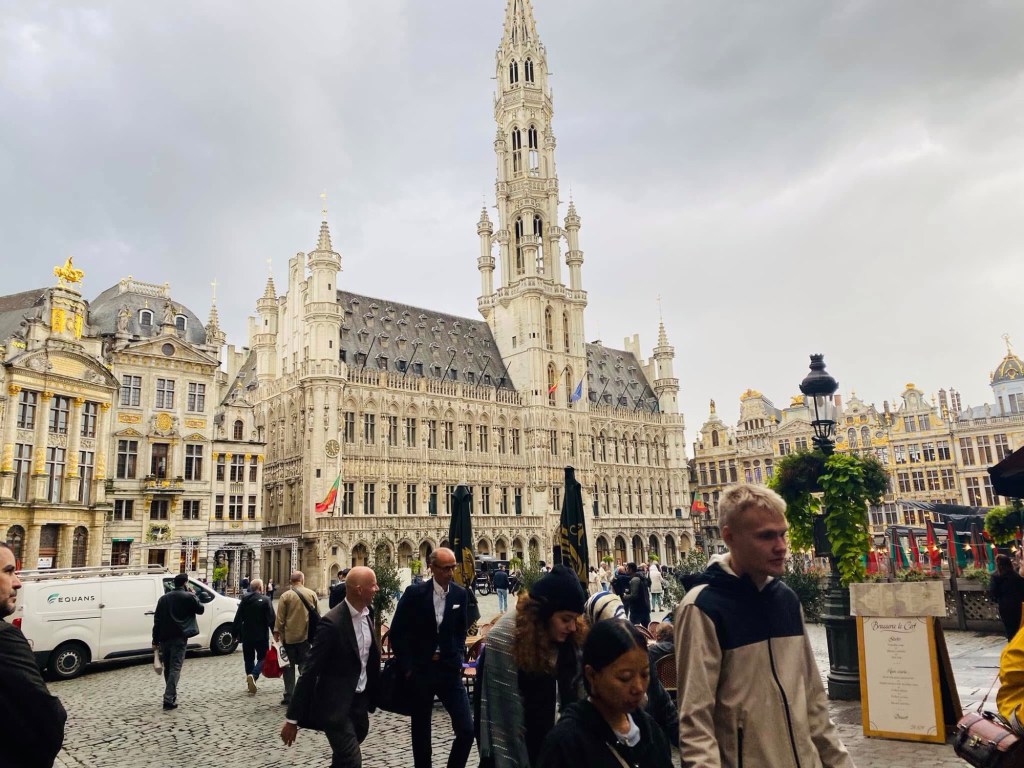
Busking in Brussels

Brussels biggest plus is location. Less than 2 hours from Amsterdam, 3 from Luxembourg & an hour & half from Paris. Eurostar gets you into Cologne (Germany) under an hour, forty five minutes. The famous twin spires hovering into view as the train approaches. An immensely walkable city, everything’s in & around the station. Foot steps in pink guide you to old town – heritage site, Altstadt

Six hundred years in making (1248), twin spired, the largest Gothic Cathedral in Germany contains the remains of the Magi. A fee of €6 allows entry to the Treasury & to the 533 steps leading up to the top.

Cologne has 12 other famous Romanesque churches but the Cathedral’s the focal.

The trip was planned around it. Shopping an afterthought. Went looking for a German – made nail cutter (the best in the world) in a market flooded wth Chinese. ‘Cologne 4711’ was the other sought after buy. A parfum invented in 1709, exclusive to the city of its origin.

Temperature in the 7 – 8 degree range, the sun was out & smiling. Walking the Rhine waterfront, hanging around Hohenzollern bridge laden with lovelocks. People – watching. Time for a beer – had to be traditional ‘Kolsch’ that outsiders smirk & call ‘piss’. Kolsch & Reibekuchen – crispy potato pancakes/ apple sauce – a great combo. Or German style, beer with mash potatoe – sausage & stewed apple.

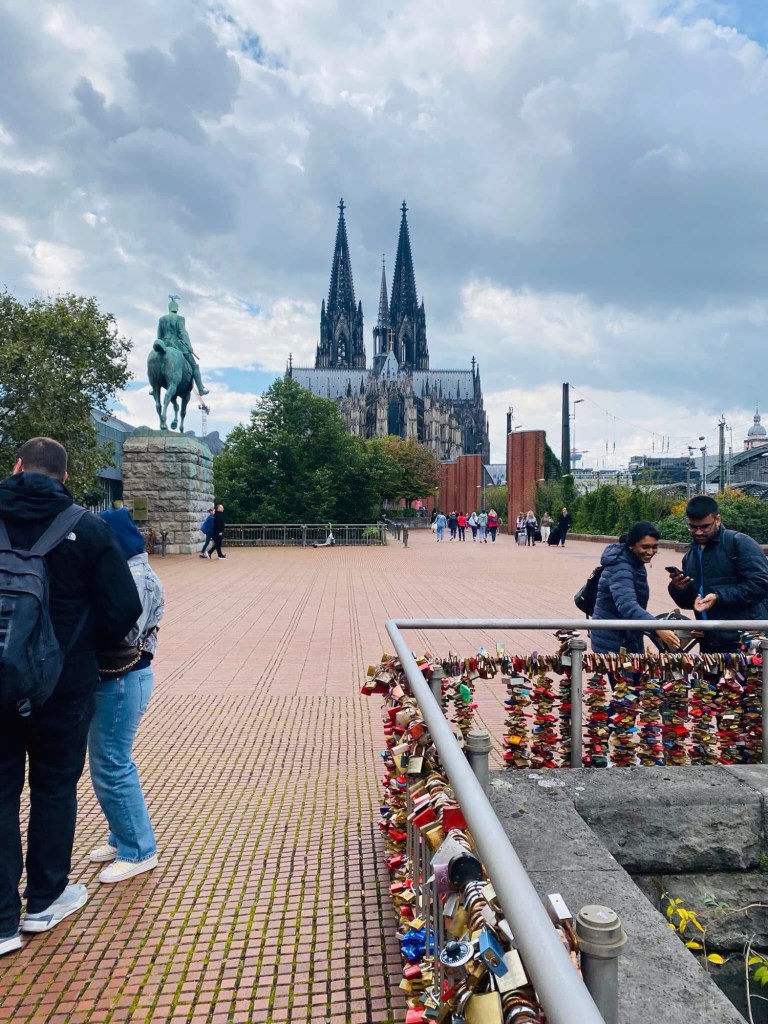
3 in 1: Cathedral, Rhine Waterfront, Hohenzollern Bridge

To Luxembourg finally – the only remaining Grand Duchy in the world. A tiny nation surrounded by big neighbours. Inhabited by people of all nationalities/ languages. Not only is it one of the wealthiest countries, it is expensive too.

It’s motto: “we want to be ourselves”.

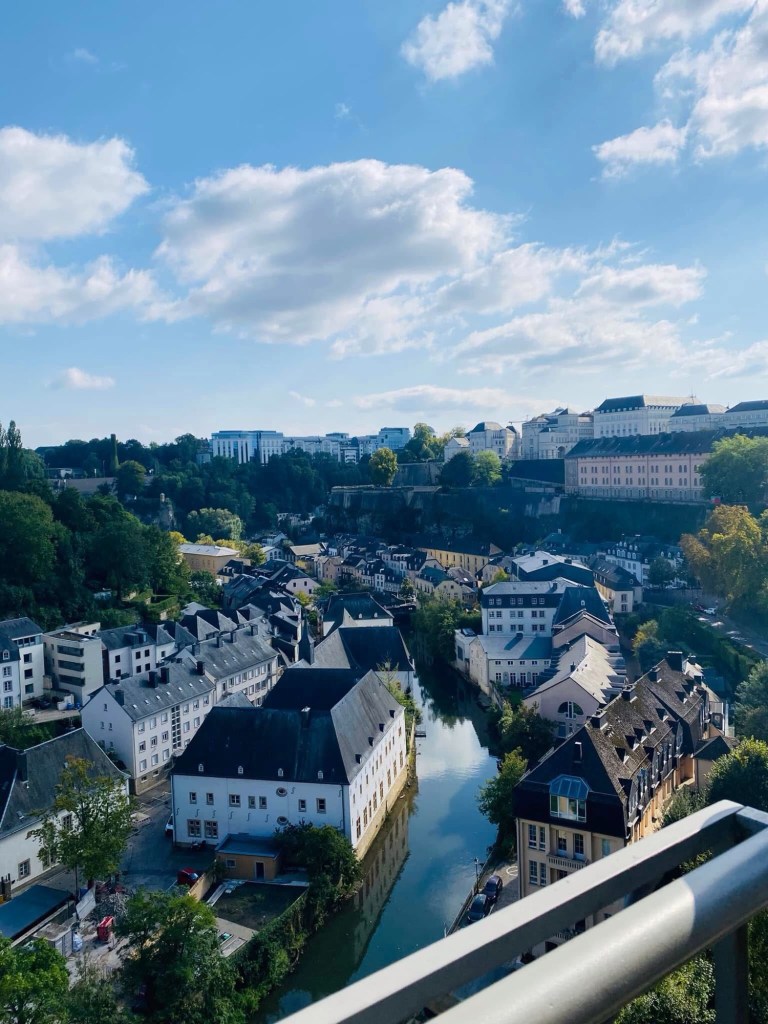
Hilly terrain, undulating countryside, Luxembourg sits across a rocky promontory surrounded by ravines & gorges cut by the Alzette & Petrusse rivers. It is at two levels, upper & lower, a lift connecting the two. Glass bottomed, free, a thrill to ride, the Pfaffenthal elevator offers amazing views.

Upper level Ville Haute (old town) is a 10 minute walk end to end. Perched on cliffs with ramparts, casements, old walls, ruins, fortifications, river gorges & what is popularly known as Europes’ most beautiful balcony – ‘Chemin de la Corniche’

Lower level Barrio Grund, old quarter / heritage (10th century) with black slate roofed homes. It has a village like ambience – canals, cafés & gardens.

Small & compact, Luxembourg has to be walked. A ‘walking tour’ took us along the circular Wendell path linking Haute & Grund. Thirty seven towers, fifteen gates, one thousand years of history in a hundred minutes.

Unable to do Vianden Castle, located in a medieval village on the outskirts I wandered around town square with its high end stores, restaurants & cafés. Notre Dame Cathedral 1613-21, Constitution Square (WW1& 2 Memorials) and the Passerelle Viaduct, an old arched bridge across the two rivers (1859-61)

Luxembourg seemed like Utopia or very near it. Green open spaces, fresh clean air. Safe, orderly, next level. Offering a plethora of Freebies. From free public transport to free toilets. Free drinking water to free food inside fridges placed at a few designated spots.
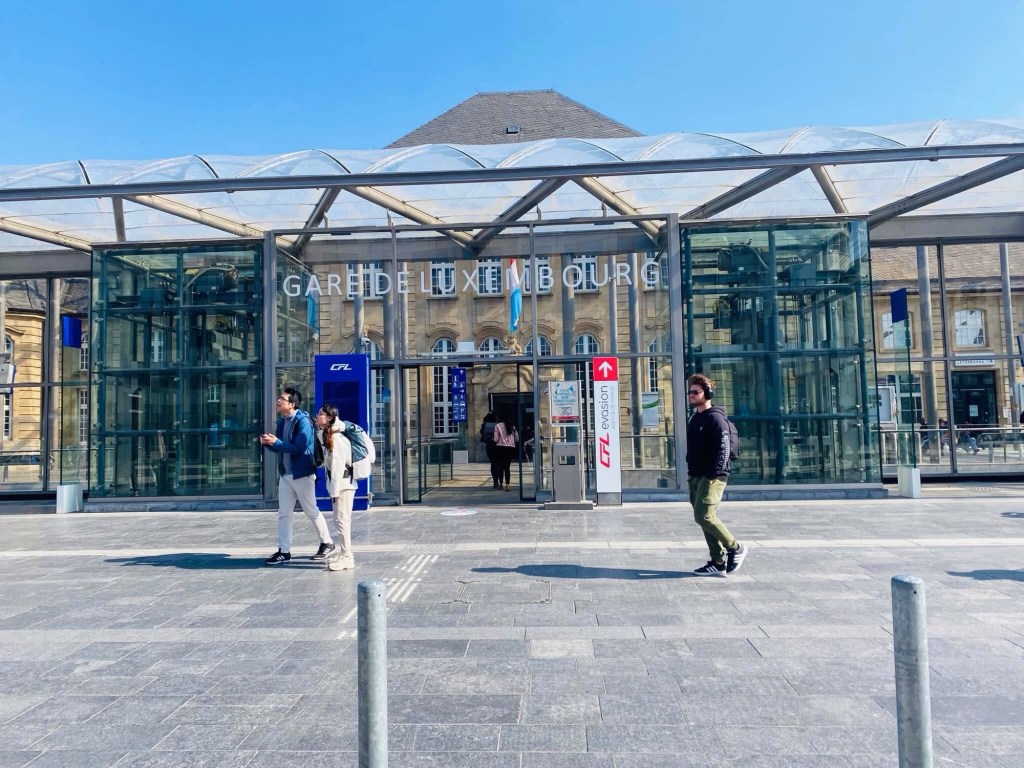
Passerelle Viaduct
Free public transport

To be in Luxembourg & skip Trier was unthinkable. On the banks of the Mosel, Germany’s oldest city (16 BC), home to Karl Marx & Emperor Constantine. It has 8 world heritage monuments that include Porta Nigar (2nd century city gate), a 4th century Roman Bath, an amphitheatre, ancient ruins, imperial baths & most prestigious of all the Cathedral with Christ’s seamless robe & ‘nail’. Preserved inside a crypt the relics are brought out for public view during the Pilgrimage, 2012 being the last time it was displayed.

It’s a delightful walk through town. From Trier HBF to Ville Haute, the historic city centre. Past medieval streets, archways, half timber homes, ancient ruins & Hauptmarkt Flea market. Trier is colourful & vibrant & makes for a fantastic day trip out of Luxembourg.

Beethoven in Trier
Hauptmarkt/ Flea Market
Porta Nigar
The Crypt

Europe it must be said has morphed into a homogeneous whole, achieving a degree of standardisation that makes travel simple & easy. Crisscrossing borders the traveler largely knows what to expect. From rules & regulations to budgeting to every little detail. Nitty-gritty like bathroom fittings, plugs, adapters too.

Global migration of the young a heartwarming experience, watch them make lifestyle choices – sans borders. Colour, creed, ethnicity no bar. Belgium a fine example of a brave new world in the making.

Unknown's avatar

Going Dutch

Rotterdam Central

Neither Venice of the north nor Petersburg’s poor cousin, Amsterdam exists in its own right. For a traveler to restrict himself to this city alone would however be a mistake. For Netherland is much more.

Four to five days being enough I moved south making Rotterdam the base to further explore the country. Also because it was economical.

Barely 40 minutes from Amsterdam, Rotterdam’s a 15 – 30 minute ride into the little towns in its vicinity: Utrecht, Gouda, Delft, The Hague. And just an hour away from Brussels.

A vibrant university town that has striking architecture, the aesthetics of the place will bowl you. Completely destroyed during WW2 it has risen phoenix like from its ashes. Beautiful, modern, avant garde. Great art, architecture, infrastructure – the hallmarks of a great city – along with international cuisine & large, green, open spaces to roam & chill. Rotterdam came as such a surprise that planned trips to Haarlem, Zaanse Schans – Zaandam were left on the back burner. For another day & time, luck permitting.

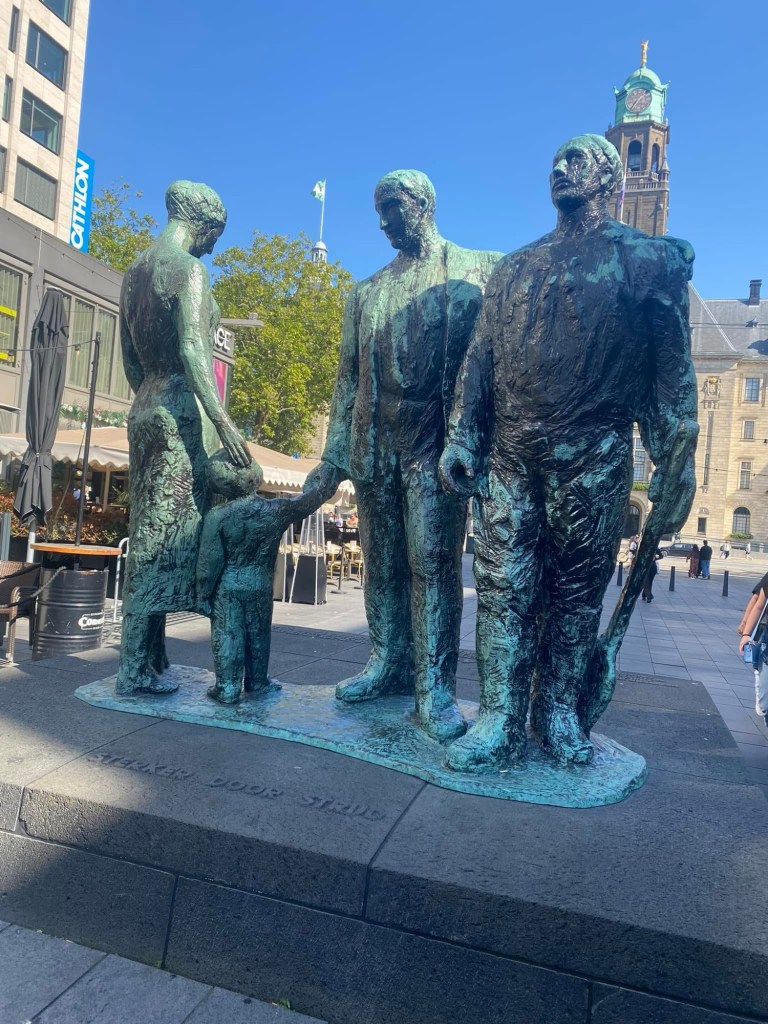
Here’s a tribute to it’s spirit.

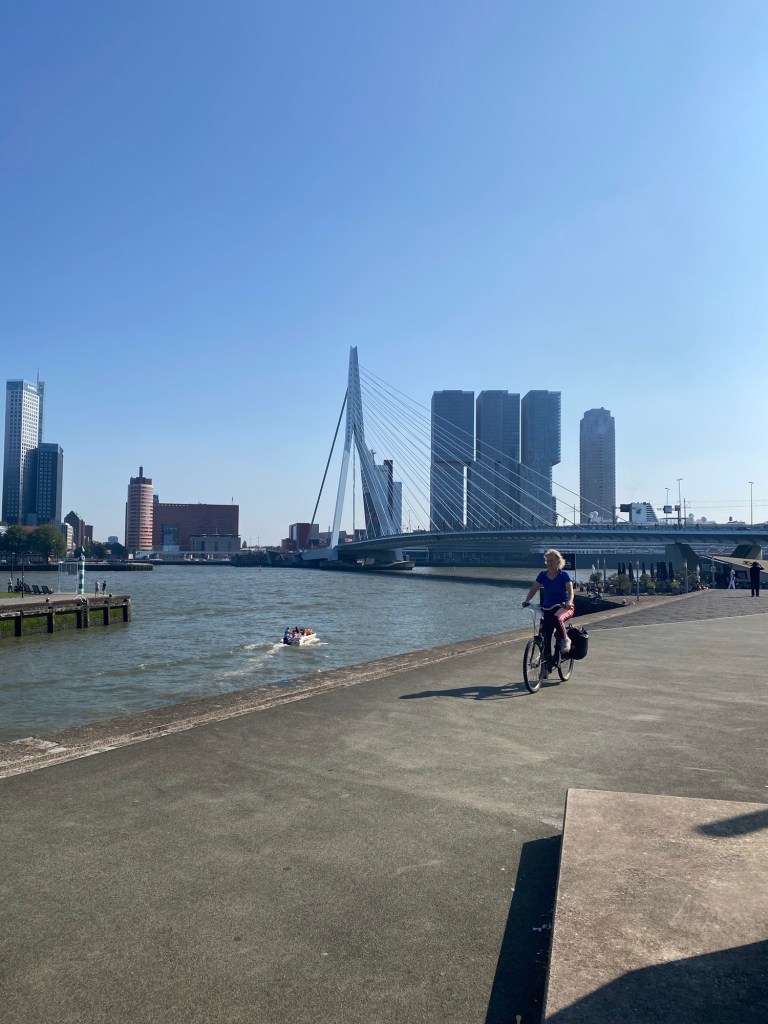
Swan like across the Maas, the iconic Erasmus bridge.
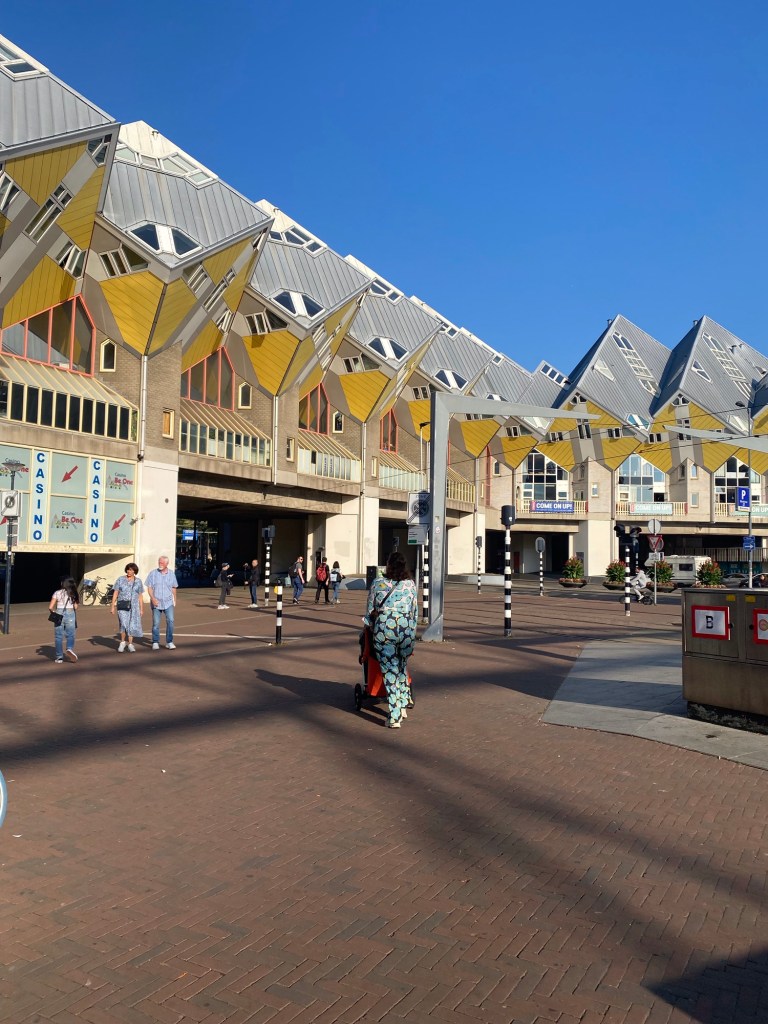
Architect Piet Blom’s cube houses. Every cube an apartment
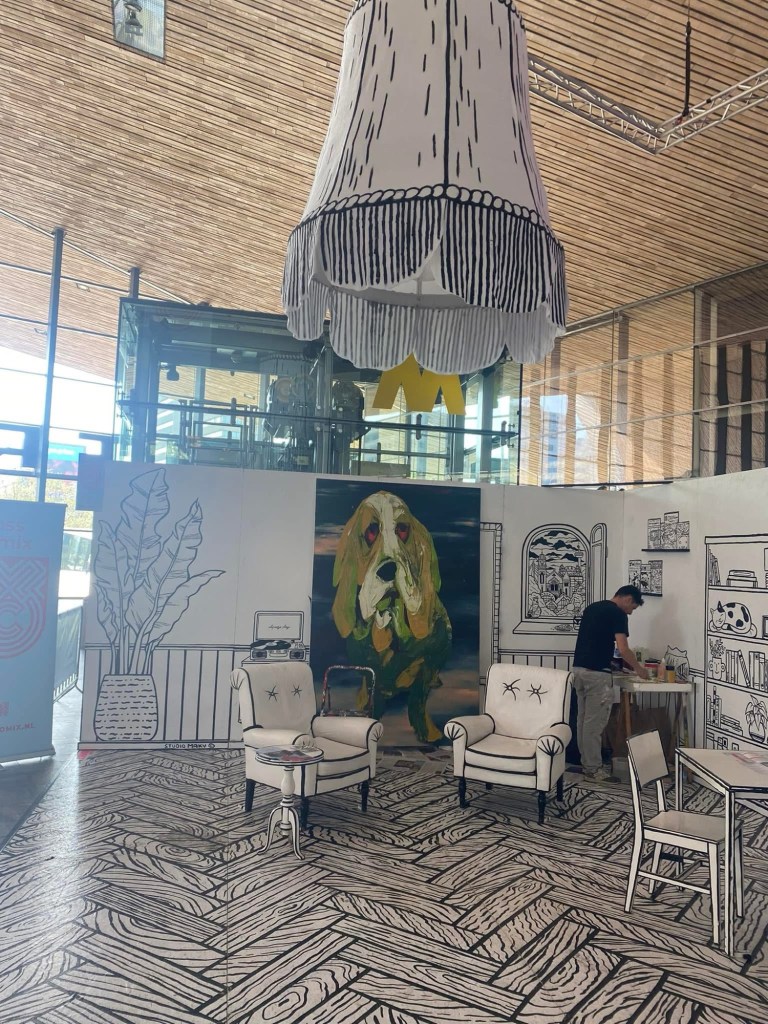
Art for art’s sake
Artist’s corner
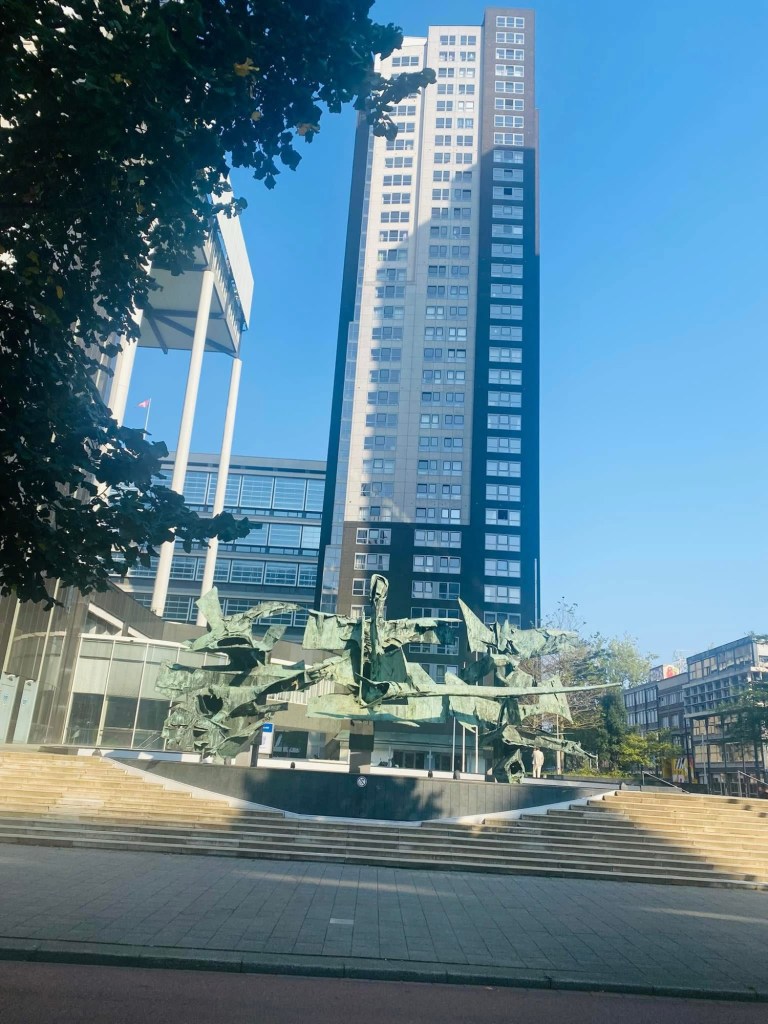
Past Present Future. The sculpture says it all: the future can only be built on a remembered past

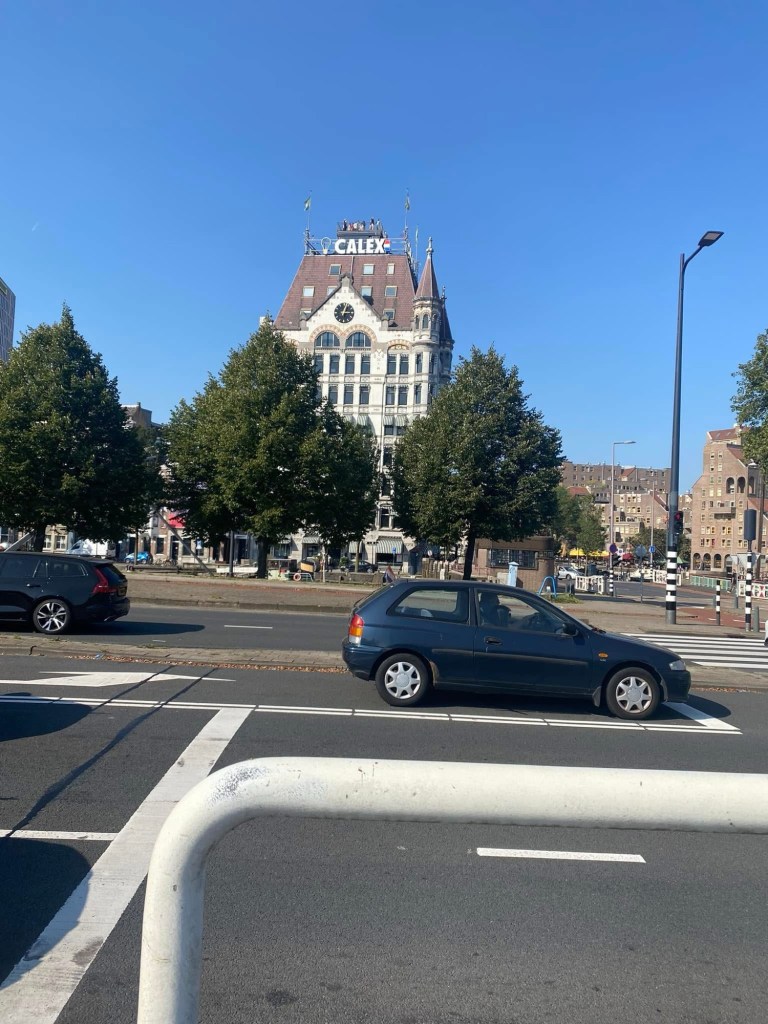
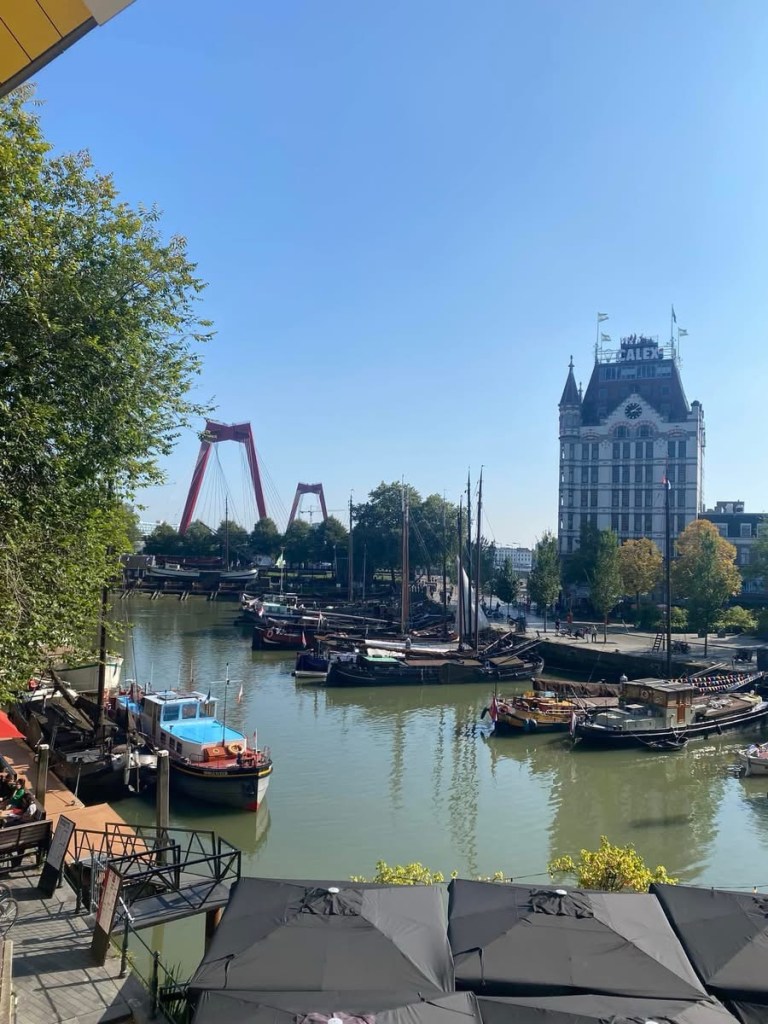
Witte Huis. Historical landmark (1890’s). One of Europe’s first tall buildings that survived the war.

Oude Haven. Old harbour Rotterdam

Easily reachable via a vast & efficient rail network little towns dotting the Dutch countryside spell magic, quiet & charm.

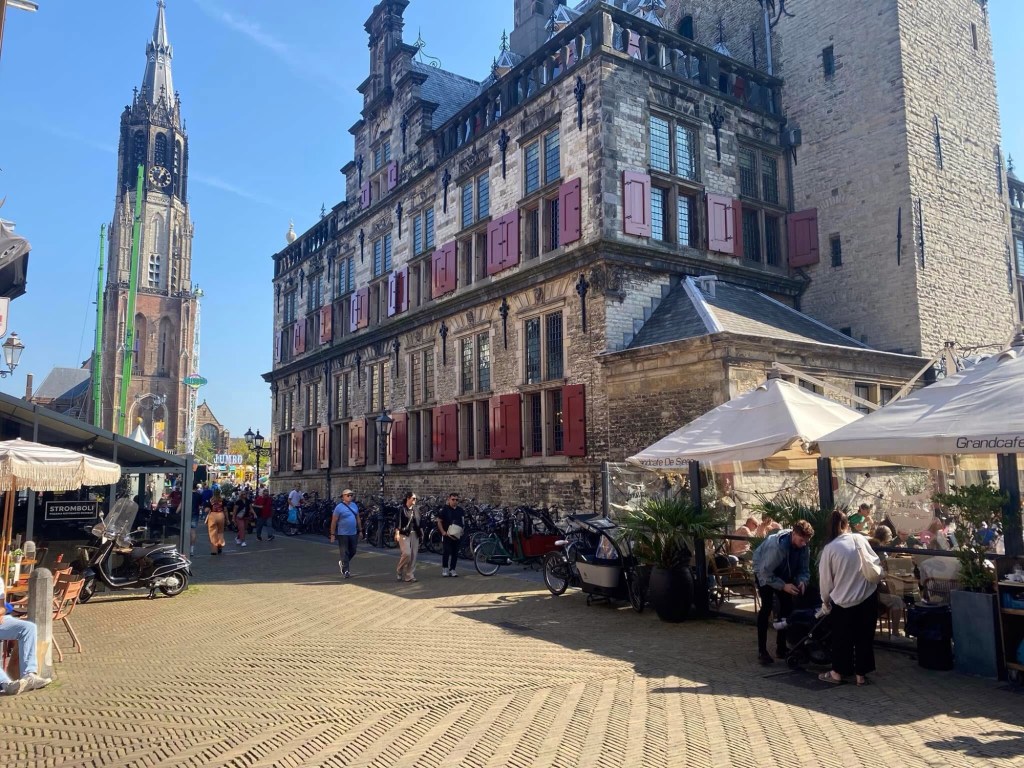
Say Cheese to Gouda, the most authentic of Dutch cities. To its beautiful facades, canals, courtyards and antique shops.

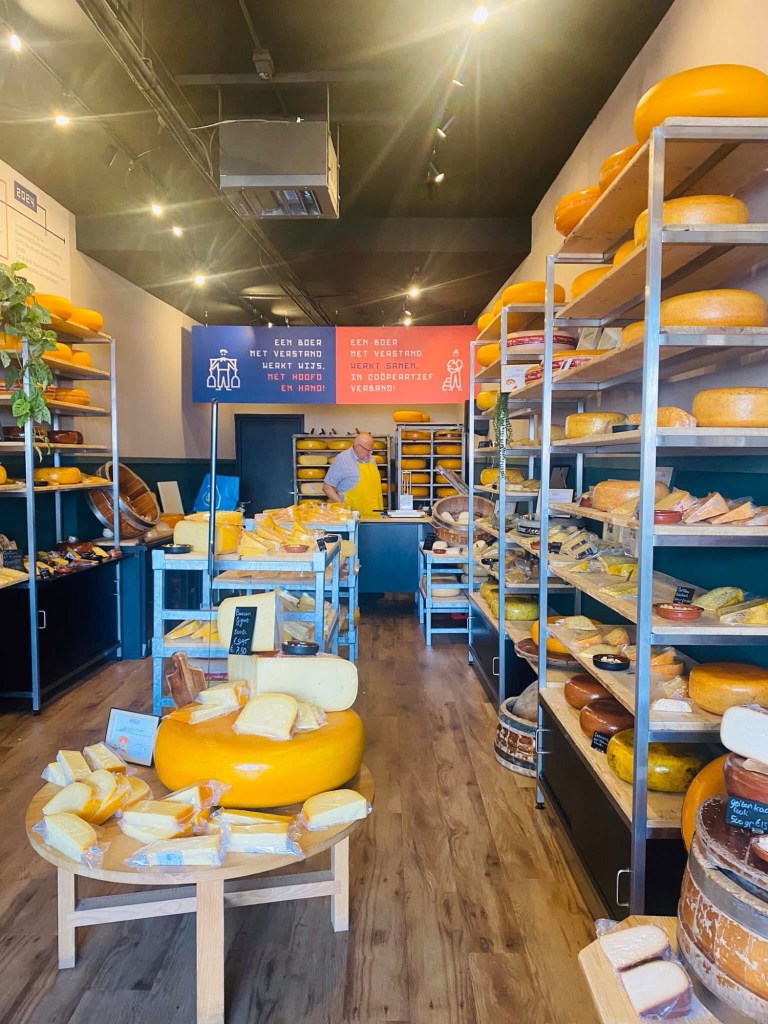
Thursday’s market day at the historical Cheese market, in existence since 1395. Savour different varieties of a delicacy that is soul food. From Chilli to Fenugreek to Nettles. Name it. Have your fill. Every flavour conceivable. (Impossible though it be to imagine Nettle infused cheese)

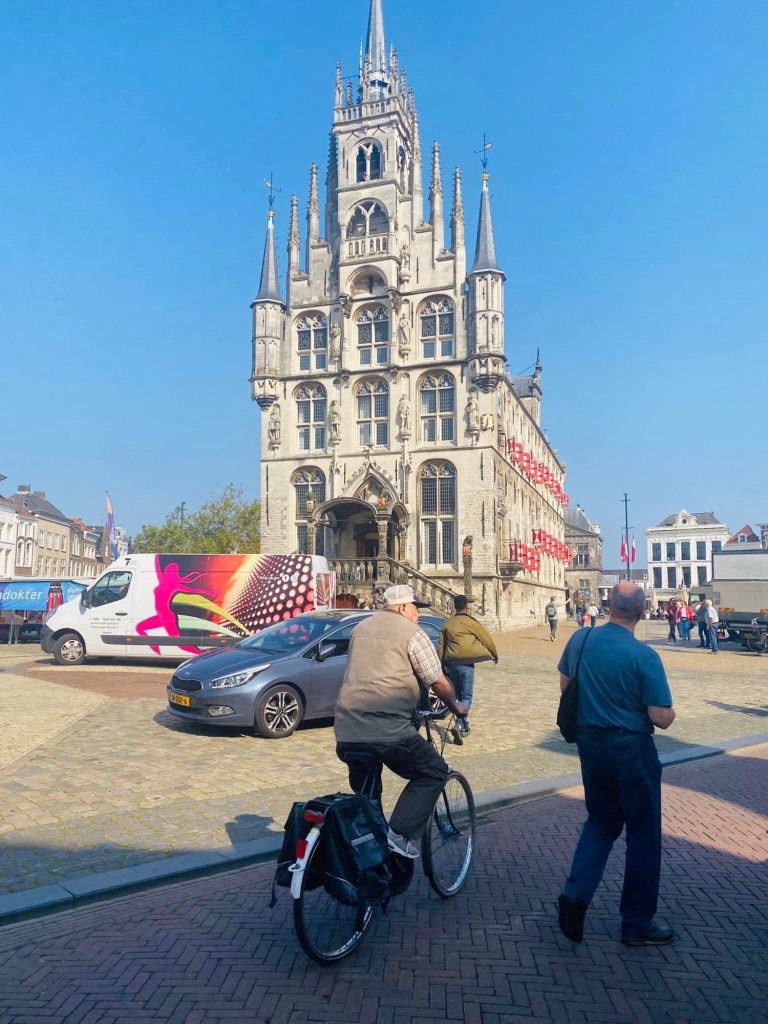
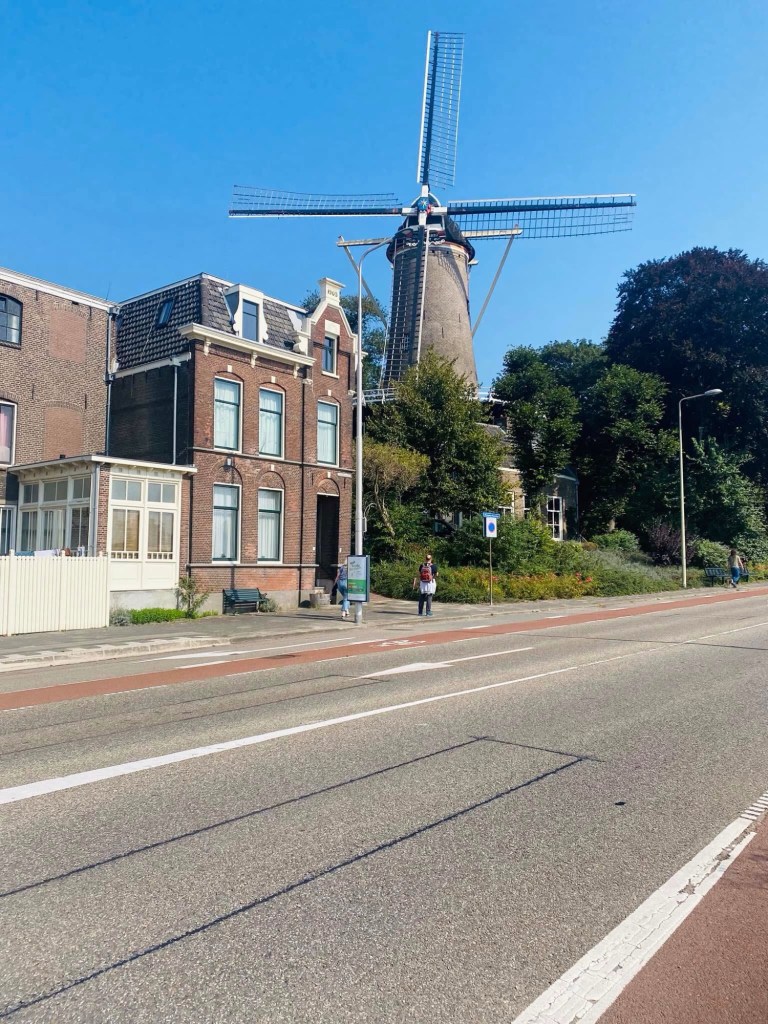
Wandering around this exquisite town under a mild September sun was heaven. Past the well preserved Town Square, City Hall, two lovely old windmills – Slot Mill & De Roode Leeuw – along the old harbour and not to be missed Cheese Museum

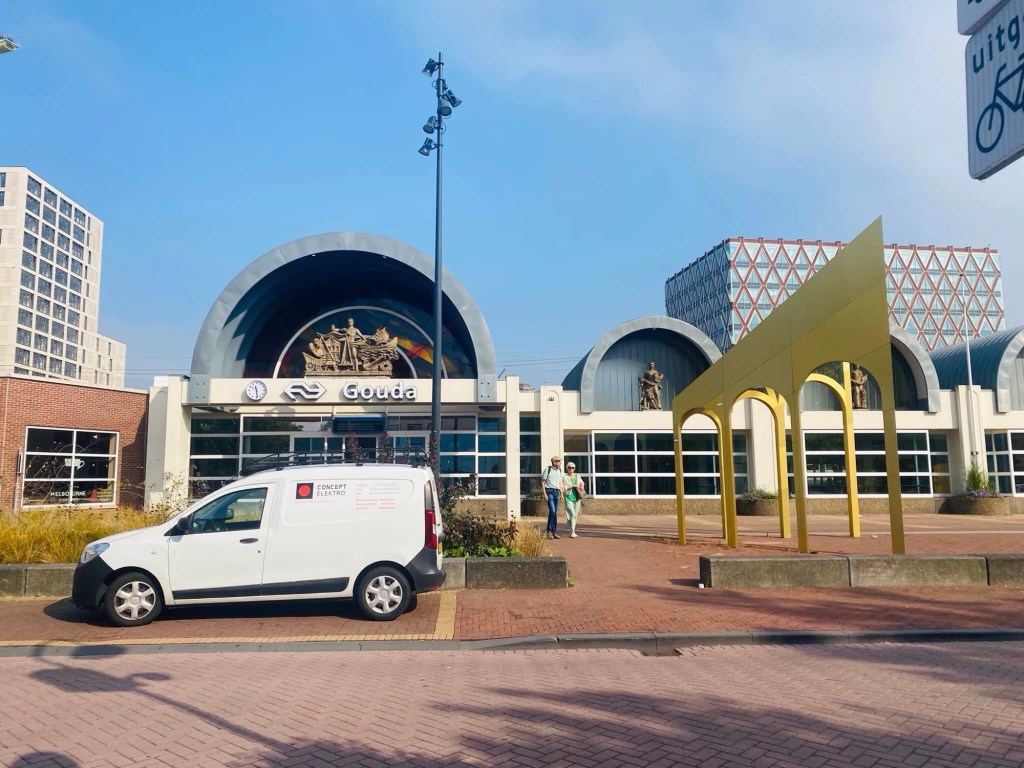
Gouda train station
Tailor shop showcasing ‘The Prince of Wales’ Ostrich feathers.
Town Hall
Choose your Cheese

Most picturesque of towns, Utrecht oozed atmosphere. A mere 20 minutes by train, the station’s a short walk to the city centre. Surrounded by a moat, 2 canals run through it. The pleasure of walking down streets spilling over with holiday makers. Of wafting down canals in the company of swans. Or guzzling beer at the many cafés lining the waterfront. A perfect example of ‘il dolce far niente’ (sweetness in doing nothing but watch the world go by).

After a surfeit of food & drink a little exercise will do. Walk up the 465 steps to the top of Dom tower to be rewarded by the most splendid of views. The belfry is said to be the tallest in the Netherlands. Tickets must be bought but heck, it’s worth it.

Keep Saturdays for Bloemenmarkt – the floating flower market. Just in case you are around.

Canal Cafés

Canal ringed Delft’s another charming town. Famous world over for Delftware – delicate, hand painted, blue & white pottery. Not only do ‘made in China’ fakes unfairly compete but sell for a song.

Delft too has atmosphere aplenty. Walking its lanes on a bright September day one felt a distinct chill in the air. Not autumn just yet but leaves were beginning to turn brown giving everything a sublime, unearthly look.

Den Haag /The Hague. Netherlands capital is located on the North Sea. Eleven kilometres of beach blessed coastline. Seat of parliament & International Court of Justice, Foreign Missions are headquartered here.

But what would you say if I told you that I visited The Hague yet saw nothing of it?

Here’s how it played out. Arrival by train, exit train station. To walk along a boulevard. Stopping for a bowl of hot Lentil soup, cheese – bread. Then strolling aimlessly along, chancing upon a park with a church. There were children playing, chasing kittens in the sun. And mothers wheeling their young. I settled upon a bench & fell easily asleep. Deep & peaceful – unmindful of the commotion around.

Catnapping in the afternoon sun. Waking up with a start in time to catch the train back to Rotterdam.

I did make it to Zaanse Schans in the end. With a ‘lil bit of luck. A ‘lil bit of luck’s all one ever needs. And pluck. The duo – luck & pluck.

I had overstayed Rotterdam quite certain it meant foregoing Zaandam. Until Lady Luck stepped in with a plan allowing time to spend half a day at will.

Flying back home I had 12 hours between hotel check out & flight check in. Ample time for that desired trip to Zaanse Schans. Time enough for a leisurely stroll through town, window shop, drink & eat at the cafés that abound. Lingering by the quiet flowing Zaan, taking in typical Dutch landscape. Old architecture – elegant green, wood houses sharing space with windmills, their giant arms slicing through the air.

An unforgettable last day of vacation.

Amsterdam’s Schiphol is one of the busiest airports in the world. Excellent rail connectivity links it to Zaanse Schans with frequent to & fro services covering the distance in less than 30 minutes.

Also, Schiphol has a 24×7 baggage deposit facility. Located in the basement between Arrivals 1 & 2. Costs € 7.60

Which is what I availed, making the most of a splendid opportunity. For ZS (Zaandam) is a must see. Definitely NOT the kind of place one should miss.

Old, green, wood houses along the Zaan

Zaanse Schams: An overview
Unknown's avatar

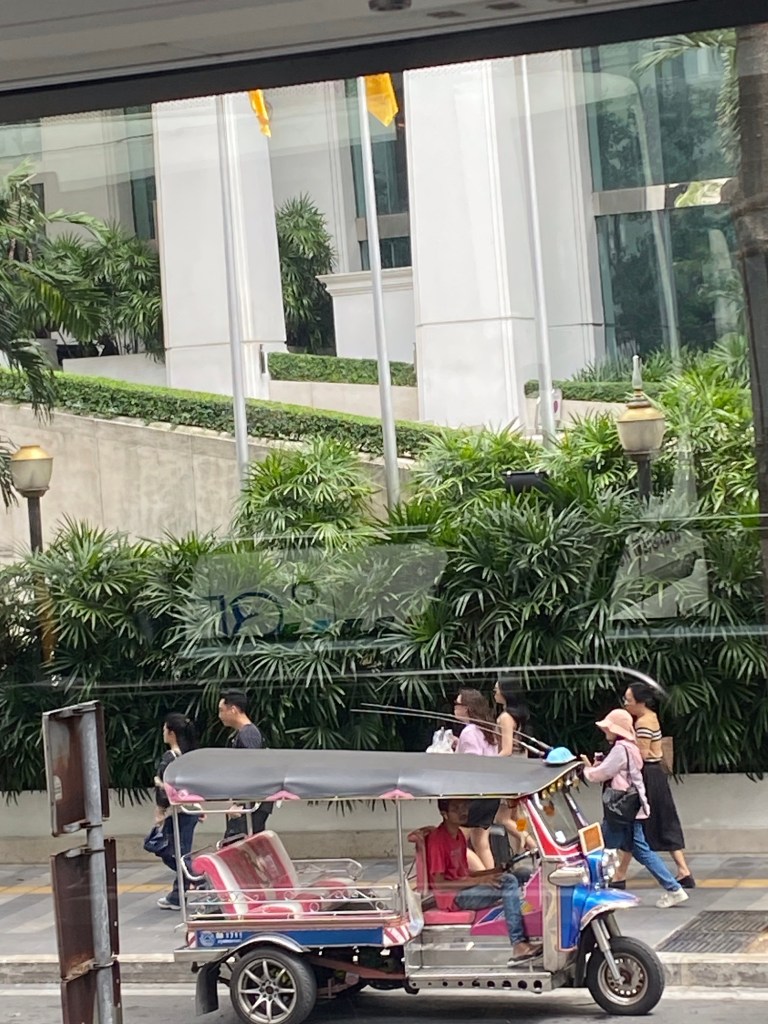
Tuk Lae Dee

(Cheap and good)

A most popular tourist destination Bangkok for me had little or no attraction. It never was on the bucket list but an out – of – the – blue opportunity presented itself. Not to be missed. Taken with hesitation, a head full of preconceived ideas & notions. Some prejudice too. The very antithesis of everything travel is about.
A trip, undertaken for the first time without planning or research turned out rather nice. Opening new worlds, throwing up surprises. A relaxed & enjoyable holiday, it was a great deal of fun.

Let the pictures do the talking.
Massage anyone?
What Pho. The Reclining Buddha
Land of exotic fruit & flowers, lovely people, great food, amazing massage. Legendary Thai hospitality. History, art, culture. Name it. Fascinating altogether. I took the ‘hop on/hop off’ to first familiarise myself with the city. Something I rarely did otherwise. Followed by an organised tour that included a visit to places of tourist interest, a canal cruise past tiny obscure villages, gemstone shopping & lunch.

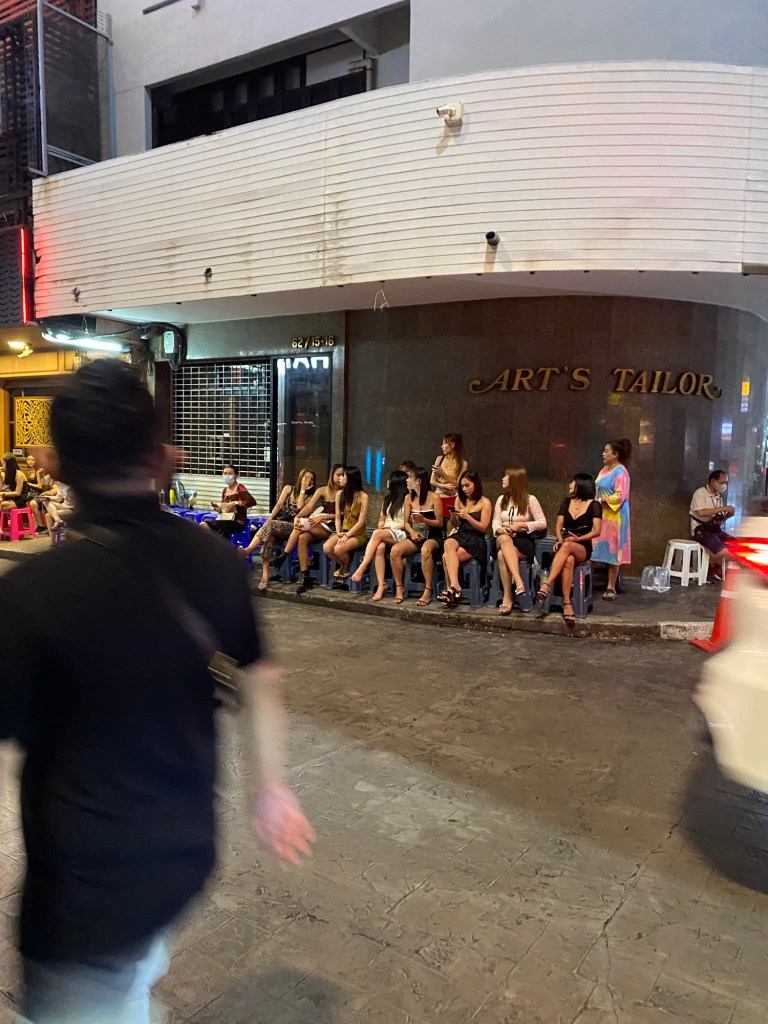
The streets of Patpong suddenly come alive after dusk. Scintillating night life, one wanders around driving bargains, savouring street food – the best in the world. ‘Tuk Lae Dee’ open 24×7 a favourite haunt.

Not all slut & sleaze, Patpong’s an experience in itself. Hub of Bangkoks infamous flesh trade everything’s on offer – from drugs to striptease, peep & transgender shows. All under the policeman’s nose.
Prostitution isn’t legal. There was a police post in the vicinity – with eyes wide shut. It’s common to be waylaid & accosted, just as I was a couple of times – always without harassment.

*You want boy? Girl ?
No thank you

*Massage?
I’m looking for a massage parlour

*I have private massage room. Nice boy ( calls out to Yang Shang, a tall hefty guy)
No thank you. Who are you? What do you do?

*(Extends hand) I’m Ninja. I give young boy, young girl. You want? Tell me. Here? In hotel?
No thank you

*You see Show? Pussy Show. In – Out. Pussy smoking. You see pussy smoking?
No thanks. Are you some kind of a pimp? But ………of course………..you ARE

Ninja guffaws in agreement.
Links hands.
A High Five.

Everyday encounters with no one ever feeling threatened or insecure.
Waiting for customers
Unknown's avatar

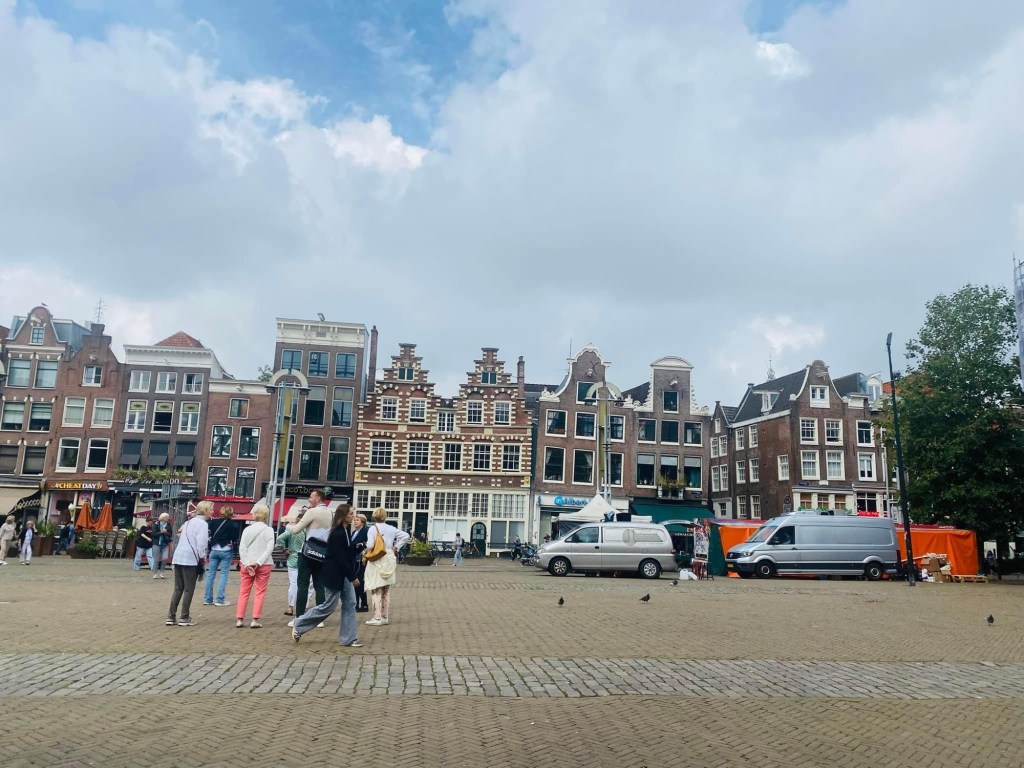
I Amsterdam

Room with a view
Anne Frank House

Amsterdam Central
Last week of summer

Landing in Amsterdam one cannot but notice St Andrew’s 3 crosses. XXX emblazoned on the most ubiquitous of things from city flag to food cans to dustbins. Representing truth, honour & bravery on its coat of arms, the X’s also stand for Amsterdam’s worst fears – fire, flood, plague. Or in present times – sex, drugs, LGBT. Most visitors aware of the last alone, come seeking X rated pleasures available in plenty.

Walking’s the best way of coming to know a place. Starting from St Nicholas, onwards to old fishing sites near Central station, to China town, New market, the Jewish Quarter, de Wallen, Anne Frank House.

Pubs & 2nd hand shops on Nine Streets, Jordaan’s cozy boutique – cafes, amazing shopping streets – Kalverstraat, Leidestraat, Guyp market – ending at Dam square the heart of town. All in a span of two & a half hours.

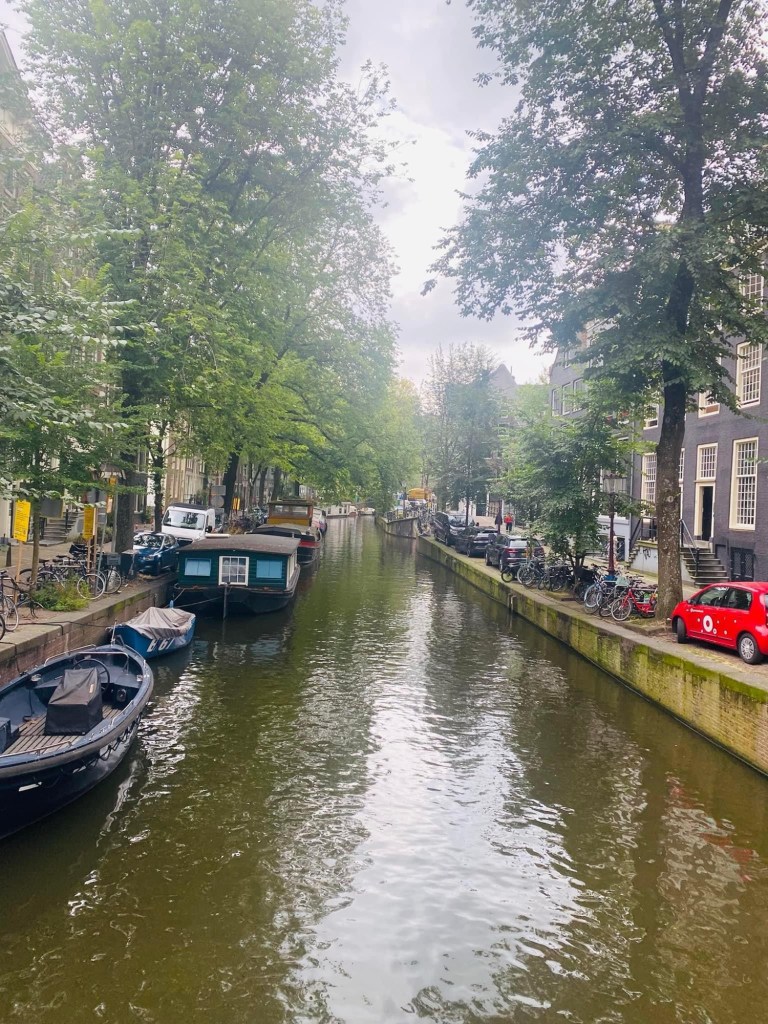
Cruising its innumerable canals & waterways further enhances the experience. It offers a grandstand view of colourful, tilting gabled houses lining the waterfront. A 24 hour ticket costs € 27.50 and allows 8 hop on-hop off stops, easy walking from all major sites.

De Wallen is Amsterdam’s red light area. Interesting architecture, touting it a tourist attraction a bit weird though. Relatively safe during the day, stoned & gawking drunks take over the alleyways at night. There are plans to renovate & beautify the space giving it a sleek modern look, retaining at the same time its core purpose & character. It will continue as den of prostitution with entertaining add-ons relevant to the trade.

Amsterdam’s three crosses I’d say are free, liberal, progressive. Let me elaborate.

Tolerant of a myriad things the Dutch have mastered the art of ignoring what they pretend not to see. An intrepid people with incredible money making skills. Noticing long queues around de Wallen, prostitution was taxed & legalised. The same with drug addiction after it threatened to become a problem. Money earned ploughed back into rehab.

Drugs in the Netherlands can neither be bought nor sold. Or cultivated either. Easily available in ‘coffee shops’ one may smoke a joint, snack on ‘substance’ but not have coffee. Simply because it isn’t available.

Where then does one go for the beverage? To a Cafe. 😁

Coffee House – Cafe. A neat & clear distinction.

There’s a silver lining to this. Forbidden fruit no more – goes Dutch logic – drugs no longer tempt or appeal to the young. Proven to be true, addiction’s a lesser problem than several other parts of Europe.

Making soft drugs legally available keeps the harmful stuff away. Laws against these being extremely harsh & stringent, thus in effect killing two birds with one stone. If Cannabis cannot be traded or cultivated where does it come from? Out of nowhere. It appears by magic. (Remember the Dutch knack of pretending not to see)

‘Our Lord in the Attic’s’ another case in point. A tourist attraction, this Roman Catholic ‘niche’ inside a private home has existed since the first days of intra Christian strife. When Catholicism was banned, its followers began worship in secret. Did the State not know or ever find out?

Dam Square

Amsterdam’s the cycle capital of the world, there being more bicycles than people. Canals filled with discarded bikes, infrastructure is geared towards cycling, it being everyone’s choice of transport. Most bikers travel with their bikes – on ferries, trains, buses. Getting off only to hop on & peddle away. Aggressive at times, pedestrians need to watch out, take care.

It is also the museum capital of the world, there being almost 80 in all. Visiting each a near impossibility one has to pick & choose. Book in advance also.

Anne Frank’s diary has remained a poignant childhood memory. Inability to procure tickets to the house – museum a huge disappointment I hung around nevertheless. The thought of clicking a selfie a sacrilege almost, I walked up to the front door, touched the knob & turned away.

Marketed as ‘Van Gogh – Rembrandt’ an immersive experience, works of two great artists stream inside a 16th century church both frequented during their respective lifetimes more than two hundred years apart. Sprawled on cushions randomly placed on the floor one looks up at the ceiling where masterpieces in 3D are being rolled out – accompanied by Van Gogh’s own words taken from his letters to his brother. It is mesmerising but not nearly as meaningful or soul stirring as viewing the original. Van Gogh museum’s the place for that – to experience the sense of intimacy virtual reality lacks.

Clocking ten to twenty thousand steps a day the weather was glorious. Bright, sunny & warm right into the third week of September. “It’s the last good week of summer” was the constant refrain. An excuse for the entire city to spill out into the open. Beer, fries, barbecue, swimming, soaking in the sun.

Visiting for three days only, an extended summer meant missing the golden – rust magic of Autumn. Another of those vagaries of travel.

Sitting by road side cafés without deadlines. Reading, chatting, people watching – guilt free pleasures all. The Dam Square, Royal palace – Fountain just the right place for it.

Watch a post lunch crowd collect around a magician /musician. Folks in fancy outfits staging their act. Akin to begging in our parts it’s called ‘busking’ here. Don’t miss a group of Falungong protesting Chinese persecution. Or Kurds demanding their right to freedom. Or a lone Palestinian – the flavour of the season – soliciting funds for his cause.

Local ‘cuisine’ if there’s such a thing at all, remains a mystery. The staple, ‘Fries’ not quite food despite the Dutch having learnt to spike it with a dash of pepper. Pepper transforms, adds flavour & excites. One spice among many – after colonising half the spice world.

What is the best kept Dutch secret?

Average national height. It is 6’5”.

Land of milk, butter & cheese is it dairy or pure genetics. Guesses! Anyone?

Busking
Unknown's avatar

Slow Days.

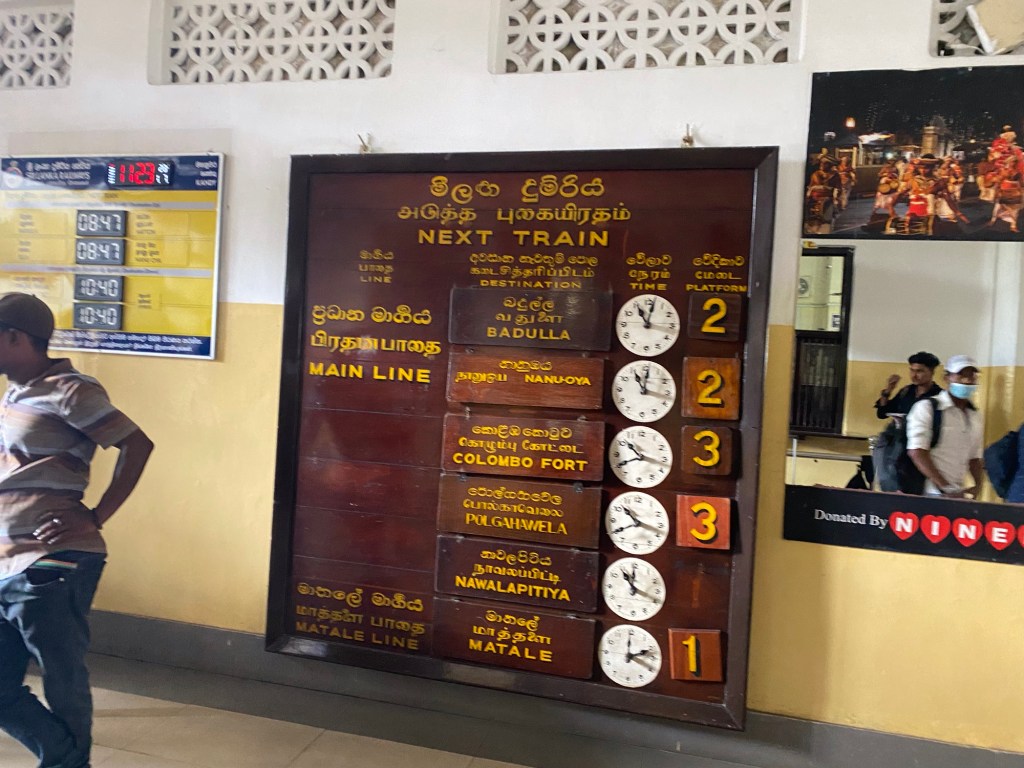
Train station, Kandy
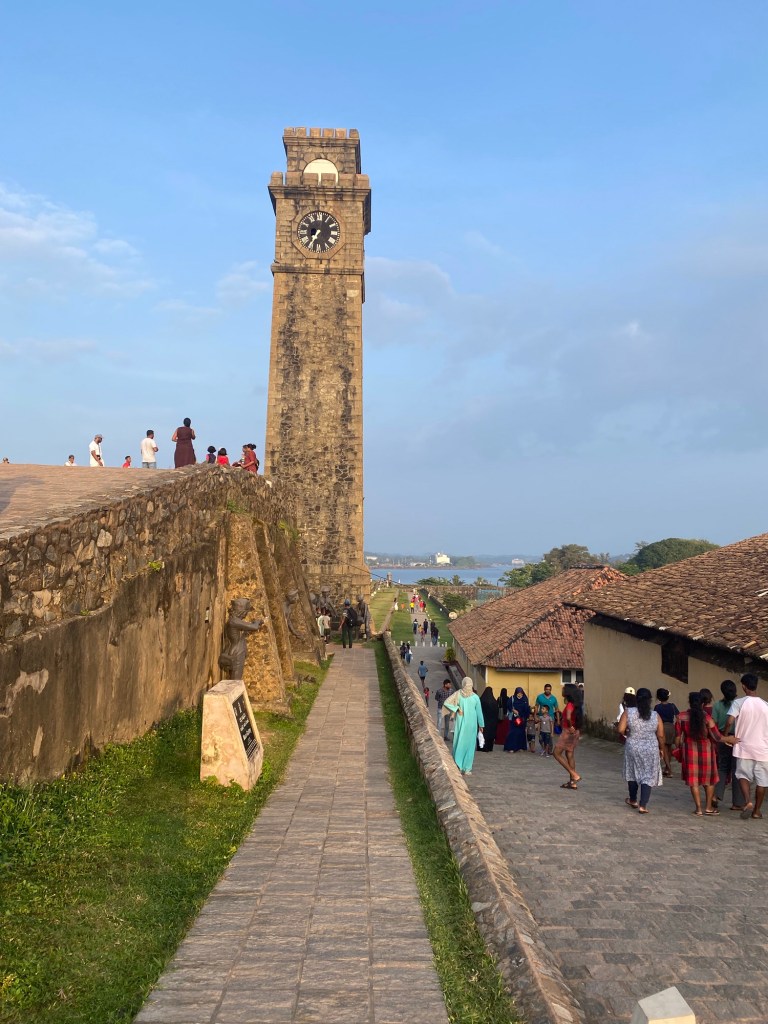
Clock Tower, Galle
Kandy Lake
Mahaweli Ganga, Kandy

An episode from a book read aeons ago remains a clear & distinct memory.

Of a young Norwegian entering her cold & gloomy place of work day after dreary day, thrilling at the sight of a poster advertising a beach holiday in Ceylon.

The book, ‘The Drifters’ by James Michener follows the trajectory of a group of young people. Of diverse backgrounds, living out their dreams – from the USA to Spain to Portugal, Morocco & Mozambique. Published in 1971, it inspired an entire generation to travel.

Long on the bucket list the pearl drop, rain drop, tear drop isle happened at the peak of a harsh North Indian winter. Pure bliss. Two weeks in sunny Ceylon where the Indian rupee quadrupled in value.

A land of great natural beauty, immense forest wealth, lovely people. The Buddhist faith of the majority has tempered them infusing a kind of gentleness that rubs off on a casual visitor. Slow paced, laid back, like travelling back in time. Ambling along without hurry or push the traveller quickly slips into the groove accepting things as they are. Zen like acceptance, harsh words rarely exchanged.

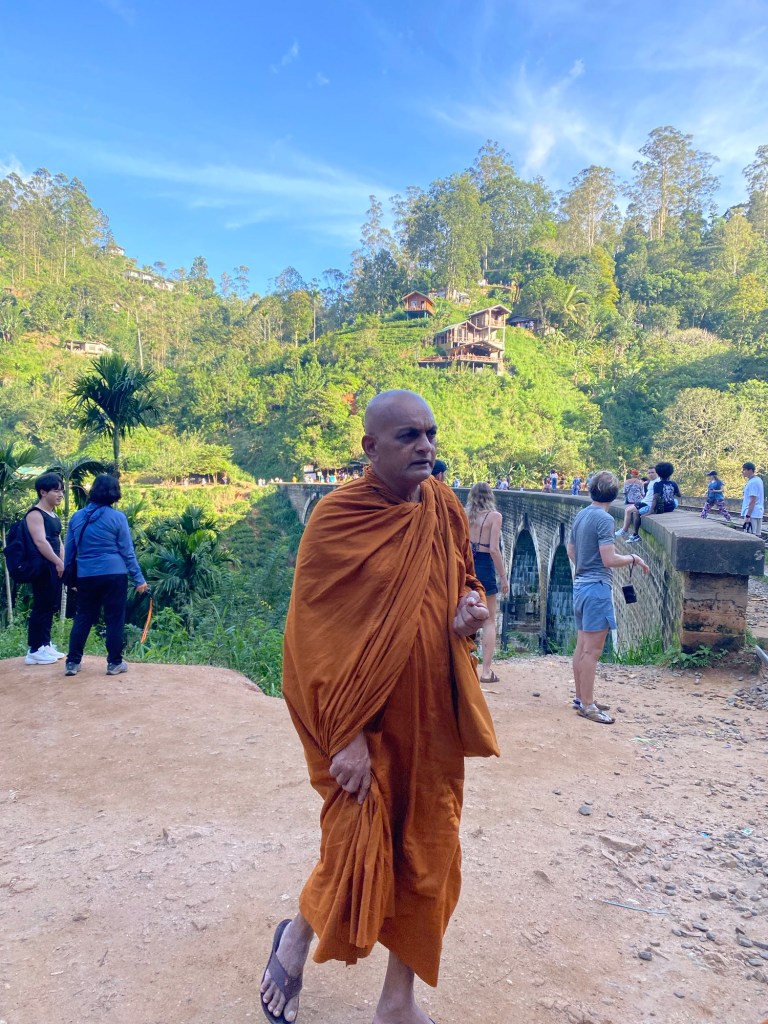
The train’s a great way to see the country. Dirt cheap too. The Colombo – Ella line winds it’s way through verdant tropical countryside – tea gardens, tunnels, waterfalls, dense forests, the iconic Nine Arch Bridge, varied flora- fauna. Starting at sea level it touches 1800’ at Kandy & 6200’ at Nanuoya/ Nuwara Eliya. Doors – windows left open, soft breezes wafting in, travellers squat on door steps or hang out of door frames crying whoa – whoa as the train clambers on. Cruising at an easy 25 – 30 it occasionally picks up speed, making an otherwise short journey unduly long. (Make sure you’re well stocked for food & drink. Breaking journey midway makes sense). Counted among the most beautiful train journeys in the world, I cannot entirely agree. A pleasant ride certainly, memorable holiday experience too. Nothing more. Having said that I wouldn’t miss it in all the world.

Travelling by the coastal train from Colombo to Galle likewise, one hardly catches a glimpse of its most talked about feature – the waters of the ocean lashing against the shore.

Small & clean, without display screens or porters, most stations have a run down look. There isn’t much difference between categories too. Second & first class for instance. First is air conditioned with sockets for charging while second is open & airy. Preferable if one likes sticking the head out of the window, feel the wind on the face as the train chugs along lulling one to sleep.

Buying a ticket is simple, ensuring a window seat not. Even if booked online. The online ticket valid only after it’s exchanged for a physical one at the station. A classic lesson in how to complicate things.

Inside Galle Fort
A Sinhalese meal
Post Office, Nuwara Eliya

Signs of general economic distress abound, though nothing like the abject poverty one encounters elsewhere. Incomplete projects stalled for lack of funds. Signs of ‘regret inconvenience, work in progress’ without any evidence of work being in progress. Hard times result in hard measures which is perhaps why fuel is adulterated, making the air reek of a mix of diesel & K oil. On the plus side the one way rule is strictly enforced & traffic snarls are rare. Traffic unbelievably comes to a halt at crossings, pedestrians given right of way always.

Colombo’s glass – metal gleam & spit polish finish belies the underside. Welcoming of outsiders, the capital eagerly awaits tourist footfalls.

A nicely laid out city it has much to offer. Not on the general circuit, Geoffrey Bawa’s home turned museum is a must – see. An innovative artist far ahead of his time, people from world over flock to visit & pay homage. ( book in advance preferably or wait it out at Cafe Mitsis next door)

A Tuktuk will take you around Colombo for less than $ 2. Meter less mostly, drivers charge at random, Uber a better option definitely.

In the midst of an economic downturn what struck me was the abundance of spas, money changers, finance – banking institutions. Hotels, restaurants & bars. Colombo’s nightlife begins & ends at Park Street Mews & the Dutch Hospital Complex. Live music, local – international cuisine, great sea food, ‘The Ministry of Crab’ is everyone’s go to place.

On the sidelines was a different distraction – scintillating sapphires in a myriad hues, the good natured shop keeper recognising a non serious buyer but humouring him still. It became a pre supper ritual of sorts. First, a visual treat of sapphires, then the meal followed by a post dinner walk on Galle Face Promenade.

Two nights in Kandy will more than suffice. Among its many attractions from the Buddha Tooth Temple to the Lake, War cemetery, Botanical gardens etc ‘Gajamuthu’ tops. The ‘Queens’ signature drink served iced & chilled is a delightful mix of Arrack, ginger beer, mint, lemon & brown sugar. Most invigorating of poisons, a Gajamuthu a day kept unhappiness away.

During WW 2 Lord Mountbatten of Burma – as Supreme Allied Commander South East Asia – was a frequent guest at the ‘Queens’. Built in 1844 this colonial style hotel has a ‘Queen of Hearts’ restaurant, ‘The Royal Ballroom’ & ‘The Pub Royal.’ Poorly maintained, it has undoubtedly seen better days.

Of special interest to movie buffs in particular is the Mahaweli Ganga where David Lean’s ‘Bridge on river Kwai’ was filmed.

Having heard so much about Nuwara Eliya expectations naturally ran high. At 6200’ it was indeed ‘high’ but a washout otherwise – literally & metaphorically. Unseasonal rains & plummeting temperatures kept one indoors. Afraid of missing out on something I ventured out, to the gem of a post office – exquisite architecture – managing to drop off a postcard even. Hot cappuccino at ‘Nashers’ an added rain – day bonus.

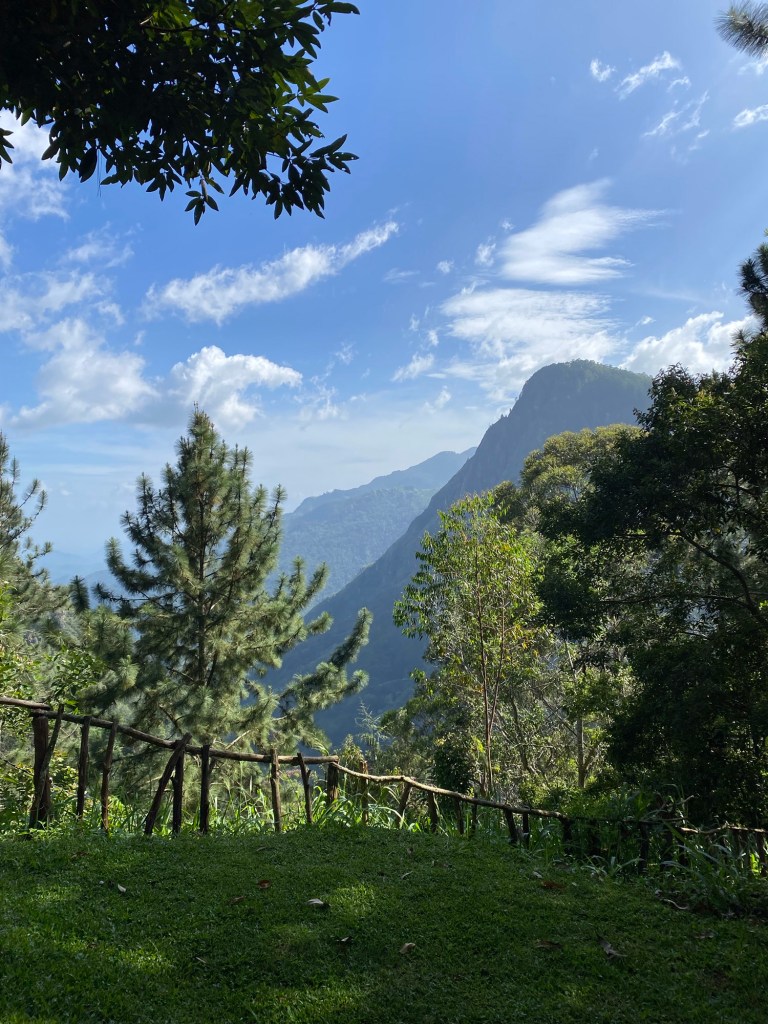
Ella (3000’) was cool. The weather as well as the vibes. It had a rhythm & feel special to touristy places around the globe. Nature walks, hiking trails, trekking up Little Adam’s Peak or the more challenging Ella Rock. Ample outdoor activity along with holiday crowds & decent night life. This one street town was chock-a-block with Bistro – bars & street food stalls. Popular with the young, ‘Cafe Chill’ blaring loud music looked busy & inviting. So Cafe Chill it was, for hot Tomato soup in Chicken broth. The ‘Ceylon Village Cafe’ further up the road for good, authentic local.

Ella to Galle the south western tip of the island, is best done by road. A 3.5 hour drive through pristine forests, a palette of green with every shade imaginable. The island’s forest wealth truly astonishing, one goes past tiny villages getting a peep into life lived in the back of beyond.

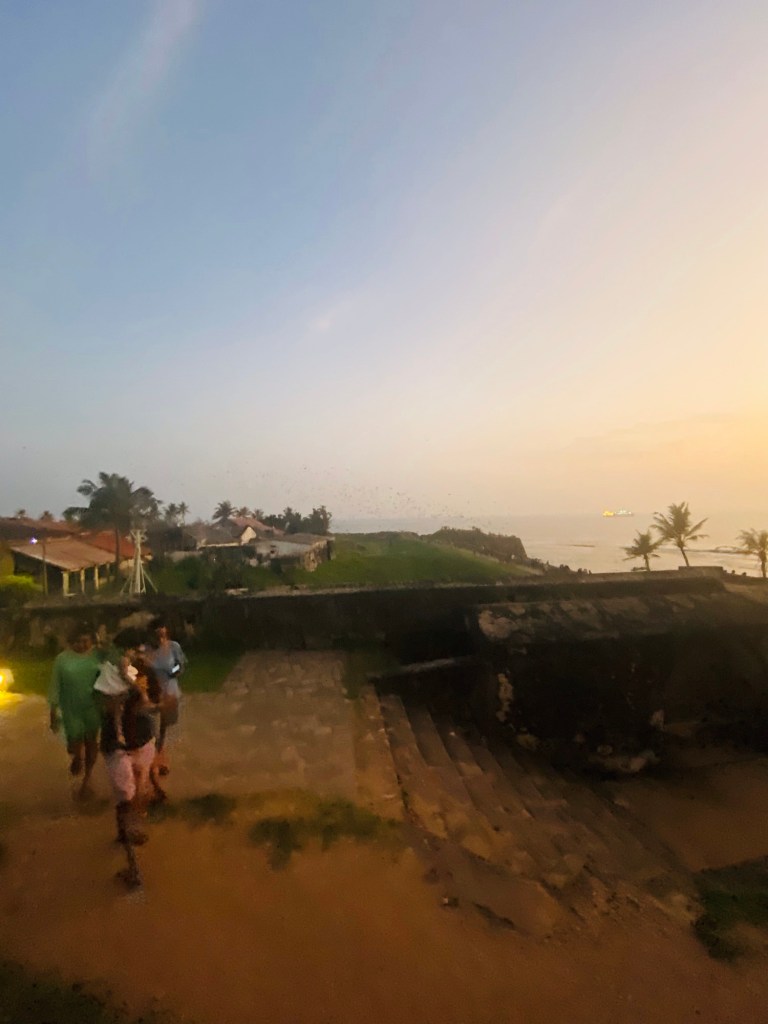
A UNESCO world heritage site, the clock tower & lighthouse prominent landmarks, Galle preserves remnants of an interesting colonial past. The Portuguese, Dutch & English all having come & gone. The Portuguese built the outer sea walls fortified later by the Dutch. Stunning stone ramparts, cobble stoned streets & leafy boulevards.

‘What’s there to do in Galle? It’s for people of leisure with time to stand & stare. Sip slowly on the wine. I’d give it time, if only for the pleasure of roaming its car free streets or sitting on stone walls gazing out at sea. Picturesque & charming, stroll in & out of book stores, souvenir shops, art galleries, boutique hotels, restaurants, cafés, bars. Enjoy local & international cuisine – ‘Kalita’ for sea food, the best in town. Galle was hot but it was vibrant & feisty & had the perfect mood & swing.

There was the mystery of the cactus that never got resolved. Large & small varieties, prominently placed everywhere indoors. In the midst of a natural profusion of greens what was the significance of a poor & lowly succulent ?

Another more recent phenomenon was the mother-son duos. From Europe mainly. A dutiful son perhaps, who left Dad back home with a caregiver, to give Mum a much needed winter break. A pleasant if radical change from the singletons of old.

The Hammerer’s, Josefa & Julian were one such pair. We ran into each other at an overcrowded Colombo bar. Julian trying to find himself a table, me having done with, offering to make way. Striking a conversation the good old fashioned way we ended up exchanging numbers. Amazing how frequently our paths crossed thereafter. Staying in touch from one town to the next, spending many joyful hours together.

What’s in a name?

Everything.

If anyone’s wondering at the constant use of archaic, non existent ‘Ceylon,’ Josefa & I both took vicarious delight in consistently using the name. The geography of the world much changed from our schooldays when we dreamt of travelling – to Ceylon.

Ceylon aka Srilanka. The difference?

The word. What sits easy on the tongue.

The first, poetic. A soft & gentle whisper from a magical past.

The other prosaic. As prosaic as can be.

Dutch Hospital Complex. Colombo

The Iconic 9 Arch Bridge
Ella Rock
From inside Galle Fort
Unknown's avatar

Morocco

Chefchaouen
Fes Medina
Cold Press Argan Oil
Riad Arabesque, Fes

A landscape of rugged mountains, desert expanses & stunning coastlines makes for exciting but difficult travel. Public transportation not always an option for women travelling alone, Morocco being an Islamic country.

Going solo, logistic support was essential. Four wheel drive – driver/ guide. Long haul, three weeks across varied terrain where mode of transport could only be donkey, camel or car. Casablanca – Fes – Merzouga – Skoura -Marrakesh.

Desert beats on the go, Sayyid at the wheel practising limited English language skills. ‘My friend’….. is how he always began. Curious about life & times he once explained why being allowed four wives was a practical idea. “One wife………she is pregnant/ill, who cook – clean?

Casablanca to Fes (3 hours). Fes – Merzouga (7 hours) via the Middle Atlas Mountains, home to aromatic Atlas Cedar & tailless Barbary Macaque. Past panoramic views & traditional caravan routes. Ifrane’s Swiss style chalets – ski slopes, the Ziz valley’s Date Palm groves. Any wonder that the scheduled seven hours stretched to nine?

Merzouga to Skoura (5 hours), desert to oasis saw us in the Dades – river, cliff, picturesque villages. And, the Grand Todra Gorge.

It was another 4-5 hours, across the High Atlas from Skoura to Marrakech. Winding roads, remote Berber settlements & Quarzazate, the studio there known for big banner productions like ‘Gladiator,’ ‘Lawrence of Arabia.’ Onward to ‘Ait Ben Haddou’ the wondrous mud brick Kasbah on steep mountain slopes & Tiz n Tichka Pass where we stopped for cold press Argan oil.

Together for over a fortnight it was ‘goodbye Sayyid’ at Marrakech. True, straight talking Berber, a better Man Friday impossible to find.

Less than 48 hours after the devastating earthquake, most sites in Marrakech were closed. Shops too, owners returning to their homes in the mountain to enquire about their families. With nothing of major interest I contented myself walking the alleys of the old Medina to get a feel of this darling of tourist destinations.

The country’s road – rail network’s pretty sorted. ‘Al Atlas’ category of trains connect major towns & cities. Fast, frequent & on time they are comfortable except for ‘hole in the floor’ toilets. The big job a strict no-no naturally. High speed ‘Al Boraq’ linking Casablanca to Rabat & Tangier is as good as France’s TGV. Affordable, it has a lounge for first class travellers. Equally reliable & efficient, buses connect remote towns & villages. All the above of little or no consequence if travelling into the desert or mountain.

A unique destination, Morocco’s geographical location has allowed for cross cultural interaction.

Having been a French protectorate (1912-1956) there’s a tangible French influence in everything from language to food. Breaking for siesta, the country follows French work hours. There’s a great love for bread & roadside cafés are full of people sipping mint tea – not coffee – all day.

The Hamam’s a one of a kind experience having little in common with it’s Turkish counterpart. More like a public bath, women gather to catch up & meet. Old world, authentic, one fourth the cost, it’s approach completely ‘No Nonsensical’. You enter a steam bath, squat on a mat & have hot water slapped over you. A rigorous application of black Moroccan soap follows. Left to sweat & stew in your juices, onto a raised platform thereafter where the actual scrubbing begins. Loofah in hand it is scrub a dub – drub. Dirt unseen, unbeknown. Watch the layers peel off. More scrub followed by intermittent splashes of hot – cold water, rounded with a generous dollop of cream. The body feels bruised. It’s not, of course. You come out shining new.

Misconceptions about the country abound, perpetuated on blogging sites mainly.

There is no preferred dress code. Wear what you will without anyone batting an eye, keeping legs (knee downwards) & shoulder covered – inside places of worship alone.

As for pickpockets & scams, worry not. The big three – Paris, Rome, Barcelona – continue to hold sway. Just be wary & watchful.

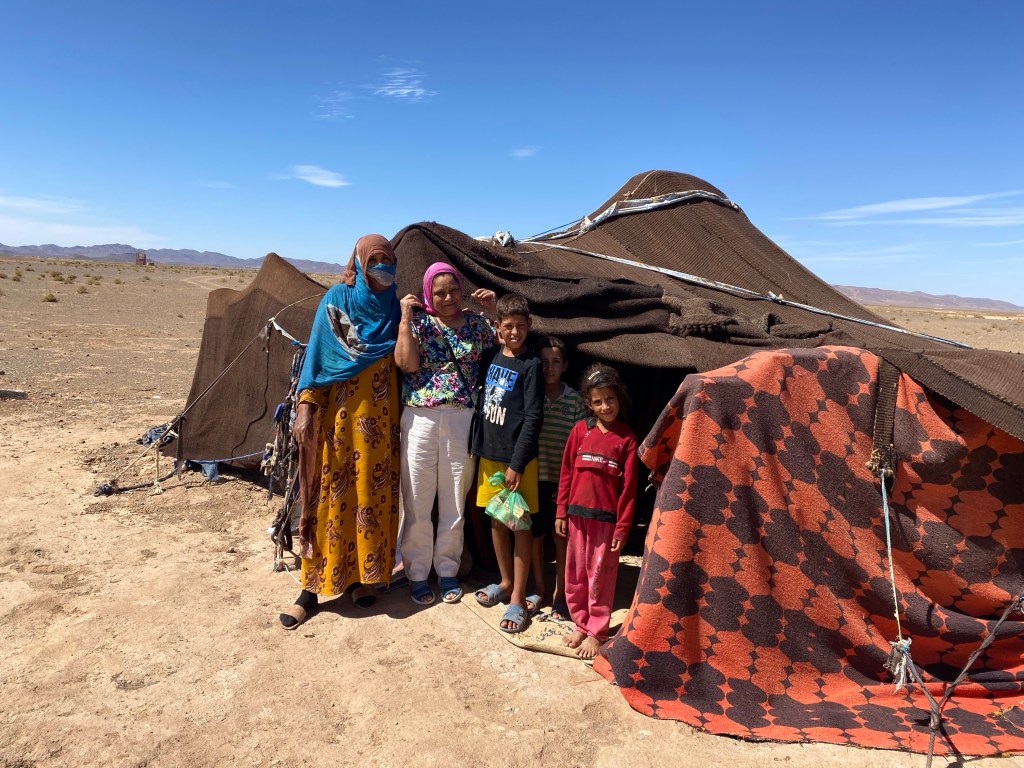
That women dislike being photographed isn’t entirely true but it’s polite to ask. A nomad I ran into was thrilled at being clicked but forbade posting it on Facebook. Hilariously cute, considering she was unschooled & without access to anything. Not even the basics. (Her husband traveled miles to ferry home water on a donkey) Rootless, the family roamed the wilds striking home wherever they fancied.

It is not uncommon to see women driving or sitting by themselves in cafés or parks. This Islamic country makes wine & beer, ‘Casablanca’ a beer you will like. No restrictions on drinking either. The problem’s that of easy availability.

Intrinsic to Moroccan life & culture is ‘Kasbah,’ ‘Medina,’ ‘Riad’. A word about each.

The Kasbah’s a fort/citadel. Found all over the country, ‘Ait Ben Haddou’ in the High Atlas, it’s finest example.

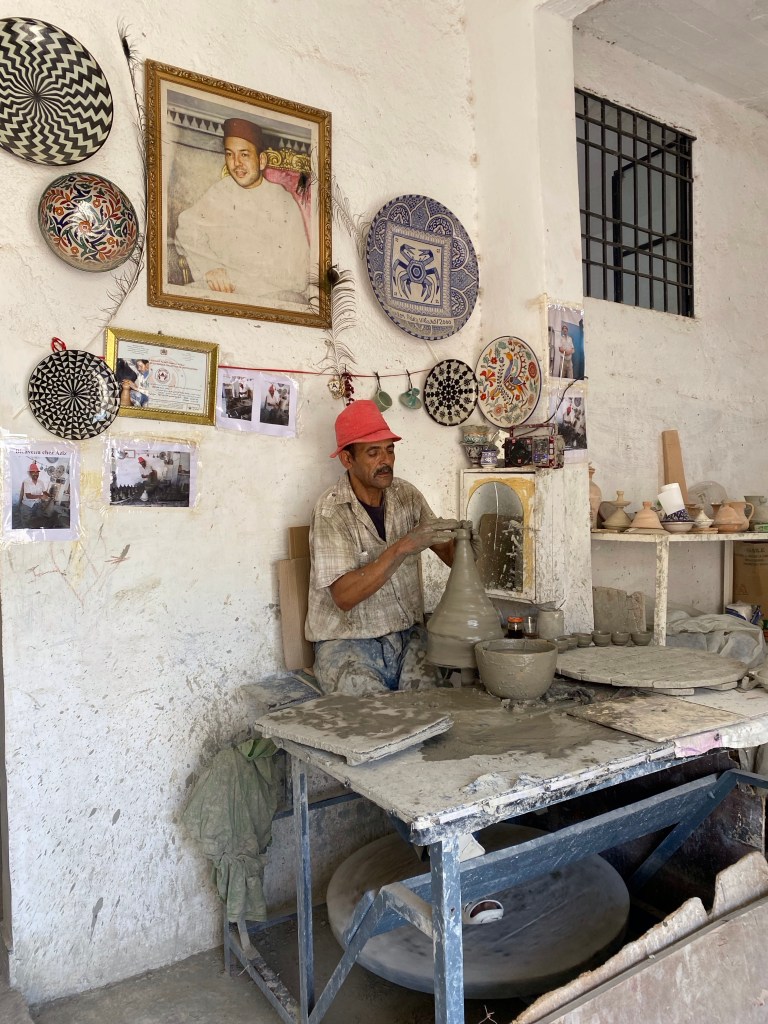
Medina’s the city centre. A labyrinthine of lanes – alleys where locals can also get lost. In this maze no gps works. Best to explore, allow oneself to be lost & find the way again. The 9th century Medina at Fès a perfect example. Spread across 540 acres, a world in itself, it has everything from souks, eating places, shops, living quarters, mosque – medrasa, the oldest university in the world, Mellah (Jewish Quarter) & 1000 year tanneries. Every trade adequately represented – weavers, potters, coppersmiths……. A corner for cheap Chinese goods too. With more than 18 gates, 300 mosques & ten thousand cobbled alleyways, some as narrow as 60 cms, it is the largest car free zone in the world.

The Riad is a traditional Moroccan home built around an interior garden. It has open balconies, terraces & inward facing rooms with exquisite Zelig (mosaic) & intricate wood carving. Large or small these are beautiful living spaces where one should spend at least a night. High walled (for privacy) & high domed with a clear view of the Heavens, each has a water body in the central courtyard, a fountain or pool. Water being the source of life.

Casablanca’s Moorish architecture & Corniche – the lively beach front district – calls for a stopover. Most flights land here in any case. The other ‘Casablanca’ (1942), Ingrid Bergman – Humphrey Bogart starrer continues to fuel dreams. Watch visitors queue up outside ‘Ricks’ mythical gin joint. Entering as if searching, for someone – something. Looking around, sipping a Negroni ‘as time goes by’ is played & replayed, several times upon request.

Neither Marrakech nor Casablanca – Fes being in a league of its own – Tangier’s my favourite. For the atmospherics primarily & for the fact that Ibn Batuta belonged here (14th century). A 19th century lighthouse at the entrance to the Mediterranean the landmark. At the crossroad of cultures & civilisations Tangier is a heady mix. It’s charm precisely what is often said in denigration – ‘a den of rogues, writers, spies & sleaze balls’.

The Kasbah has Batutas’ mausoleum – museum & offers fantastic across the Bay views of the Rock of Gibraltar & Spain. Cafe Hafa (1921) popularised by the Beatles & Rolling Stones offers similar views along with wonderful ambience & food. Graceful boulevards, sleek modern buildings & many many cafés.

More enjoyable than ‘Mamounia’s’ (1960) excellent Couscous was it’s aged guitarist singing ‘Mustafa,’ his tinny voice taking me down memory lane.

Ranked among the fifty best in the world ‘Cafe Gran de Paris’, (95 years) indulgence extends to letting guests lounge around as long as they please even as countless others wait. A business mantra that seemingly works. Sip fresh orange juice in elegant tall glasses, watch the world go by. No rush, no hurry.

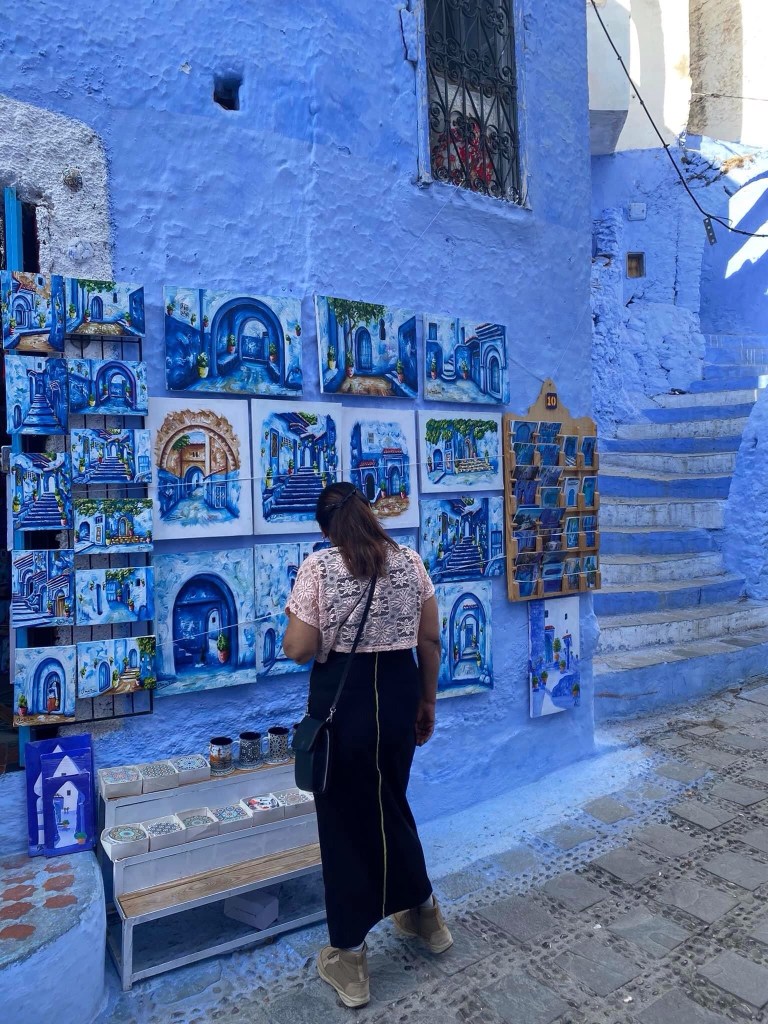
Tangier to Asilah or Tetouan could be day trips but Chefchaouen deserves a night. This charming little place in the Rif mountains is Morocco’s blue pearl, the entire town a soothing Mediterranean blue. Hike up to the Spanish church for a bird’s eye view. Traipse its cobblestone streets. Rue El Asri for Sawa (chicken Moroccan noodles) and Instagram moments, Morocco’s feline beauties lying curled or stretched, sure to sneak into the frame.

(I was drowsy eyed 24×7, was there hash in the air?)

Separating desert from ocean, the Atlas cuts diagonally across. Jagged peaks & cliffs, the effect of centuries of weathering. Rivers, canyons – gorges, passes. Incredible views. The mountain changing mood & colour, flitting from dark to grey, blue – pink, depending upon the sun.

Closed for summer, Erg Chebbi reopened early September making me the first, the only guest beginning of season. Like a tiny speck, in a vast space in the middle of nowhere, not for a moment did I feel alone. Timeless, immemorial, the desert sands shimmered & stretched. Everything around silent & still. Venus like a lamp across the firmament, the night sky streaming with stars. Shooting stars. If only wishes were horses. An experience as intense as the heat, a Berber saying came readily to mind, “God made water & land for man to live & the desert to find his soul.”

The Sahara was harsh. Solar power & water but no fan or air conditioning. Height of sustainable living. The mornings were magical as were the evenings, the day heating up fast. Hotter than hell, heating everything around from body to electronic devices that refused to charge. Unbearable within enclosed confines, sitting out in the open a better option especially as the wind picked up, even if it was hot & searing & even if it blew sand into the eyes, hair & face – tasting gritty between the teeth.

The reason perhaps why many prefer to stay in nearby Merzouga. Officially ‘gateway’ to the Sahara, Merzouga has luxury hotels with air conditioning & pools.

But it is soulless.

Those who come do so for a single night alone. Arriving in the cool of the evening, leaving before noon next day.

The two nights spent here were so out of the ordinary. Surprised to find working wifi & astonished at its speed – as fast as light – I’d scamper up the nearest dune to make video calls to friends back home, excited at sharing what I was seeing.

“Look …..not mountains, mounds or hills but dunes……. “

“Excuse my clothes. It’s bloody hot……”

“Here, have a look, that’s the Morning Star”

If there’s any regret it’s not sleeping under the stars. Why didn’t I think of it?

The one big takeaway without a doubt, was the love & respect shown everywhere I went. Due in no small measure to Shahrukh & Bollywood. Of that I’m certain. Make no mistake. India’s’ soft power is real and it is neither IT nor cricket but Bollywood.

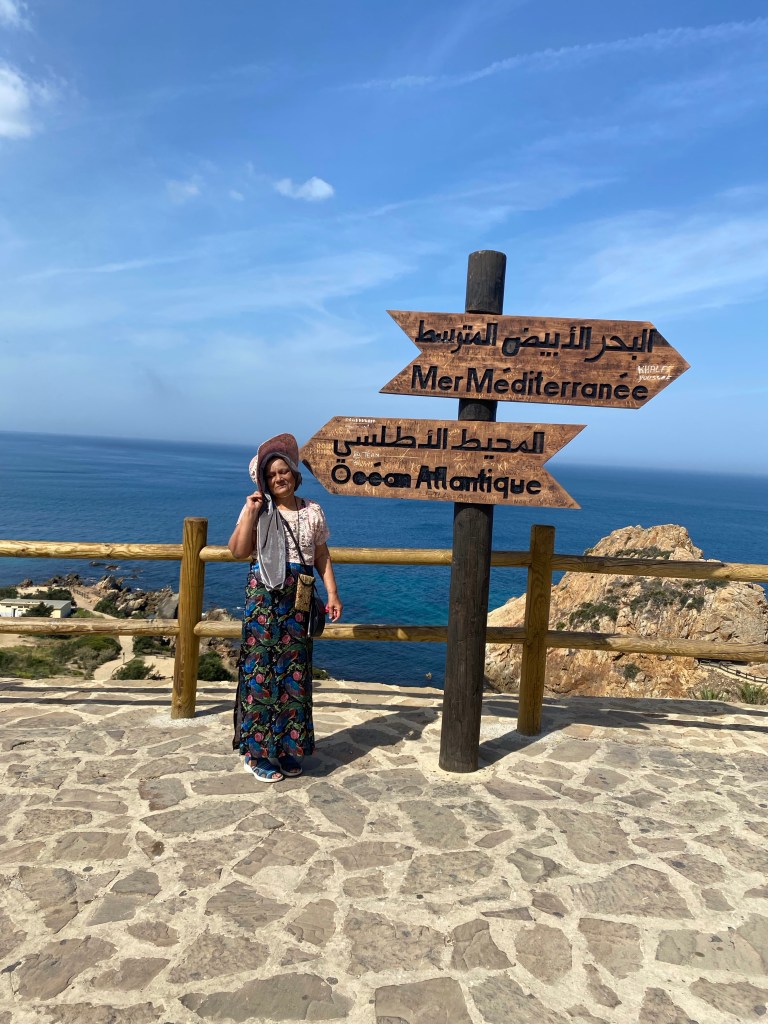
Where Ocean & Sea meet
Cap Spartel, Lighthouse – Maritime Museum 1861
Haima. Portable tent made of camel/goat hair
Ground Water Spring
Ricks Gin Joint. Casablanca
Cafe Hafa. Bay of Tangier
Riad Elias, Marrakech
Chefchaouen

Enroute Tangier – Chefchaouen
Atlas Mountains. Todra Gorge
The Desert at dawn
Erg Chebbi Sahara
Camel milk, tongue, meat, fat stored in the Hump. Everything edible
Unknown's avatar

Malabar Coast

Kannur seafront

Where do I belong? A frequently asked question best left unanswered.

The world’s my home & life takes me places. Every place my own.

Geographical names invariably trigger the wanderlust. Mountains, rivers, streams. Coastlines, above all. The Coromandel, Konkan, Malabar. Fascinating places, lyrical names. How can adrenalin not flow?

Malabar’s the latest bee in my bonnet. It’s where I absolutely must go. No sooner said when a zillion ‘why’s??’ hit back.

“Go to Goa instead.”

“No” I answer.

“Why not? It’s so happening”

“That’s precisely why.”

Others who’ve never heard of Kannur, coo –

‘Coonoor, up in the Nilgiris. Wow !’

Kannur, Malabar, North Kerala, India. I’d considered making it a base for trips to Wayanad, Kozhikode, Mallapuram & Kasaragod. Each within 100 – 150 kilometre radius. Plans made followed by calls soliciting tips from someone who ‘belongs’ there.

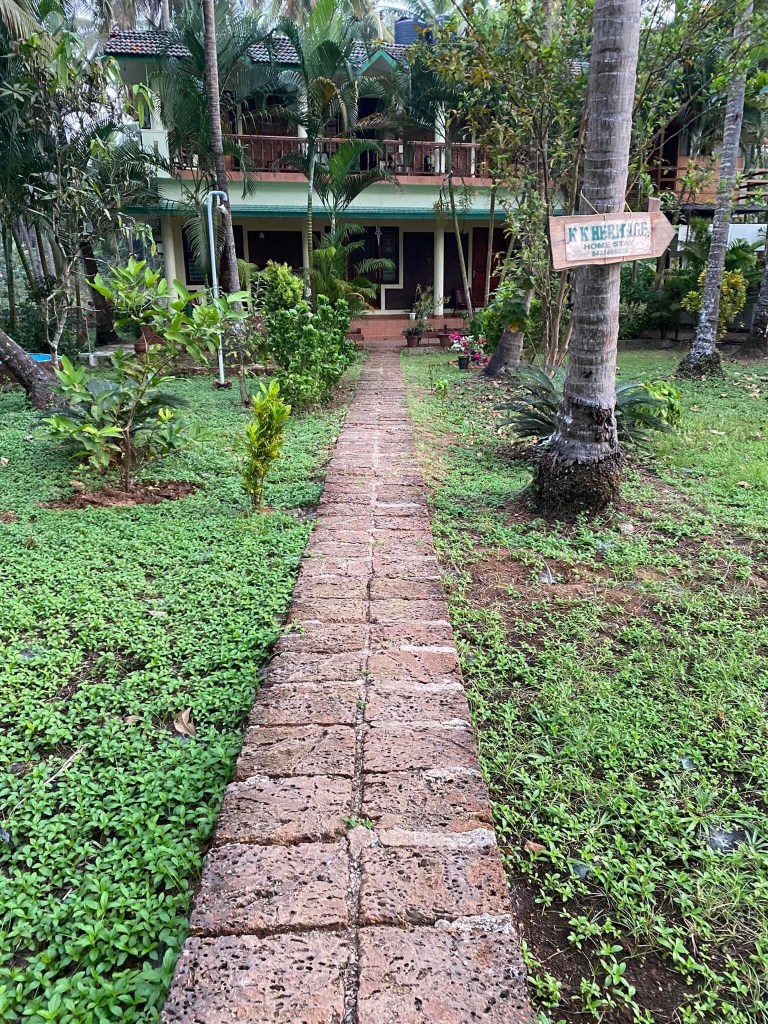
I am offered a place to stay. A bungalow, driver and car. The latter’s welcome but it’s a strict ‘No’ to accommodation for I have set my heart upon a place by the sea. A village homestay on a lagoon.

A tranquil seaside town Kannur has the finest beaches. The Drive In Beach it’s trophy. The only one of its kind in India, the largest in Asia. Loved zooming across it.

The heritage home, 50 metres from the beach had two other wanderers. After morning swim & breakfast the hot day kept us indoor, each of us keeping largely to ourselves. I’d spend the day reading – writing while Antonette sketched the outdoors & Anna worked on her podcast. Antonette has been coming here these last seventeen years & is on first name terms with everyone including the village goldsmith.

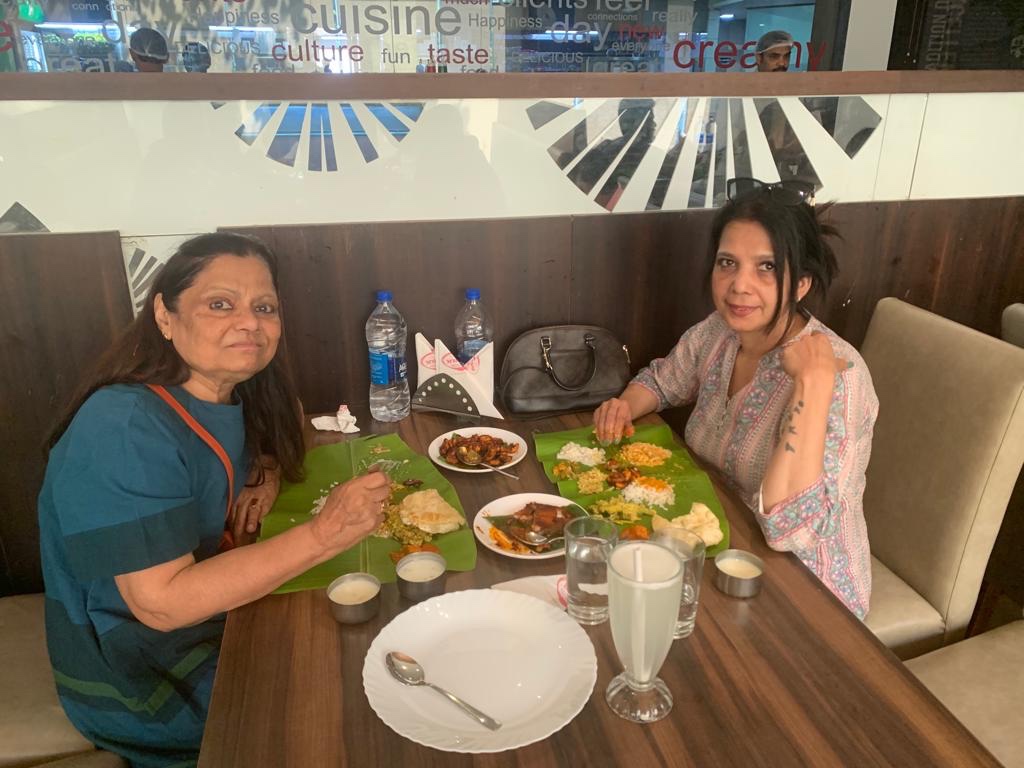
Malabars’ cuisine is it’s hot selling point. Delicious home cooked food everyday. Restaurants serve a ‘Kerala Thali’ that has a large variety, the main dish fish based of course. We ended up having Pomfret fried, golden Prawns, Tuna for lunch & Mackerel – Squid at dinner. All in a day.

Come evening & there’s a knock at the door. Antonette & Anna wanting to know if I’d like a drink. Out come the bottles, a clink of glasses & friendly exchanges. Coming from the ends of the earth there’s much to be said & heard.

The Fort & Arrakal museum are both must – sees. It is the temples that surprise. Not a temple goer I manage three nevertheless – Annapurna, Karthike & Raja Rajeshwar – and have to say there’s something special about each of them. A certain feeling & vibe that touches the core, more than the better known ones elsewhere. These lost in antiquity temples built around little ponds & peepul trees had a strange effect. Hindu temples I’m told were never meant to be places of worship alone. It is where one goes to recharge & contemplate. To energise & revive before starting out for the day.

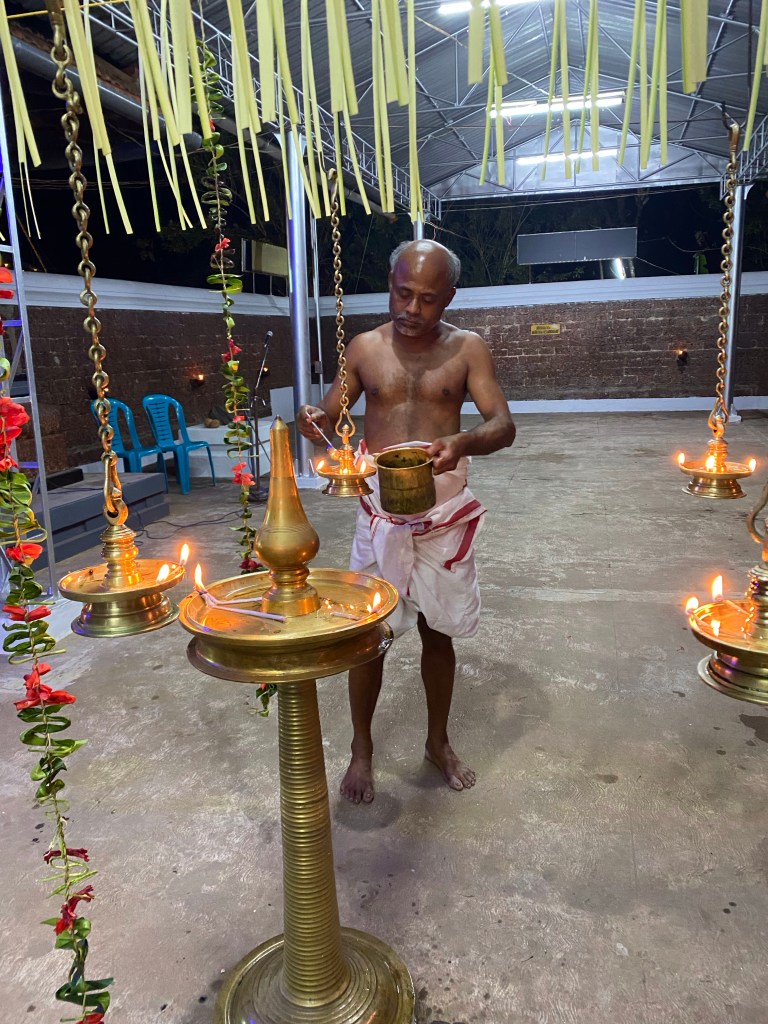
Temples have long been repositories of traditional dance. Peculiar to north Kerala, ‘Theyyam’ can best be described as dance, ritual, tradition, culture & art, all rolled into one. The season begins around October carrying into March. Performed by tribal & lower caste males, the devout – Brahmins among them – seek their blessings & guidance. Theyyam dancers are looked upon as Living Gods. A kind of social order defiance that comes naturally to Kerala.

Negotiating the Lagoon
Puttu Kadya
Kerala Thaali
Typical old Bungalow
At a local temple
At a ‘Thaiyyam’
Beachside Homestay
Old – beautiful

150 kilometres from Kannur, Wayanad is 80% forest. With the Kabini flowing languidly by, it has natural beauty, wild life, spice gardens, plantations & upscale cottages & homes. A smooth drive up to a mountain plateau, it was amusing to see large Messi cut outs all along the way. A soccer crazy world after all.

Far from the madding crowd ‘The Spice Trail’s a 15 acre plantation growing coconut & rubber along with every spice imaginable. Bird watchers delight, a natural stream runs through the property crisscrossing its many trails & walks. Family owned, the spice garden is beleaguered with acute labour shortage, a consequence of the young & able shunning farm work in pursuit of Gulf dreams, even if it means earning a pittance.

Santosh & Sheeba’s rice fields lie barren therefore. They’ve had to give up animal husbandry too & taken to letting out rooms to supplement income. The silver lining being the opening of minds & widening horizons for their two little girls who’ve benefited from interaction with travellers from around the world. Santosh’s eldest, his pride, now studying to become an archeologist.

Known as the land of lore & looms, north Kerala is blessed with natures’ bounty. A land of abundance & plenty, gone are the literate & semi literate beggars of yore. Gone too the topless old women & long – skirted girls.

There is longevity as before. The big difference – erudite old men bemoaning the direction the country is going.

“It’s not what we strived for”

Dreams die first. More’s the pity.

Wayanad church
Spice garden trail
Crossing the Kabini

Unknown's avatar

Pining for those Pines

When ‘Liberty of the Seas’ docked at ‘Civita Vecchia’, our excitement leapt unbound. Rows of buses lined & ready to transport us into town. Details of that drive are blurred, not the moment of entry, first glimpse & impression. Watching knee deep crowds from a high seater bus, a Romanesque extravaganza unfold, made me want to jump out in frustration. All I did was gawk at the grandeur that was Rome. The guide drew attention to the unending line of monuments on either side of the moving bus. Not knowing whether to look right or left. Or in front. Whichever way one turned one would miss something or the other. An architectural trove. An open air museum. Was it for real?

A first visit, seeing Rome this way was heartbreaking. I could have killed myself.

The second time, five years later, was a definite plus. A month long solo trip that involved a lot of research & planning. Wanting to pack-in as much as possible I over stretched to include Florence, Pisa, (Tuscany/Chianti countryside), Cinque Terre, Venice, Naples, Pompeii, Salerno & Amalfi along with Capri. Which in effect left just four – five days in Rome.

Difficult choices. What’s to do?

*Onboard Apertivo. A boat ride down the Tiber past Romes’ only island – Tiberina. Under ancient bridges offering splendid Vatican views.

A midnight walking tour especially enjoyable without daytime hordes that practically take over the city.

Double flavour gelatos (past midnight) around Trevi, the fountain lit up fairy – like.

The metro to the Colosseum, a walk around & the tram to Trastevere.

Caffe & trattorias for the Carbonara Rome’s known for.

And a last ride on ‘Leonardo’ – to the airport, going back home.

Got a sense & feel of the city that left me asking for more.

Soon it was time to leave.

Arrivederci Roma.

Another five years & I was back with a clearer idea of what I desired. I wanted to roam around at random. Care-free, unmindful. To experience the city first hand. With a plan & a will it was doable. Only 4 days once again. Even so.

Aided by http://www.com self guided walking tours were curated.

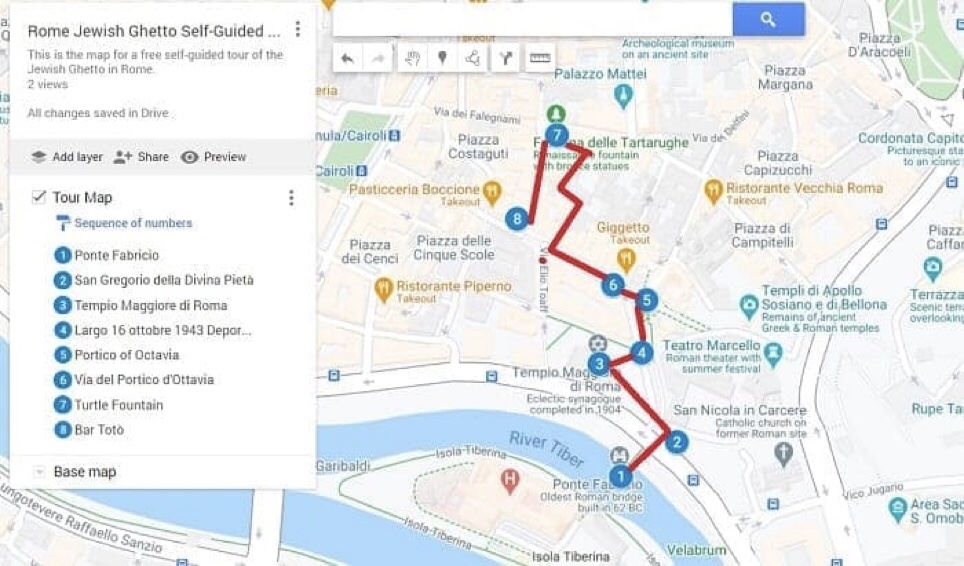
Jewish Ghetto Tour. I got pickpocketed aboard Bus 64 going to Largo Torre Argentina. It was bound to happen. What’s Rome’s without hiccups. Jokes apart, I should have known better than board a crowded bus.

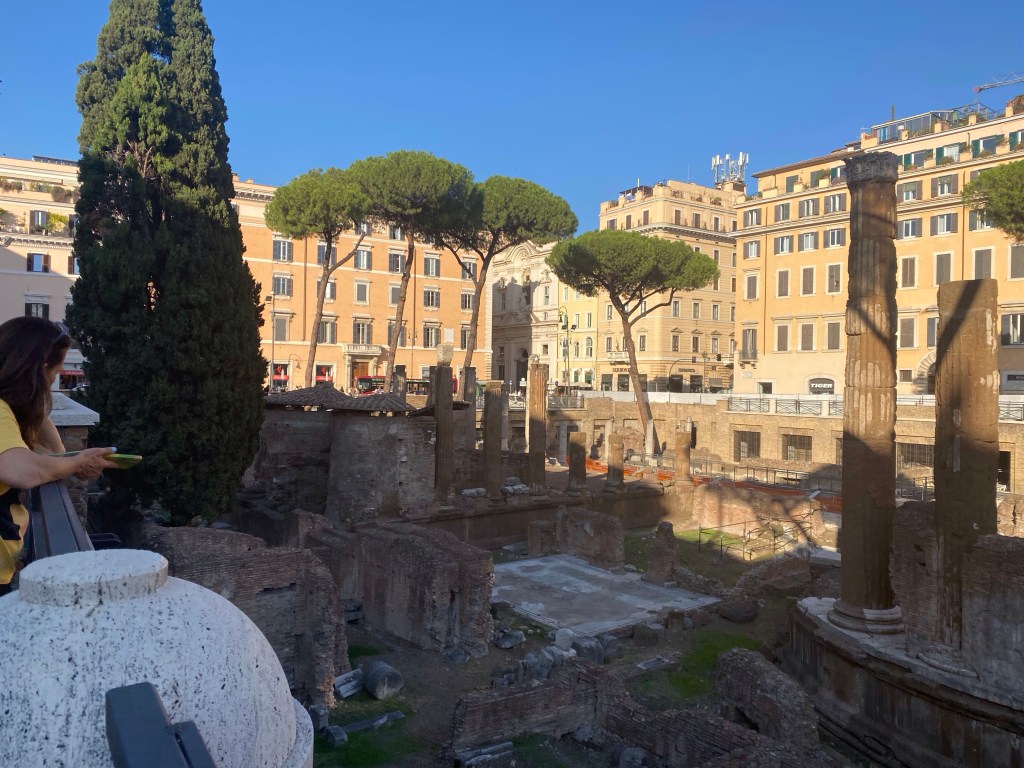
Piazza ‘Largo Argentina’s an archaeological site not many visit or know about. Hollowed out ground off the main street, it has ruins of four Republican era temples. Overlooking it is Teatro Argentina, a modern state-of -the -art theatre built on the remains of another – Pompey’s – ancient one. Home to a large colony of cats, one can hardly believe it was once the seat of the Roman Senate. The spot where Julius Caesar was stabbed – 23 times (44 bc) – The Ides of March. “Et Tu Brutus !”

A busy transport junction it has cafés, parks, bars & restaurants. A cool place to hang around.

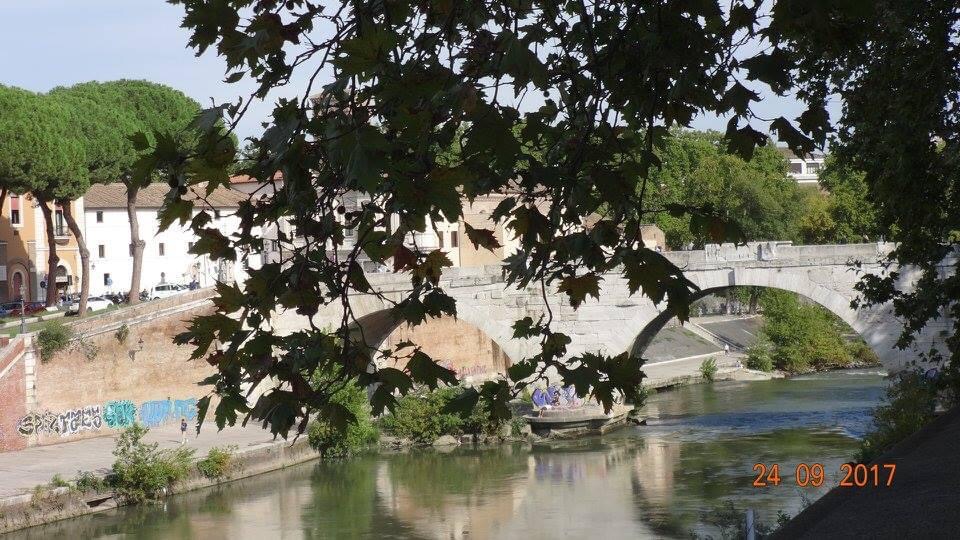
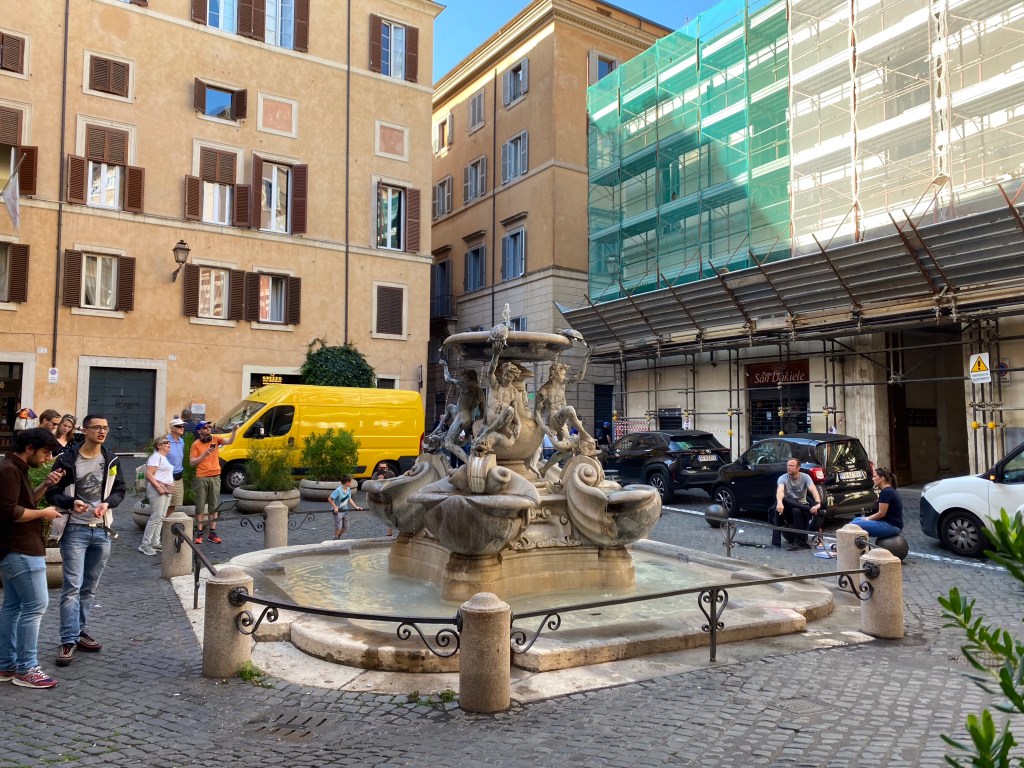
I begin walking from Torre Argentina – ‘via Arenula’ to reach the Tiber, turning left to walk along the river front – ‘lungotevere,’ – the Vatican & Sant’Angelo across the river to the right. At Ponte Fabricio, the oldest Roman era bridge (62 bc) still in use, one could take a right to go to Trastevere & the Vatican or simply cross the road taking a left for the Jewish Quarter. A Catholic Church at the corner the landmark, onwards to the Synagogue, museum, theatre Marcello, Portico Octavia & Piazza Mattei. The last with its absolutely must – see Turtle fountain: Fontana Tartarughe

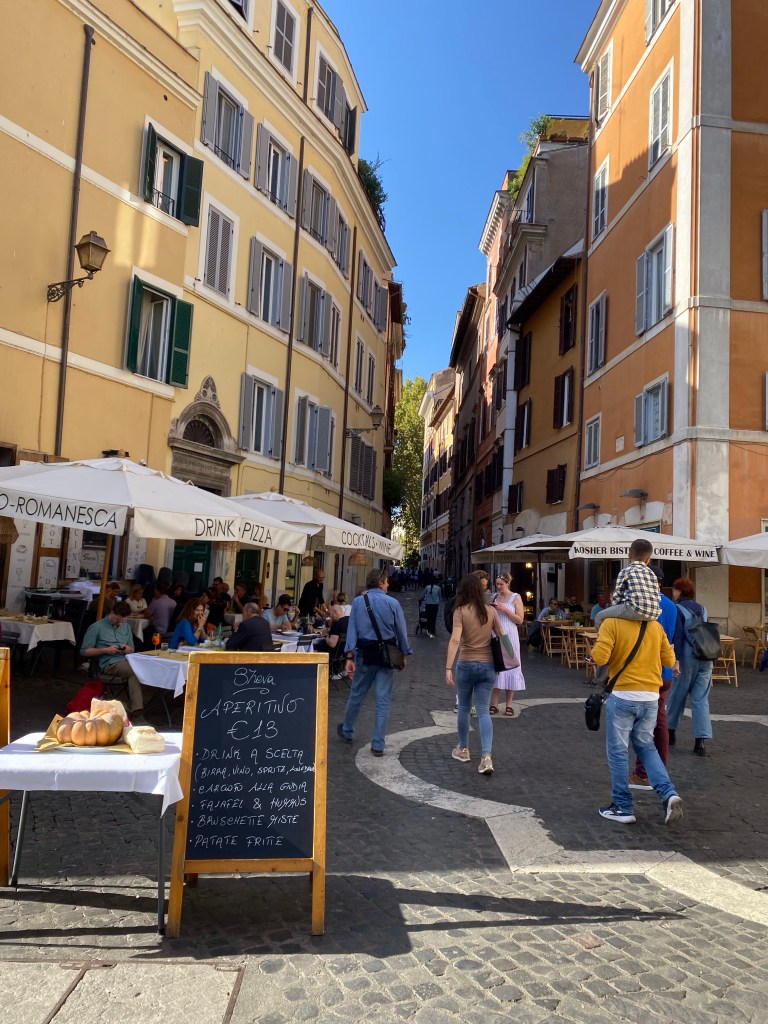
Old cobblestone streets, buildings in rich ochre-orange tones, the Jewish Quarter is fascinating. Largely traffic free, vibrant & alive it is best to walk it’s maze of lanes & by lanes, soaking in the atmosphere. With stone benches to sit & people watch & outdoor eateries that provide the best Jewish traditional. All Kosher of course. Even coffee & sushi – whatever – The deep fried zucchini flowers were best.

The main attraction is the Synagogue & Museum. A pleasant way to while away the afternoon, the place has history. And, it makes a statement. Portico Octavia’s where a thousand plus Jews were rounded up for deportation. On Oct 15, 1943. Never to return. Along the walk one stumbles upon brass plaques embedded on cobblestones. Called ‘tripping’ stones for you to slow down & ponder. They bear names/dates of victims, stirring both remembrance & feeling. A short walk distance-wise, one ends up spending hours. Such is its charm.

Rome Jewish Ghetto Tour
The Tiber
Ponte Cesare
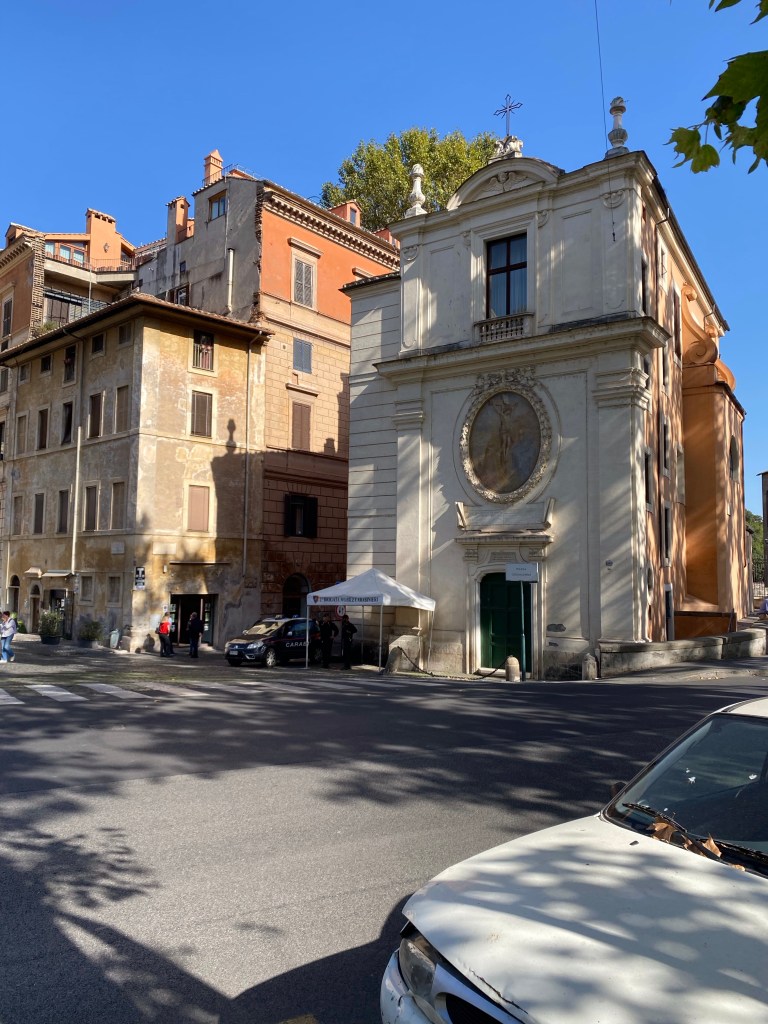
Entrance to the Jewish Quarter
Portico Octavia
Turtle Fountain
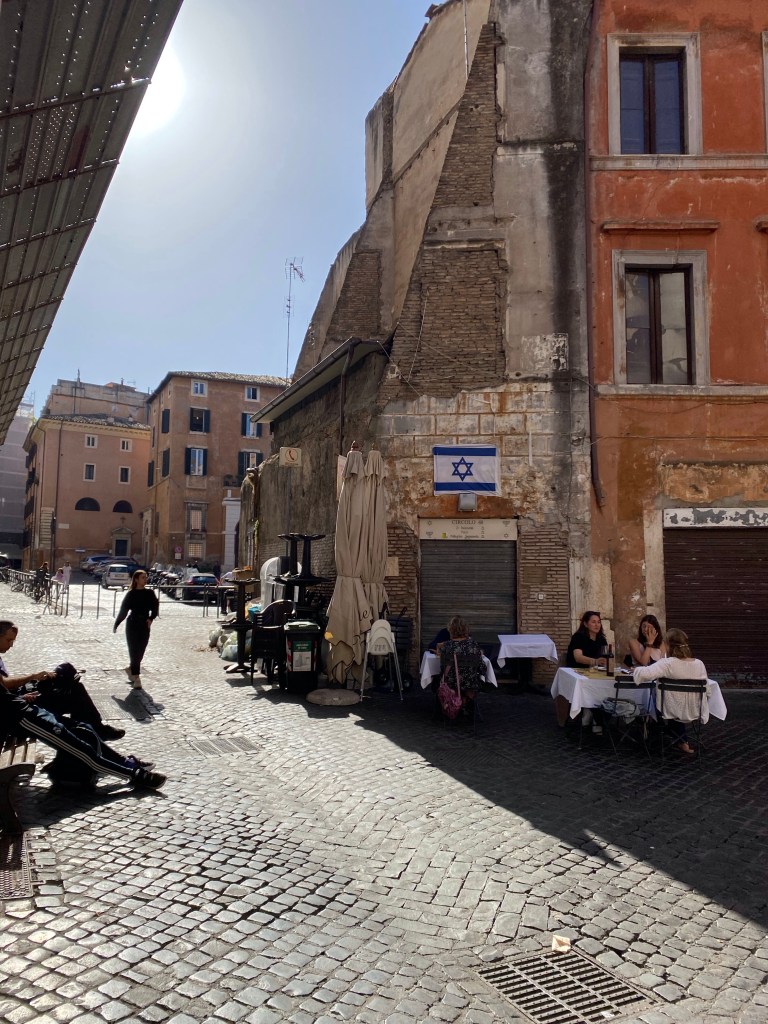
Jewish Quarter

Tour 2 Via Napoli – via Nazionale – via Fontane, across back streets to the ever popular Fontana Trevi. The crowds seen to be believed. But crowds can sometimes be fun. I plonked myself on the steps of an adjacent church and sat down to watch & enjoy. (One of the many advantages of travelling solo)

When I’d had my fill of crowds, time again to strike out alone. On to via Condotti, Romes’ upscale shopping street, to the Spanish Steps and ……… more crowds. How does Rome cope, I wonder.

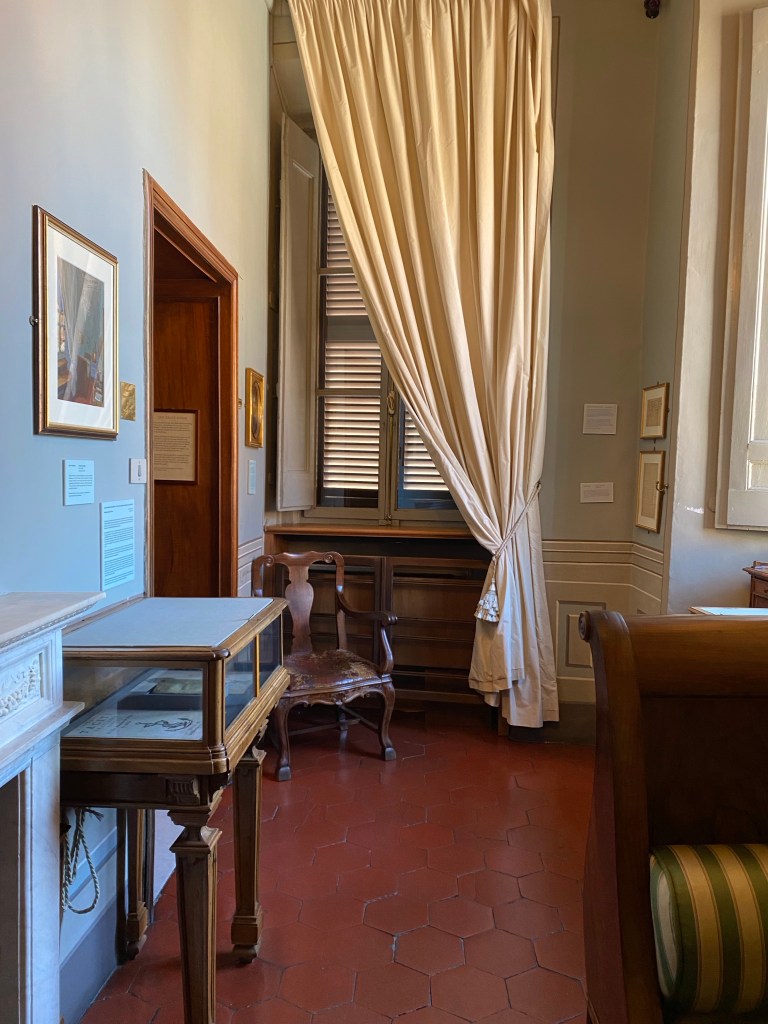
Been here, seen that. The sights – piazza, church, obelisk, monument & fountain. Each clicked & written over a thousand times. I’ve come looking for the Keats- Shelley House however. ‘Casarina Rosa’ as the locals call it. A memorial to Romantics it was for me a place of pilgrimage. A bright red banner proclaims its presence on the second floor of the building to the east of the Steps. Alas, for a yet to be recognised poet to die at twenty five. Keats spent his last days here, with a clear view of the Steps, the Square & Bernini’s boat shaped fountain. I looked around the museum, watched a documentary on his life & left – for Piazza del Popolo. Walking all the way back to the hotel having clocked over twenty thousand steps, hurray!!

Largo Torre Argentina
Keats – Shelley House
Keats House Interiors
From Capitoline Hill
Spanish Steps
Around Bernini’s Boat Fountain
Via Condotti
Piazza Popolo

Tour 3 What could be nicer than walking the streets accompanied by a local? One born & bred here. Who better than my one time language teacher (Italian)? Architect by profession, Carlo loves the city. We spent the day walking & chatting – history, culture, arts – step by measured step, stopping by places, breaking for lunch. Pizza-beer at an ‘antica trattoria’.

Food’s no trifling matter, going by the category of eateries. A ‘trattoria’ for instance is not as formal or high end as ‘ristorante’ but it’s a notch superior to ‘osteria’. A ‘Pescaria’ serves fish based cuisine & the difference between ‘caffe’ & ‘bistro is small but significant. If you wish to sit & eat out in the open you must go to an ‘Al Fresco’. And if it’s fast food you crave there’s ‘Tavola Calda’. A ‘Pizzeria’ is simply what the name states. And ‘Enoteca ? – the closest to a tavern, pub, bar.

Grazie Signor, that was quite an education.

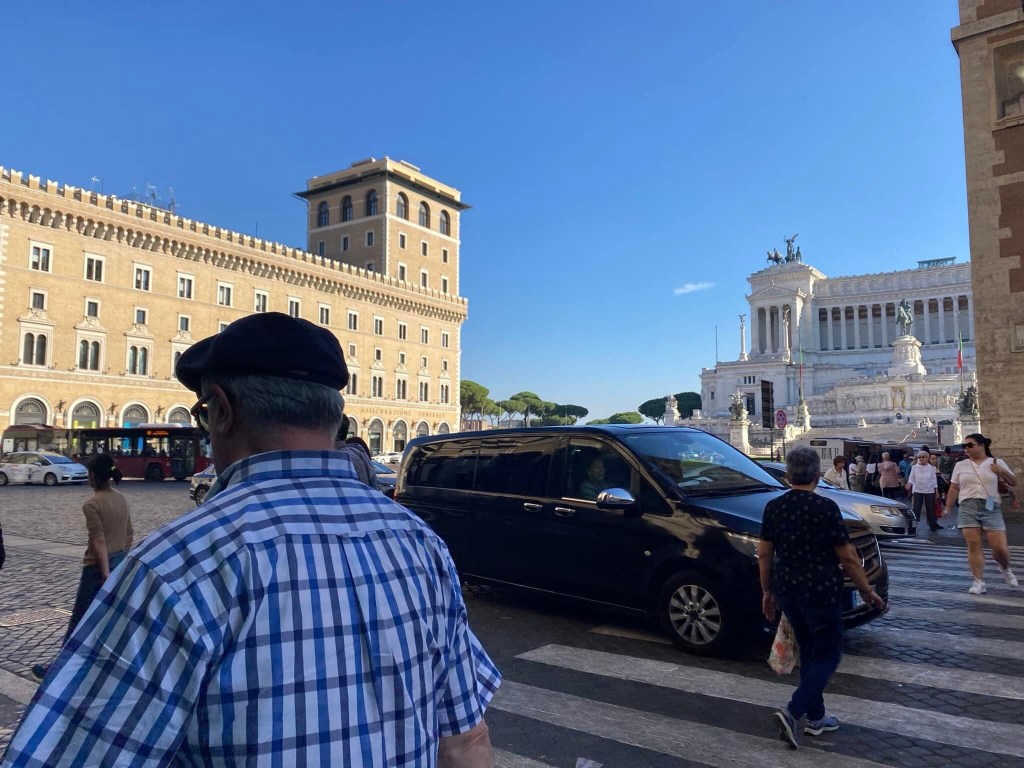
A mild October sun radiating warmth & joy we started near Piazza Cinquecento, crossing streets & back streets between via Nazionale & Piazza Venezia. Right across stood the building from where Duce Mussolini had addressed crowds, giving fascist speeches from the second floor balcony. To its right was the Tomb of the Unknown soldier, a monument many years in the making. One every Italian loves to hate. Some call it the wedding cake, others the typewriter. Not surprising in a country with fastidious taste. Foreign tourists flock to it however. Its humongous size the attraction perhaps.

Crisscrossing streets & alleys we arrive at Piazza Navona & Bernini’s ‘Fountain of Four Rivers’ – a remarkable piece of baroque. From there to Capitoline hill for an uncommon view of the Roman Forum.

Despite belonging to different periods of history a noticeable feature of the architecture is that it comes across as a harmonious whole. The modern alongside the ancient & renaissance, medieval, baroque, all juxtaposed side by side. Friendly & approachable and without arrogance. These monuments were never meant to intimidate. They exist for everyone’s pleasure. Walk you must. The only way to truly enjoy the city.

City of palaces & squares, fountains, gardens & springs. Everything on a grand scale, everything captured & documented a zillion times. The little things too draw attention.

Never before had I seen construction sites camouflaged so aesthetically. Giant posters with post completion images cover entire walls. Even before completion. To enable passersby I was told, to familiarise themselves with street/ corner/ place & not feel disoriented on coming upon it suddenly.

Practically every road had a sunny & shady side, giving pedestrians the choice of walking whichever side they preferred. A practical lesson in urban design – planning.

Anyone visiting Rome would have noticed the Stone Pines. Those beautiful, stunted, umbrella like trees that standout amidst a sea of ochre. The pines seemed taller than before. Had they really grown or was it my imagination.

Back home in India the trademark pines are the first thing I sometimes see on waking up each morning. Stark – dark & strangely alluring. Some kind of a karmic connect surely.

The infamous balcony (view blocked unfortunately) & the Wedding cake
Under construction Site with Advt et al.
Trastevere

Unknown's avatar

Sicily

No love for Paris. It was first port of call only because France gave Schengen V. Forty eight hours, no more I swore & ended up wasting half a day tackling post Covid challenges. Travel no longer easy, the pandemic had wreaked havoc on the psyche too.

I did manage a few delightful hours at Montmartre, walking up the 200 odd steps to the ‘Sacre Coeur’ for a fantastic view. Watched little children run, play, ride the carousel & chase pigeons in the sun.

Then off to Sicily, the largest Mediterranean island.

Why Sicily? It is the birthplace of the Mafia. It is also fifty years of ‘Godfather’. Long exterminated, the mafia no longer exists. There is instead a ‘No Mafia’ museum. A citizen enterprise open everyday, entry free. Unsurprisingly there is a lot of ‘mafia’ nostalgia. The hugely popular ’Don Corleone’ tour cashes upon it showing visitors around places where the film was shot. Sound business sense. Why not?

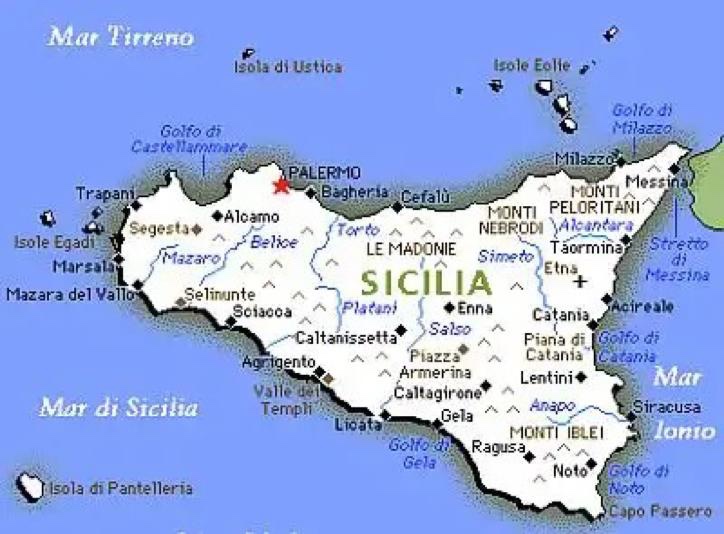
I solo circumnavigated the island in 20 days. From Palermo the capital to Stromboli, Catania, Taormina, Siracusa – Ortigia & Agrigento.

Alluring landscape, delicious food, fascinating history, varied culture. Sicily has it all. Every ethnic group that ever came here – Arab, Norman, Byzantine, Greek or Roman – left an indelible mark on its cuisine & architecture.

A blend of Italy & Greece, a cocktail of cultures, there is something robustly magical about it. As for the average Sicilian, he is passionate about everything

Italy’s fifth largest city, Palermo comes across as chaotic & grimy. It scores high on charm not cleanliness & can best be described as a city upon cities going deep into the earth one below the other. There are buildings with glass floors under which are visible ancient walls, fortification, artefacts from layers of history. The pride of a city in its well preserved past.

Music fills the air at the historic centre, ‘Quattro Canti’. An opera singers’ deep tenor serenading crowds from Romeo – Juliette balconies. Around the corner is ‘Fontana Pretoria,’ the Fountain of Shame with statues of nude men & women from Greek & Roman mythology. Defying convention, cocking a snook at the seminary, nunnery & church nearby. Nobody seems to mind nor is anybody scandalised. The priests & nuns least of all.

It’s a pleasure walking streets & back streets, soaking in the atmosphere, going in & out of churches (leg & shoulder fully covered), idling by roadside cafés. Granita in hand. Or an Aranchina. Perhaps a coffee – Canola. Palermo is easily the street-food capital of the world. And Sicilian tapas has great variety. You cannot miss having ‘Panificio Pollicino’ the local pizza. I liked trying something new everyday & chanced upon ‘Polpette di Sarde’ a dish of sardine cakes stuffed with pine nuts & raisins & served in a rich herb infused sauce.

No Mafia Museum, Palermo
Palermo Harbour
Archeological sites under shops & buildings
Film shoot at the Fontana Pretoria

Italian railway is streamlined, efficient. It is also the best way to see the country. Train cancellations happen but with systems in place disruptions are rare. I experienced it first hand when a connecting train was suddenly cancelled. A Flix Bus arrived transporting passengers to their destination, taking us cross country with the added pleasure of seeing places we never would otherwise.

The trip up the Tyrrhenian coast from Palermo to Milazzo must rank among the most beautiful train journeys of the world. It takes 2.30 hours, the tracks running closely parallel to the coast, less than five yards in places. With a window seat facing the direction in which the train was moving stunning views flash by.

Palermo to Milazzo by train

The highlight was of course crossing the straits from Messina (Sicily) to Villa San Giovanni on the mainland. The Palermo-Rome ‘Intercity Notte’ takes 12 hours & is a memorable experience. Bedding, water, chocolate bar, juice provided, as is a mug of steaming hot coffee early next morning. Not to forget breathtaking views along the way, the stretch from San Giovanni to Naples especially.

At Messina the entire train (8 bogies) is loaded on to a ship in a precise, clinical manoeuvre. The exercise takes about 2 hours including a 30 minute halt at Messina. Thirty minutes loading, thirty for the crossing & another thirty off loading & assembling. The train rocking gently on the ferry one is literally shipped to Italy. Passengers have a choice of continuing inside the coach or coming out on the deck for a breath of fresh air – coffee.

The Strait of Messina is narrow – barely 30 kms. It is therefore unclear why an underground tunnel or overhead bridge cannot be made. Reasons like the meeting of seas are often cited, as are currents & geological fault lines that cause the mainland to drift.

Loading the Inter- City Notte on to the ship

A quiet seaside town, Milazzo is the gateway to the Aeolian islands. I took the hydrofoil, negotiating choppy waters at terrific speed, a 2.30 hour ride to the farthermost island – Stromboli. The first thing to catch the eye is the mountain/volcano looming large over the tiny isle. It has been bellowing smoke & fire, spewing lava for over 2000 years. I am lucky to get a room with some kind of view but the fireworks are best observed at the opposite end from around the island. I plan to do it from a boat bobbing on the waters.

A perfect holiday destination Stromboli is barely 8 kms end to end. Scenic, remote, beautiful, it has wild flowers & rare botanical plants. One can spend time walking, hiking, trekking up the mountain, swimming or spending happy hours drinking, eating, reading & relaxing. Shopping too, for souvenirs made of black lava. Besides a picturesque lighthouse, church, village & observatory there is a museum dedicated to screen pairs down the years, inspired by Ingrid Bergman & Rossellini the lead pair of the 1953 classic (‘Stromboli’)

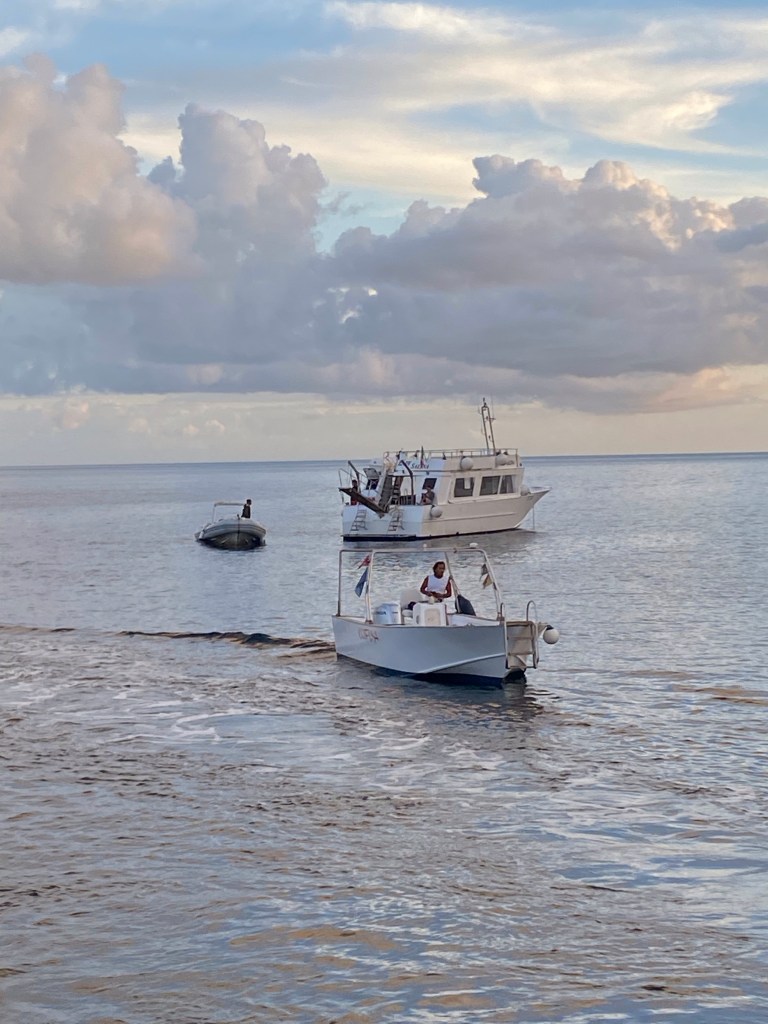
The sea around Stromboli
Stromboli in all its glory
Strombolica

Sicily’s second largest city Catania was the springboard for trips to Taormina & Etna. (A meter gauge train goes right up to the foot of Mt Etna). In the shadow of an active volcano that rumbles & spurts, Catania is compact & easy to walk, a favourite among tourists many of whom prefer it to Palermo. I enjoyed walking the main street Corso Emanuele & Duomo Piazza with the black lava Elephant Fountain. Catania’s subterranean river, Amenano, surfaces at a baroque fountain in the corner of the square. Carved with mythological figures it separates the piazza from a bustling fish market. Adjacent to it is Sicily’s oldest university (1434). Great Baroque architecture, great food, I liked Catania but didn’t find it exciting. Not many will agree. The shortcoming mine for not giving it enough time, being in too much of a hurry to get to Etna & Taormina.

Piazza Duomo Catania
Amenano fountain – spring

Devoid of natural vegetation walking under a harsh sun can become an ordeal. It was a rainy day luckily making the 5-6 km walk pleasant & enjoyable. A blessing of sorts that cost me a visit to the ‘Scala dei Turchi’. Just about ten kms away I got to see it only in passing. Wedged between two sandy beaches these stunning limestone cliffs are in the shape of a staircase. Called Turkish Steps as it became a safe haven for Turkish pirates who boarded, landed & took shelter here.

Atop a promontory on the Ionian sea the latter is a gem. A charming mountain town with shades of Amalfi & Cinque Terre but less crowded & touristy. A cable car connects Isola beach to Corso Umberto the main thoroughfare ( €3 / every fifteen minutes). A fifteen minute walk end to end Taormina quite literally has beauty spilling down its mountain slopes – enormous sea views, Mt Etna views, medieval ruins, a Greek amphitheatre, churches & cafe lined squares. A ‘passeggiata’ of sorts, the most popular activity strolling, people watching, window shopping. A one street wonder it is wonderful.

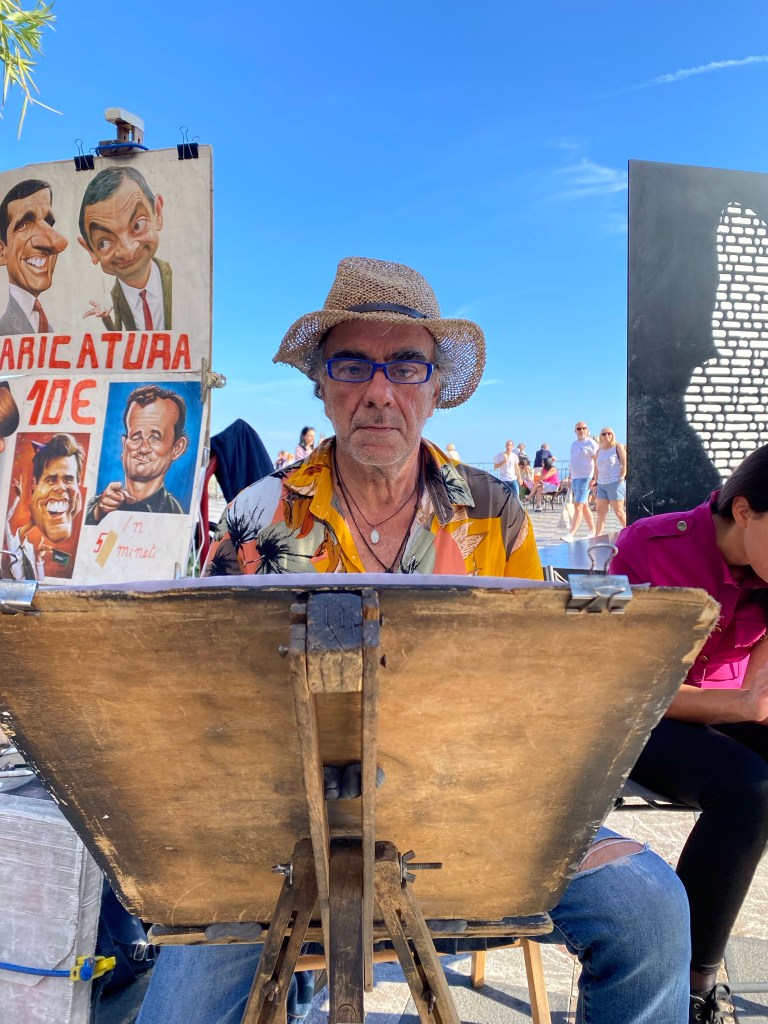
Caricature artist. Taormina
Taormina views
A superb example of Baroque. Taormina

Among Italys’ famous three, Mt Etna at 3350 m is the highest (in Europe). Also the youngest (1000 years). It has been erupting for centuries, the last big eruption in 1669 when Catania was completely destroyed. It is a six hour day trip from Catania. Three hours to and fro & another three for a halt 2000 metres up. The wind – chill factor is high. There are eating & staying places, a bio-park, birch woods, vineyards & citrus groves. One either treks up from 2000 m or takes the cable car upto 500 metre’s short. OR, circumnavigates from the comfort of a small train. Silvestri the central crater is active as are fourteen others. There being 260 scattered craters in all.

And…. taking ‘work from home’ to a whole new level, a fellow with a laptop. One begins to wonder…

Mt Etna @ (1000’). Hut made of lava

A reference to St Paul/Siracusa stored in hidden memory, Ortigia had entered the consciousness long before reaching there. Along with a very definite connect was the mystery of the unknown. Small seaside towns enamour. This was perfect.

Two little bridges connect this magical isle (1000 x 500 meters) to Siracusa, birthplace of Archimedes. A lovely Baroque town, world heritage site, Greek, Roman, Jewish & early Christian influences visible everywhere. One can imagine it some 2000 + years ago. Not very different I guess. There – in lies its charm.

A no traffic island with parking along the periphery, it is immensely walkable. And walk I did exploring it end to end, tasting each & every flavour of Granita along the way. Negotiating streets & alleys, map in hand for better navigation. Doing the forbidden – talking to strangers. You simply cannot get lost, would find your way if you did.

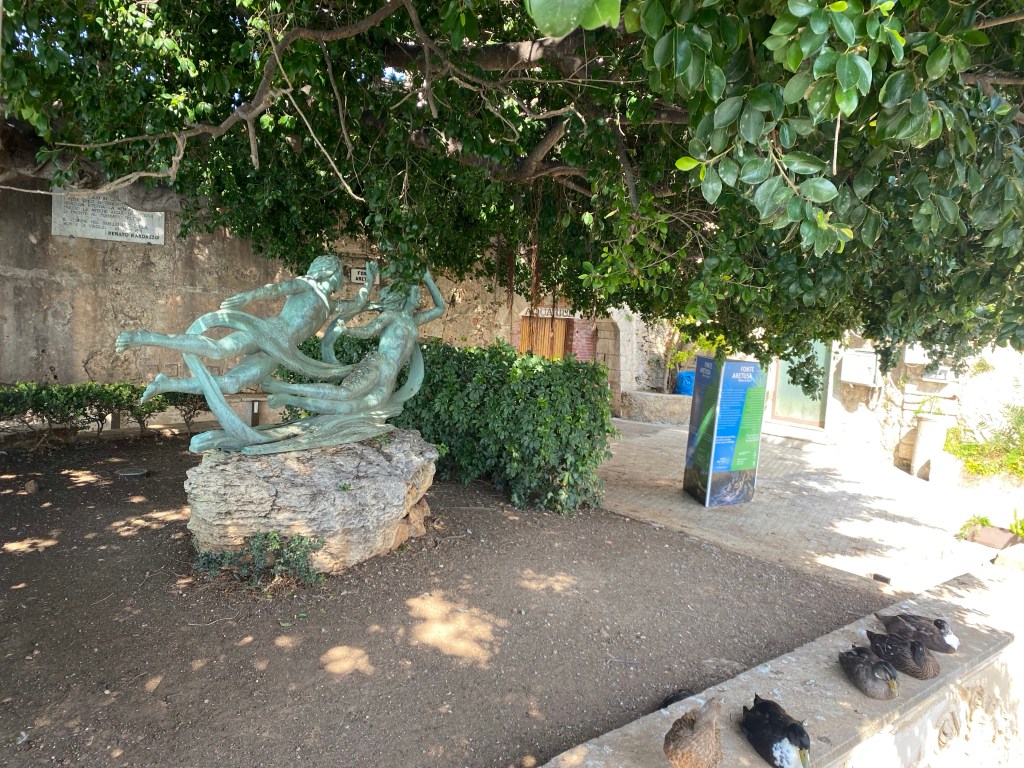
500 m from the train station, Piazza Pancali’s the hub. Six streets leading to six different directions radiate from here. It has cafés & bars, an ancient market & St Paul’s church that overlooks the ruins of the Temple of Apollo (6 BC). My walk starts here going past the ruins & the church to Dianas’ Fountain in Archimedes Square. Onwards to the Cathedral (former temple of Athena ) & Arethusa Spring. It has a really evocative sculpture of ‘The Chase’.

Sea winds, sail boats, blue waters, bluer skies, I am at the southern most end in front of the supremely imposing Castello Maniace. A military base, one can wander around nonetheless. Turning the corner at the castle the walk continues along a splendid marina, the waters of the Ionian washing against the shore. A tiny ‘spiaggia’/ beach along the way surprises. It has a few bathers & swimmers. Wandering & wondering I stroll into an alley to find myself in the fascinating Jewish Quarter. A feast of sights & sounds. Then out again into a large Square that has the temple of Minerva – a place of Christian worship today.

Time to treat myself to a beer (Peroni) / Tuna – pasta, don’t you think?

Self guided walking tour, Ortigia
‘The Chase’ Arethusa Spring
Beach head, Ortigia

A train to Noto leaves every four hours – €5/30 minutes. Another heritage site, Noto is early 18 century Sicilian Baroque – churches, palaces, squares, architectural sites. I took an early morning train hoping to spend an entire day out but a sudden downpour spoilt the fun. An enchanting train ride across rain washed countryside the only consolation.

Siracusa to Agrigento – just about 150 kms as the crow flies. One ends up clocking 250 instead. Thanks to poor connectivity. There are no flights or direct bus/train connections. One has to travel back via Catania. A bit of an annoyance considering that moving from place to place never took more than an hour or so thus far. And to think that Agrigento was just about 2 hours from Palermo, I certainly could have planned it better. On the flip side was the thrill of going deep into the interiors, never mind that it took more than 6 hours doing so.

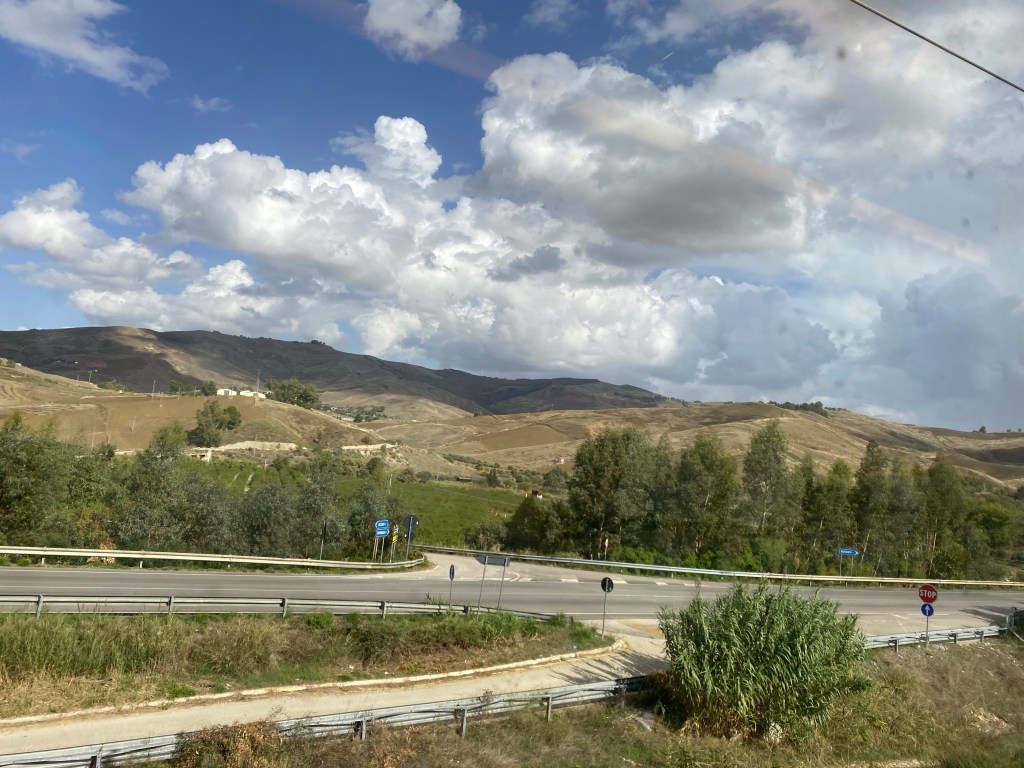
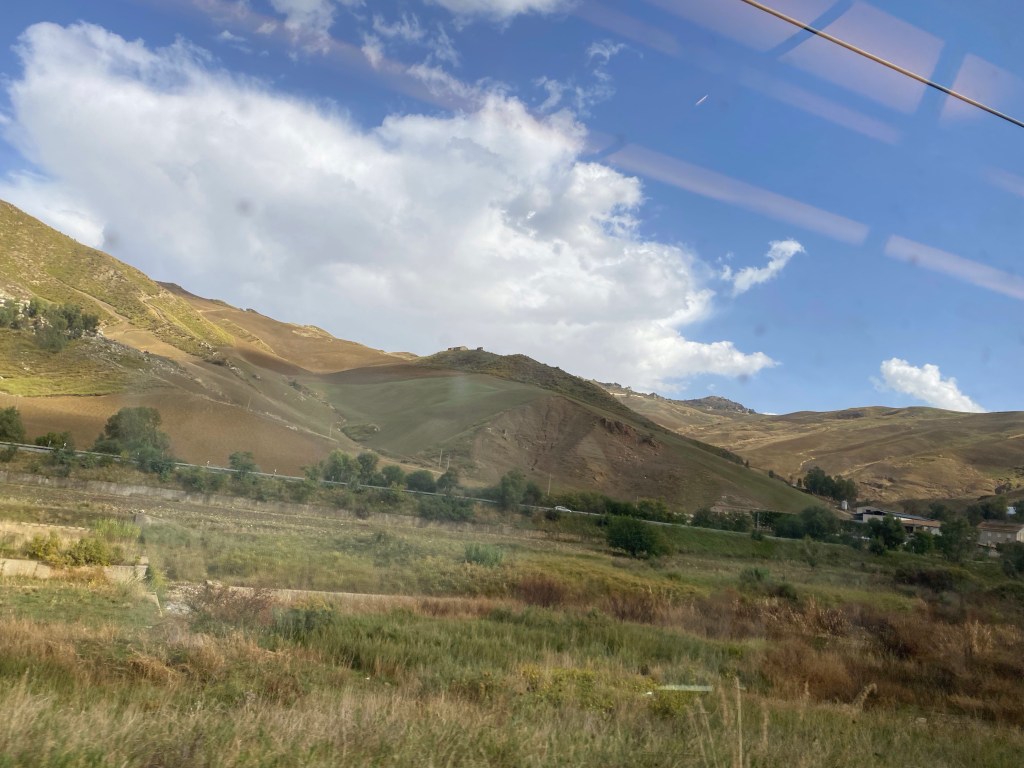
The Sicilian heartland is a kaleidoscope of hues – black, brown, tan, shades of green. Wide, bowl shaped contours, fields of yellow & green interspersed with dark magna rich soil. Sweeping downs & gentle slopes leading to mountains on the rim.

A small, quaint town Agrigento’s main street has flights of stairs ascending to higher streets & alleys. Full of cafés & bars, restaurants, book stores, shops selling jewellery – fashion brands & churches. Church bells ring out every half hour but there are no candles to light, churches having switched to an electric system where candles light up when a coin is inserted.

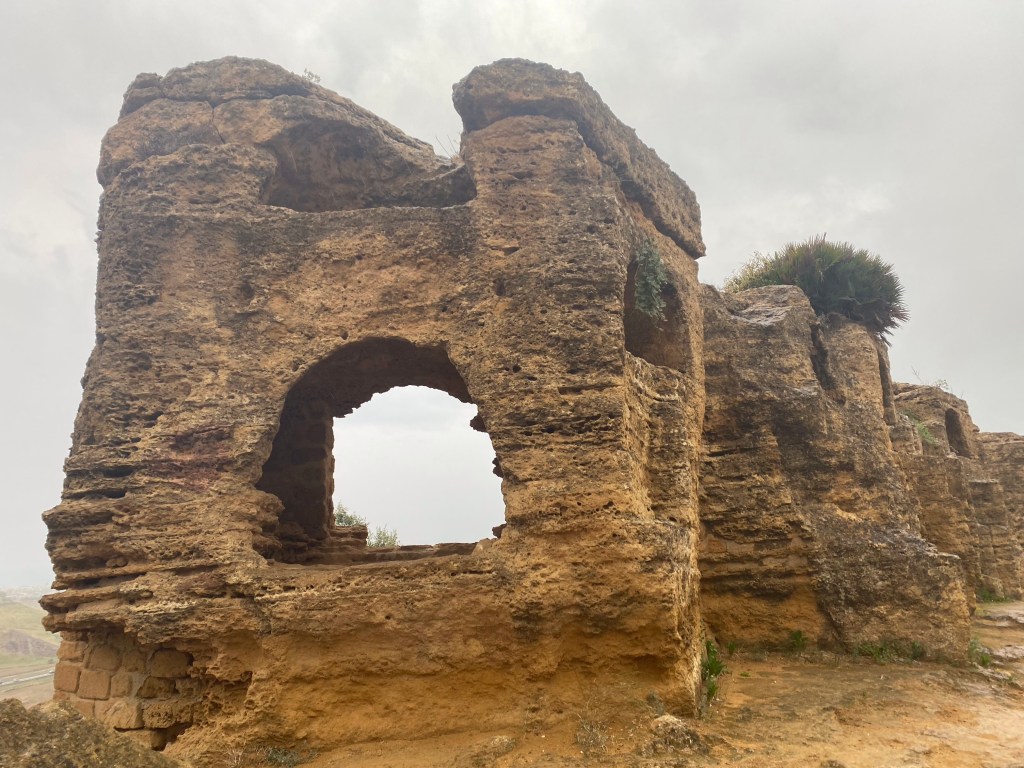
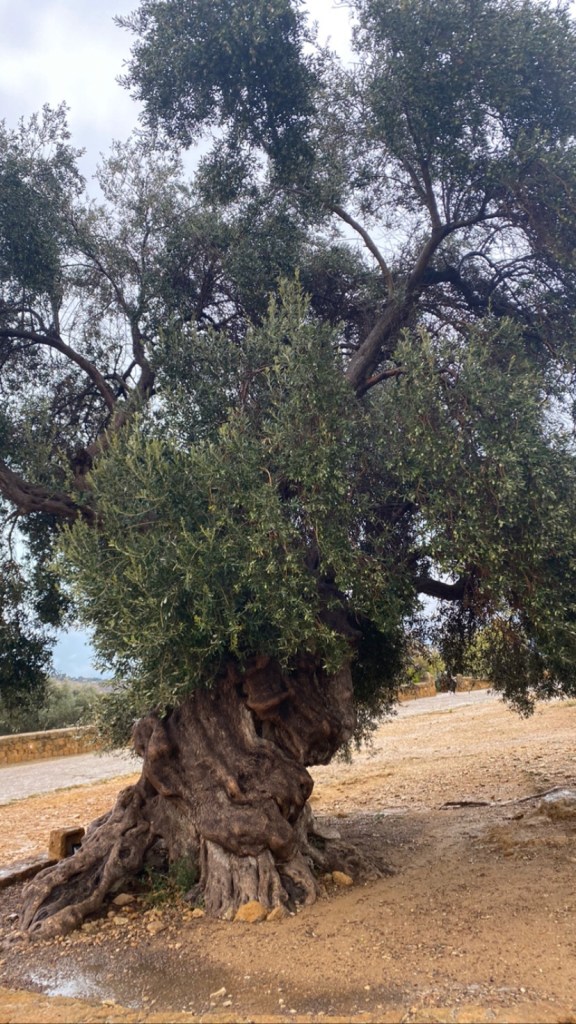
The Valley of Temples, a 2500 year old archaeological site is on the outskirts, 3 kms away. It has remnants of the ancient Greek city of Akragas (5-6BC). Spread over an area of 13 sq metres there are Greek & Roman statues, seven Doric temples & a series of Byzantine tombs built into city walls/fortifications. The temple of Concordia 430 BC is the best preserved, a fallen Icarus & a gnarled 800 year Olive tree by its side.

A lush green, shady corner of the site, history & nature meet at the Kolymbetra gardens – A citrus grove with over 300 + labelled species of Mediterranean plants

Piazetta della Camilleri, Agrigento
Section of Akragas city walls 5-6 BC
Valley of Temples Agrigento
Over 800 year old Olive Tree

Some Takeaways

*A 20 day solo trip with an 8.5 kg backpack.

*Visa delays & woes. Well laid plans out for a toss. Impromptu travel instead.

*Delicious food everywhere. My vote however goes to ‘L’Ambasciata di Sicilia’ Agrigento (1928) for the best Ravioli ever.

*Sicilians have winsome ways. This one goes to the unknown stranger handing me a 10€ note & scurrying off hurriedly. Thought me a beggar or was he just being nice. I’ll never know.

*Towns. All charming. Have to hand it to – Ortigia though. It was the best

*The weirdest thing, Sicilian breakfast of course. Ever heard of Brioche with a filling of Granita?

*A Sicilian proverb lastly. Unable to recall the exact words it would translate as “do not dwell on the good you do. Move on. Give serious thought to the evil in you”

Unknown's avatar

Locked:Down Not Out

Swami Rampuri Maharaj

Sankatmochan Temple Hanumanchatti

Yellamma

2020 is the inauspicious year of the Bat_Man. A virus mutated in the badlands of Wuhan traveled from bat to man, grounding entire populations, halting the world in its tracks, forcing it to perceive itself anew- vis-a-vis life, work, travel.

Luckily for me, the year began quite auspiciously. Or so I think. Holiday, Dec’19 went into ‘20 & beyond, right up to Feb. Which is why the sledge hammer impact of a complete travel ban thereafter, fell with gentler effect.

The first month of the New Year had been spent loitering in and around the Cormondal coast. And here was I, relishing every moment, nine months later.

Coming to think of it, very little time is spent on ‘actual’ travel. I’d say only about 3-4 months a year – in real terms that is. One is however in perpetual travel mode, either planning journeys or savouring them, recalling strange encounters and reliving every nuance of an experience, much like poetic emotion,“recollected in tranquility”

I still want to know why that very interesting sadhu at Hanuman- Chatti did not give me the ‘hanuman chalisa’ he had so obviously brought out to give. It’s been 5 years but the thought continues to rankle. Just what was he thinking?

In Covid enforced solitude Eva comes readily to mind. Slim as a reed, she trudged the streets of Karaikudi because, “I want to lose weight……..”

“Do you watch Guru Dutt” she once asked.

I had heard of the French obsession with Guru Dutt. How they loved and admired his work just as the Russians did Raj Kapoor – Nargis-‘Awaara’ I had not however realised the extent of their fascination until Eva broke into song,”jaane woh kaise log the jinko pyaar se pyaar mila………”

It wasn’t merely song & tune, she understood the meaning.

Travel is not – nor ever can be, about ‘places’ alone. It comprises a gamut of imponderables and in-variables that come beautifully together. Take a visit to the Kanchi temple for example. The one that has a thousand and one lingams. This ancient temple is built around an even older mango tree. And mango, leaf and tree get incorporated in the famous Kanjeevaram weave. Temple hopping – imagine, not 1 or 2 but 1008 lingams – and shopping is interesting and fun but nowhere near meeting & interacting with real life characters.

Long black hair & glossy skin, Yellamma was a beauty, except that she often came across unkempt & untidy. Touching a delicate chord, she gave me her reason one day. She did not feel like doing anything, let alone dressing because she had been unable to get over the loss of a dearly beloved daughter. She had 3 sons she didn’t care about. They weren’t any good, much like her good for nothing husband. She had absolutely no desire to live.

Sharing ones private life & thoughts with a total stranger is to give wholly & completely of ones self. The rarest of gifts. Thank you Yellamma.

Or take Erica for that matter. She was from Sweden, a country I had visited the previous year. I ran into her at an Udupi restaurant in Pondicherry. Seated across from me, she was debating what to order, plying the hapless waiter with impossible queries.

What is Dosa? What is Uthappam? What is Idly?

What was each made of ?

Remembering the courtesy extended to me in her home country, I had of course to intervene and help. After that, we met practically every evening, walking the promenade or watching the waves hit the shore.

Foremost among modern, open & free societies, it was interesting to learn Sweden too had its share of MCP’s.

Erica’s marriage broke up because her husband had badgered & pressured her into starting a family. This, when the two had a pre nuptial agreement to the contrary.

With lockdown eased and ‘work from home’ the new norm, young people especially are already on the move. And ‘home’ mind you is anywhere and everywhere. Not only where heart but essentially where WiFi is. Ask the unencumbered Single already on the go, scouring the countryside from Goa to Manali.

Mention Covid to village folk around Manali and come face to face with pure, unadulterated innocence – not lost. They will look at you in wonder and ask “why ?….. are there no Gods where you come from?”

Eyes shut, an unbelievable image hovers into view. It is an expression of yearning & hope. And of regret and envy too.

Walking the African wilds is dear friend Kitty. Alone and unafraid. Staff in hand, among the lions.

You live only once but –

Would I?

Could I?

Dare I?

In another life, perhaps.

Village, Upper Manali